
On August 14, TASS reported that research conducted by Russian scientists using seismic tomography technology can identify volcanic magma chambers, which will help with the development of geothermal energy in Alaska. Ivan Koulakov, Chief Researcher of the Seismic Tomography Laboratory at the Trofimuk Institute of Petroleum Geology and Geophysics of the Siberian Branch of the Russian Academy of Sciences and Corresponding Member of the Russian Academy of Sciences, told TASS that the Okmok Volcano, located less than one kilometer from a magma chamber, may have potential for developing this type of energy.
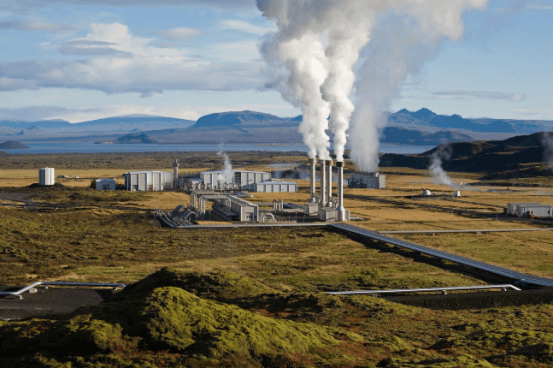
Okmok Volcano is one of the most active volcanoes in North America. Over the past 30 years, it has erupted twice—in 1992 and 2008—with the 2008 eruption sending an ash plume up to 12 kilometers high.
Koulakov said: "We estimate the location of the magma chamber, which is crucial for the prospects of geothermal energy. If the magma chamber is at a relatively shallow depth, drilling will reveal areas with extremely high temperatures. Even if it is dry, pumping water from the surface will cause the water to boil and generate enormous energy that can be used to drive turbines."
Koulakov explained that similar projects using dry hot rock to develop geothermal energy already exist. These projects require pumping water into a high-pressure environment and then returning it as steam to the turbine. Such projects are relatively low-cost. He stated: "If it were not in a volcanic area, drilling to 4–5 kilometers would be expensive and difficult, whereas here we have a 1.5-kilometer-deep well, which costs orders of magnitude less."
To determine the location of the magma center, Russian scientists used seismic tomography technology, which visualizes the internal structure of the Earth through seismic waves. Koulakov said: "For example, at Okmok, less than one kilometer from the magma center, our tomography clearly showed this. Therefore, it is a very effective tool for developing geothermal energy using dry hot rock, rather than geothermal energy that relies on water extracted from underground."
The volcanologist noted that due to low population density and an abundance of hydrocarbon energy, geothermal energy in Alaska has not yet been fully developed. At the same time, geothermal energy development also holds promise for producing cleaner hydrogen. He emphasized: "A political decision is needed here. Volcanology and seismology are sciences that require global development, and we must work together."