
A research team from the Ontario Institute for Cancer Research (OICR) and the University of Toronto has developed an artificial intelligence system named OncoGAN, which can generate synthetic genomes simulating multiple cancer types. The research results have been published in the journal Cell Genomics.
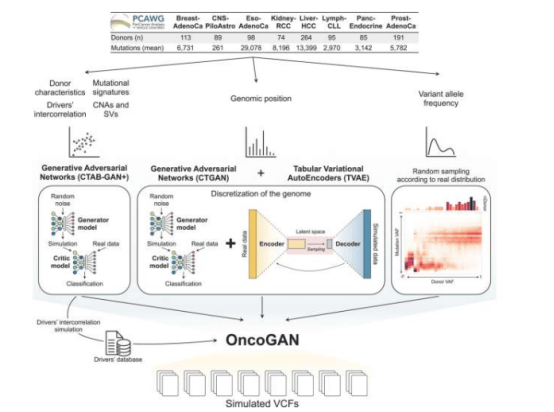
The artificial intelligence system is based on generative adversarial network technology and simulates tumor genomic features of eight cancer types, including breast cancer, prostate cancer, and pancreatic cancer. The generated synthetic data not only preserves the mutation patterns of real genomes but also provides a benchmark testing platform for genomic analysis tools, promoting the development of precision oncology algorithms.
Current cancer genome analysis faces two major challenges: first, limited training data, with most existing tools developed based on small amounts of outdated genomic data; second, the latest clinical genomic data is difficult to share publicly due to patient privacy protection. OncoGAN effectively resolves the conflict between data accessibility and privacy protection by generating synthetic genomes that are not associated with any real patients but have significant scientific value.
Senior author of the paper and OICR Acting Scientific Director Dr. Lincoln Stein stated: "Synthetic genomes created by artificial intelligence systems contain no personal health information and can be shared without barriers. At the same time, because the 'ground truth' of the synthetic data is fully known, they provide a more reliable foundation for algorithm validation."
The research team has publicly released 800 simulated genome datasets for use by the scientific community. These data are currently being used to train new analysis tools in Stein's laboratory, with the potential to improve the accuracy of cancer genome variant detection.
First author Ander Diaz-Navarro noted: "Knowing the ground truth of the genome means we can more effectively evaluate the performance of new algorithms and promote the optimization of diagnostic tools." As analysis tools continue to improve, scientists are expected to gain a deeper understanding of cancer development mechanisms, providing support for early diagnosis and personalized treatment.