
A research team led by Professor Ulrich Wiesner from the Department of Materials Science and Engineering at Cornell University has published a study in Nature Communications, introducing a one-step 3D printing technology capable of fabricating high-performance superconductors with hierarchical structures. The method utilizes block copolymer and inorganic nanoparticle inks that self-assemble during the printing process and are directly converted into porous crystalline superconductors through heat treatment, breaking through the limitations of traditional fabrication processes.
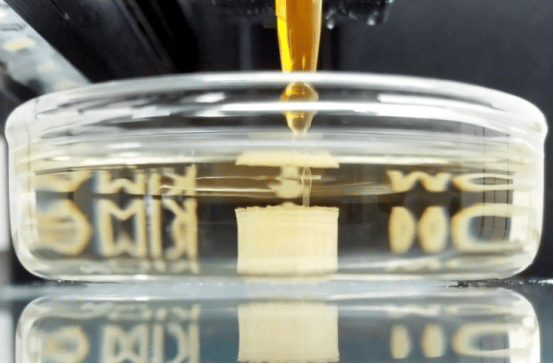
This technology achieves synergistic control over atomic-scale lattice ordering, mesoscale copolymer self-assembly guidance, and macroscale 3D printing shaping. The superconductors printed using niobium nitride material exhibit an upper critical magnetic field of 40 to 50 tesla, setting a new record for this class of composite superconductors. This property is of significant importance for applications in strong-field superconducting magnets, such as those used in magnetic resonance imaging equipment.
Professor Wiesner stated: "This work shows that we can not only print complex shapes, but the mesoscale constraints can also endow materials with unprecedented properties." The research team established a correlation between polymer molar mass and superconducting performance, providing a new basis for material design. The method can also be extended to other transition metal compounds such as titanium nitride, offering a new pathway for the development of quantum devices.
The study was led by graduate students Fei Yu and Paxton Thetford, with team members including Professor Bruce van Dover, Professor Sol Gruner, and Professor Julia Thom-Levy. Wiesner added: "We will continue to explore more efficient preparation of superconductors with new properties through soft matter approaches."