
Researchers at the University of Chicago have published a study in The Astrophysical Journal Letters suggesting that mini-Neptunes, which are common throughout the universe, may possess solid surfaces. This discovery challenges the previous assumption that these planets are covered by global magma oceans. The research, led by Professor Eliza Kempton, provides a new perspective for understanding the characteristics of exoplanets.
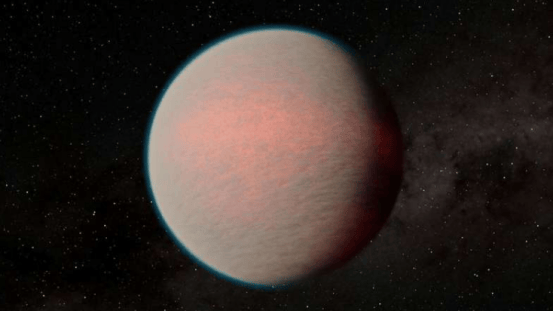
The research team made the discovery while analyzing the planet GJ 1214 b, which orbits a star in the constellation Ophiuchus. They found that the extremely high pressure generated by its thick atmosphere may transform rocks from a molten state to a solid state. Kempton stated: "This really upends our preconceived notions about these planets, which is interesting because there are so many of them in the universe." The discovery is based on the latest observational data from the James Webb Space Telescope, which shows that the atmospheres of these mini-Neptunes may contain molecules heavier than simple hydrogen and helium.
By simulating different planetary environments, the researchers concluded that a considerable portion of mini-Neptunes previously thought to be lava worlds may actually have solid surface structures. Postdoctoral researcher Matthew Nixon noted: "Before we discovered any exoplanets, we had a clear and reasonable explanation for how other solar systems formed, based on how our own solar system formed. According to that logic, other solar systems should be just like ours. But that's not the case."
In-depth studies of these mini-Neptunes will help refine theories of planet formation. Scientists hope that by understanding the composition and evolutionary processes of these planets, they can gain a more comprehensive grasp of the diversity of planetary systems in the universe, providing theoretical support for the search for habitable planets. Continued observations of mini-Neptunes will continue to advance human understanding of planet formation mechanisms.