
Simulation of the SECLG process at the University of Johannesburg shows that a promising industrial process can efficiently convert crushed sugarcane waste into green hydrogen with efficiency far beyond previous expectations. The related research was published in the journal Renewable Energy.
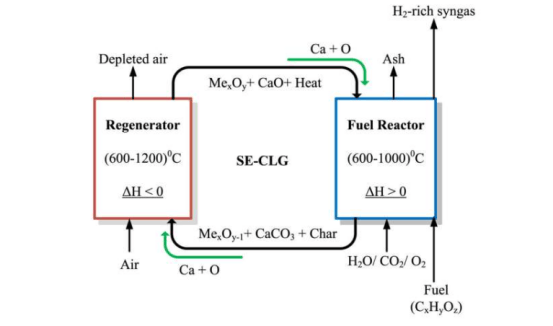
The simulation results indicate that compared with traditional biomass gasification plants, this process has higher energy efficiency, and the emissions of tar, carbon monoxide (CO), carbon dioxide (CO₂) and nitrogen (N) are only a small fraction of tar emissions. It may help energy-intensive industries such as steel and cement achieve decarbonization in the future.
The world produces approximately 1.4 billion tons of sugarcane annually, of which about 540 million tons of sugarcane bagasse are crushed. Countries such as India, China, Brazil and Mauritius have already used sugarcane bagasse gasification to generate electricity for the national power grid. Gasification is a method of "chemically burning" biomass and converting it into syngas (a clean mixture of hydrogen and other gases) without involving traditional combustion.
Professor Bilainu Oboirien, a researcher in the Department of Chemical Engineering Technology at the University of Johannesburg, said that current large-scale gasification methods have low energy and hydrogen yields and also produce large amounts of harmful by-products such as tar. In typical syngas composition, hydrogen accounts for 10–35%, carbon monoxide 20–30%, carbon dioxide 10–25%, tar 10–100g/Nm³, nitrogen 40–50%, with the balance being hydrocarbons. Carbon dioxide is not captured by the process, and high tar yields require a large amount of additional cleaning equipment, increasing operating costs.
Sorption-Enhanced Chemical Looping Gasification (SECLG) is a more effective method for gasifying biomass (such as sugarcane bagasse), and multiple research groups have been developing it over the past 10 years. Compared with existing industrial methods, SECLG can produce green hydrogen with higher purity, higher biomass yield, higher energy efficiency, and better carbon capture.
Professor Oboirien and master's candidate Lebohang Gerald Motsoeneng created a mathematical model of the SECLG process and conducted a comprehensive simulation using Aspen Plus at laboratory scale, comparing the effects of two metal oxides used as oxygen carriers on parameters such as hydrogen yield. The model estimates that in the gas composition produced by SECLG, hydrogen accounts for 62–69%, carbon monoxide 5–10%, carbon dioxide less than 1%, tar less than 1g/Nm³, nitrogen less than 5%, with hydrocarbons in balance. This means high hydrogen yield, low tar concentration and low nitrogen dilution can reduce economic costs, but hydrogen still needs further purification to reach industrial grade.
Oboirien said that countries with existing biomass gasification infrastructure and easy access to biomass, such as China, Brazil and South Africa, will benefit the most from producing green hydrogen from sugarcane bagasse via SECLG, because retrofitting existing technologies is easier and cheaper than building new dedicated plants.
The Aspen Plus model compared the efficiency of nickel oxide (NiO) and iron oxide (Fe₂O₃) and also examined the stability of oxygen carrier and adsorbent materials. The model shows that nickel oxide can produce higher purity hydrogen in the reaction and capture carbon dioxide more effectively; iron oxide is better at producing combustible mixed gases, indicating that the tunable SECLG process may also produce transportation fuels such as diesel in addition to hydrogen.
However, the model has not yet addressed the degradation of oxygen carrier and adsorbent materials over time in practical applications, nor has it modeled or simulated the solid material transport and effective separation of ash and char, which are essential for a viable SECLG system.
Oboirien said that the concept is currently being further validated through experiments in the laboratory, hoping to verify the model based on experimental data. Although SECLG is a concept validated by process simulation models, it has not yet been applied to large-scale industrial biofuel-to-syngas production. The process requires a temperature of approximately 600 degrees Celsius, a pressure of approximately 5 bar, and multiple cycles, as well as metal oxide oxygen carrier and adsorbent delivery systems to achieve continuous catalysis and carbon capture cycles.
Oboirien stated that sorption-enhanced biomass chemical looping gasification is a promising process for producing hydrogen and transportation fuels. This research requires investment in infrastructure and industry collaboration to achieve sustainable development and realize the potential of SECLG technology.