
Astronomers using the W. M. Keck Observatory in Hawaii have conducted high-resolution observations of the HD 34282 star system, providing new data for studying the early stages of protoplanet formation. The research, led by University of California, Irvine graduate student Christina Wides, captured detailed structures in the inner regions of the dust disk surrounding the star using near-infrared cameras and adaptive optics technology.
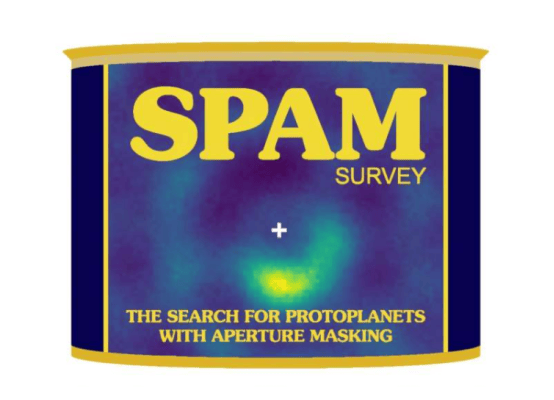
The observation team focused on the young star HD 34282, located approximately 400 light-years from Earth, which is surrounded by a transition disk believed to be in the process of forming planets. Wides said: "We all want to know where we come from and how our solar system formed. By studying systems like this, we can observe the planet formation process and understand what conditions create worlds like ours." This protoplanet formation study has been published in The Astrophysical Journal.
The research images reveal clumpy structures and brightness variations in the inner dust disk, suggesting possible planet-building activity. Although no confirmed protoplanets were directly detected, the observations provide the most precise constraints yet on the regions where young planets may exist. Wides noted: "This work pushes the limits of our observational capabilities. The Keck Telescope’s adaptive optics and masking functions allowed us to resolve features only a few astronomical units from the star."
To date, the astronomical community has directly imaged only two confirmed protoplanets, both discovered in 2020 using instruments at the Keck Observatory. Each new observation of protoplanet formation helps refine theories of planetary system evolution. The research team plans to continue using Keck Observatory's advanced instruments to monitor other young star systems while preparing for the next-generation high-contrast imager SCALES currently under development.
Continued study of the protoplanet formation process will deepen humanity's understanding of planetary origins. Wides added: "Every new system we study helps us gain a deeper understanding of how planets form and evolve. It is incredible that we can point a telescope at a young star hundreds of light-years away and actually see the conditions that may be nurturing new worlds."