
A Yale University research team has published a paper in Nature Biomedical Engineering, announcing the development of a new molecular vaccine platform (MVP) that can significantly enhance the immune response of mRNA vaccines. The technology guides antigen proteins to precisely localize on the cell surface, improving the immune system's recognition efficiency and providing a new path for expanding the application of mRNA vaccines in areas such as cancer and autoimmune diseases.
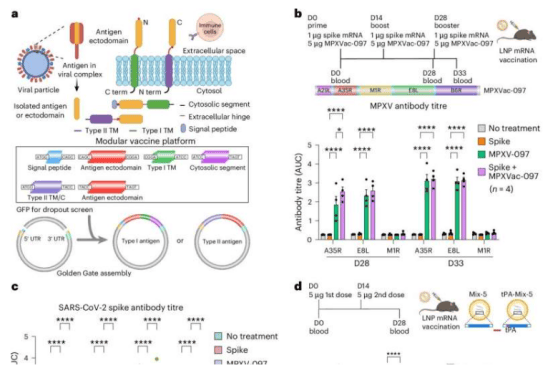
In traditional mRNA vaccines, some antigen proteins may remain inside the cell and are difficult for the immune system to recognize effectively. The research team constructed a "cellular GPS system" that directs antigen proteins for targeted transport by integrating signal peptides and transmembrane anchoring modules. Senior author Associate Professor Sidi Chen explained: "This platform solves the core problem of low antigen presentation efficiency, enabling the vaccine to activate stronger antibody and T cell responses."
The research team validated the platform in monkeypox, HPV, and herpes zoster virus models, observing increased antigen expression levels and enhanced immune responses in all cases. First authors Zhenhao Fang and Walter Monteiro stated that the technology platform demonstrates good adaptability and stability. Co-senior author Assistant Professor Carolina Lucas added: "This study lays the foundation for developing next-generation vaccines against complex diseases."
The study was completed through collaboration among researchers from 11 institutions, including Yale School of Medicine and the Institute for Systems Biology. A patent for the related technology has been filed. The researchers stated that the next step will be to explore the platform's application potential in tumor immunotherapy and chronic infectious diseases.