
According to data from the U.S. Energy Information Administration, shale oil reservoirs have driven U.S. crude oil production to record highs over the past decade, but low extraction efficiency has resulted in up to 90% of the oil being wasted. To increase production from tight shale formations, a research team at Pennsylvania State University has developed a new oil extraction workflow that can improve shale oil recovery by 15% and also provide long-term storage for carbon dioxide emissions.
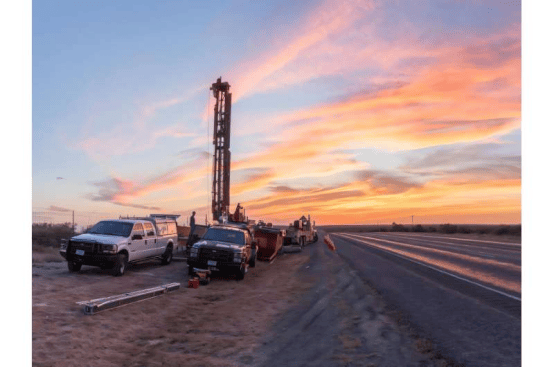
The workflow has been successfully implemented in the Eagle Ford Shale in Texas, demonstrating improvements in oil recovery and scalability to other shale reservoirs. The research results were published in the journal Fuel. The core of this innovation is an improved cyclic carbon dioxide injection technique known as "CO2 huff-n-puff," a method with decades of history that enhances the ability to extract oil from natural rock layers containing nanopores (where large amounts of hydrocarbons accumulate).
Hamid Emami-Meybodi, Associate Professor at the EMS Energy Institute at Pennsylvania State University, compared the underground shale environment to a sponge, with nanopores acting like tiny openings in the sponge filled with water that can absorb and retain hydrocarbons. He described the improved injection process as one of the best recovery systems in the industry. Using carbon dioxide to increase oil production can reduce environmental impact, meet energy demand, and support U.S. energy independence and security.
During the injection process, carbon dioxide is injected into the reservoir through the oil well. The well is then shut in to allow the gas sufficient time to soak and mix with the oil, altering the oil's properties and improving its fluidity and recovery rate. By injecting carbon dioxide into the oil mixture at different pressures, hydrocarbons can be forced out of the nanopores to the surface. However, the effectiveness of this method varies greatly depending on operating conditions, depth, and oil type. Emami-Meybodi noted that optimizing injection is highly challenging due to numerous variables such as oil characteristics and shale formation composition.
The Emami-Meybodi team collaborated with industry partners to explore methods to improve efficiency. Since America's largest shale oil reservoirs contain billions of gallons of oil, even small increases in recovery can significantly boost overall production. The Eagle Ford Shale covers approximately 20,000 square miles and is one of the five major shale oil and gas reserves in the United States. Current extraction methods (such as hydraulic fracturing) typically recover less than 10% of the oil.
The research team modified the injection method to enhance contact between hydrocarbons and carbon dioxide, covering a larger surface area with CO2 and adjusting the number of cycles, pressure, injection volume, and duration. Emami-Meybodi stated that these improvements could enable the injection method to extract an additional 15% of hydrocarbon from the Eagle Ford region. Injecting more carbon dioxide allows deeper penetration into the reservoir and more effective mixing with crude oil, releasing more petroleum.
Co-author of the paper and Pennsylvania State University postdoctoral researcher Ma Ming developed the internal numerical model and wrote the simulation code. He believes that repurposing shale oil wells for carbon dioxide storage is a cost-effective way to control greenhouse gas emissions. His greatest hope is not only to improve recovery efficiency but also to widely utilize abandoned shale wells to prevent more carbon dioxide emissions. Related work includes applying the new simulation method to more field data and conducting a comprehensive assessment of oil and gas recovery prospects.
Emami-Meybodi, head of the Joint Industry Partnership for Subsurface Energy Recovery and Storage at Pennsylvania State University, stated that with the booming development of shale oil wells (shale oil production is expected to peak in 2027), the United States faces a surge in the number of "mature" shale gas fields and declining production. Mature and abandoned shale wells represent a promising prospect for carbon dioxide storage. Shutting in oil wells results in financial losses, but storing carbon dioxide can generate revenue, and the risk of carbon dioxide leakage in shale oil wells is relatively low.