
Scientists at Harvard University have successfully launched a quantum system containing more than 3,000 qubits that can operate continuously for over two hours without restarting, marking a major advancement in the field of quantum computing. This system is detailed in a paper published in the journal Nature. Its scale is ten times that of existing systems, representing a key step toward building a quantum supercomputer and is expected to fundamentally transform multiple fields including science, medicine, and finance.
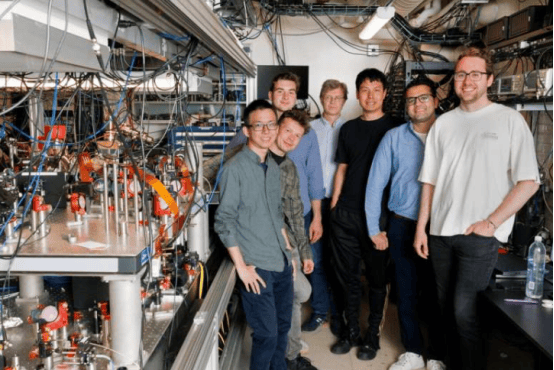
Senior author of the paper Mikhail Lukin stated: "We have demonstrated the continuous operation of a 3,000-qubit system, and this approach is equally applicable to larger qubit systems." The research was led by Harvard University in collaboration with the Massachusetts Institute of Technology and the startup company QuEra Computing. Traditional computers rely on binary code to encode information, while quantum computers utilize the quantum properties of subatomic particles to achieve far more powerful processing capabilities. Qubits can simultaneously be zero, one, or both, a property that allows the processing power of quantum computers to grow exponentially as the number of qubits increases.
However, building large-scale quantum systems faces many challenges, one of the main obstacles being "atom loss." The research team successfully addressed this issue by designing a "light lattice conveyor belt" and "optical tweezers" system that continuously and rapidly replenishes qubits. The new system can reload up to 300,000 atoms per second, enabling an array of more than 3,000 qubits to operate continuously for over two hours. Co-author of the paper Elias Trappler noted: "We have demonstrated a method that allows new atoms to be inserted while naturally lost atoms are replaced, without disrupting the existing information in the system."
Lukin added that the continuous operation of the new system and the ability to rapidly replace lost qubits are more important in practice than a specific number of qubits. The study also demonstrated an architecture for reconfigurable atomic arrays that allows the connectivity of the processor to be changed during computation, making quantum computers more flexible.