
A research team at the RIKEN research institute in Japan has successfully developed a new thin film material that combines both ferroelectric and topological insulator properties. This breakthrough offers possibilities for the development of new electronic devices. The research results were published in Physical Review Letters.
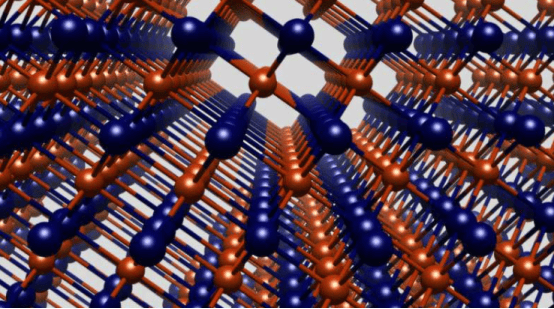
The study was led by Ryutaro Yoshimi, a visiting scientist at the RIKEN Center for Emergent Matter Science. The thin film material developed by the team possesses both ferroelectricity and topological insulator properties. The former refers to the presence of spontaneous electric dipoles inside the material that can be regulated by an electric field, while the latter refers to the characteristic that the material's surface conducts electricity while its interior is insulating. Yoshimi stated: "This achievement represents the realization of a new phase of matter, merging two key concepts in solid-state physics: topology and ferroelectricity."
The band structure is a key factor determining the electronic properties of a material. In certain special materials, electron energy bands cross, causing electrons to exhibit anomalous behavior. Yoshimi explained: "Electrons behave like waves in solids, and the relationship between their energy and momentum is described by the band structure. In some materials, different electron bands can cross and have the same energy." This band crossing produces a strong effective magnetic field, whose strength can be more than a hundred times that of a conventional magnetic field.
Ferroelectric properties provide a new way to control topological states. Yoshimi noted: "The topological structure of materials is usually very stable and difficult to change through external stimuli, whereas ferroelectricity can be easily controlled by an external electric field. By combining these two properties, we have opened a new pathway to control the topological state of the material surface." The research team's next step will be to explore controlling the number of surface Dirac states through electric fields, thereby achieving control over external conductivity and spin polarization.
This new topological insulator thin film has application potential in the field of electronic devices. The researchers stated that through effective control and manipulation of emergent effects, it may be possible to develop more efficient electronic devices. This study provides a new direction for the functional design of topological materials.