
In the field of green energy, offshore wind power, as an important component, has long faced challenges in equipment maintenance and monitoring. Maintaining wind turbines and identifying potential defects is costly and time-consuming, especially for offshore wind turbines. Cracks, fractures, and corrosion of rotor blades are common causes of wind turbine failures. Offshore wind farms face harsh weather conditions such as exceptionally strong winds and heavy rain, making facilities difficult to access and inspections extremely expensive. Even if blade damage is only suspected, blades are often replaced directly, with each blade potentially costing more than 200,000 euros.
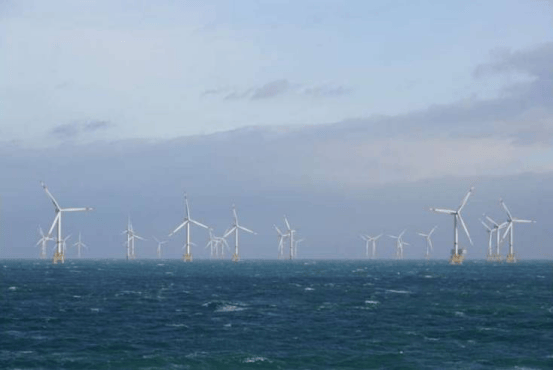
To address this issue, the Fraunhofer Institute for Integrated Circuits (IIS) and the Fraunhofer Institute for Wind Energy Systems (IWES) have collaborated to develop an innovative solution that can remotely identify internal cracks and damage in blades at an early stage.
Björn Zeugmann, team manager in the field of analog integrated circuit design at Fraunhofer IIS, explained that the project aims to use acoustic emission sensors to remotely and reliably monitor rotor blade damage and ensure the normal operation of wind turbines. To this end, the research team developed special chips for the sensors. These sensors are attached inside individual rotor blades and can absorb sound waves traveling through the blade structure.
Since rotor blade materials are non-homogeneous and consist of different layers, the new chips can capture surface wave signals generated by damage such as cracks and transmit them via mobile communication. Unlike traditional measurement systems, the new chips only transmit anomaly information. They use acoustic systems to distinguish internal cracks and fractures in rotor blades, extract features to reduce data volume, and facilitate transmission over mobile networks. The chips remain in listening mode at all times and can classify and transmit information about potential damage.
Looking ahead, this technology has significant potential. On one hand, it can determine whether damage has occurred and shut down the turbine if necessary. On the other hand, it can monitor damage over long periods, reduce unnecessary maintenance tasks, and optimize service. If damage worsens and produces noise, the system will detect it and notify technicians for targeted inspection and repair. Compared with existing measurement methods, the new solution is smaller in size, more energy-efficient, significantly reduces data consumption, and can transmit information without requiring broadband internet connection.
Previously, Fraunhofer IIS and Fraunhofer IWES had collaborated to develop an initial prototype chip for damage detection. A follow-up project was launched on June 1, with researchers planning to expand the system so that it can detect lightning strikes and their potential consequences in the future — a capability that is particularly important for offshore wind farms.
Björn Zeugmann stated that he is very interested in working in future-oriented fields such as the energy transition and creating value for society. This innovative achievement provides strong support for the green manufacturing and sustainable development of offshore wind power.