
Scientists at Durham University have completed a large-scale quality verification program for the International Thermonuclear Experimental Reactor (ITER). ITER is the world's largest project aimed at demonstrating the feasibility of nuclear fusion as a major clean energy source. The process draws on the energy of the Sun and stars, offering humanity the potential for almost unlimited energy.
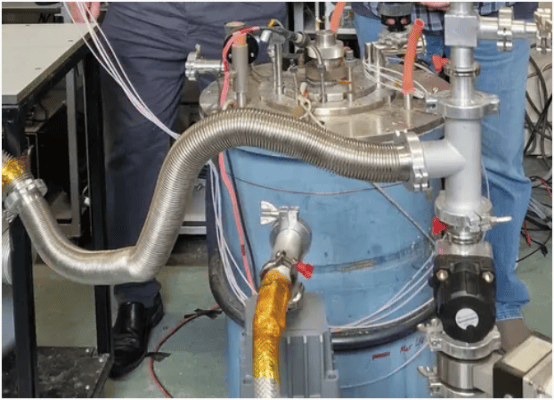
Durham University's work began in 2011, involving detailed analysis of more than 5,500 samples of superconducting wires that will be used in the core of the reactor currently under construction in southern France. The Durham team conducted approximately 13,000 independent measurements on these advanced wires made from niobium-tin (Nb₃Sn) and niobium-titanium (Nb-Ti) compounds. These materials will be used to manufacture powerful magnets that form a magnetic cage to confine plasma at temperatures exceeding 150 million degrees Celsius (302 million degrees Fahrenheit).
This progress comes at a time when global nuclear fusion research is gaining strong momentum. ITER is a collaborative project involving 35 countries, aimed at validating nuclear fusion on an industrial scale. Researchers note that Microsoft has signed an agreement to purchase electricity from a fusion power plant under the Helion project in 2028, and Google has booked 200 megawatts of fusion power from Commonwealth Fusion Systems in the 2030s. Meanwhile, the UK government has invested £2.5 billion in nuclear fusion research and is building its own prototype power plant, STEP, on the site of a former coal mine in Nottinghamshire.
The verification process required meticulous preparation, including heat treatment of the brittle Nb₃Sn material in furnaces exceeding 650°C (1202°F) to impart superconducting properties. These wires must reliably carry enormous currents while withstanding extreme mechanical forces inside the reactor.
The extensive study, published in the peer-reviewed journal Superconductor Science and Technology, includes an important finding: the establishment of a reliable statistical method for quality control. The challenge with Nb₃Sn wires is that the heat treatment that gives them superconducting properties also makes them unsuitable for repeated testing. The Durham research team demonstrated that consistent and accurate quality assessment can be achieved by measuring adjacent strands of the same manufactured length in different laboratories. This method provides a practical and cost-effective alternative to repeated measurements, ensuring manufacturing consistency across the global supply chain and laboratory accuracy.
Professor Damian Hampshire from Durham University, who led the research, stated: "The UK is a world leader in using superconducting magnets to manufacture MRI body scanners. The question is, can we help lead the world in using superconducting magnets to commercialize fusion power generation?" The success of the ITER project fundamentally depends on the quality of the superconducting strands currently being verified in Durham. The massive dataset and validated test methods provide important benchmarks for the project's construction and offer an open resource for scientists worldwide to advance future fusion technologies.
Additionally, the ITER project recently completed a 20-month repair of a key component. Its Sector 8 — the 440-ton vacuum vessel component of the ITER fusion reactor — has now been returned to the assembly tooling.