
Although modern dairy cows have become "milk production giants" with daily yields exceeding 50 kilograms, a health crisis lies behind this high productivity — frequent issues such as mastitis and cellular stress not only reduce milk quality but also threaten cow health. Recently, a research team from the Robert H. Smith Faculty of Agriculture, Food and Environment at the Hebrew University of Jerusalem published new findings in the journal Stem Cell Research & Therapy, revealing that mesenchymal stem cells (MSCs) and their secretions may provide a natural solution to this problem.
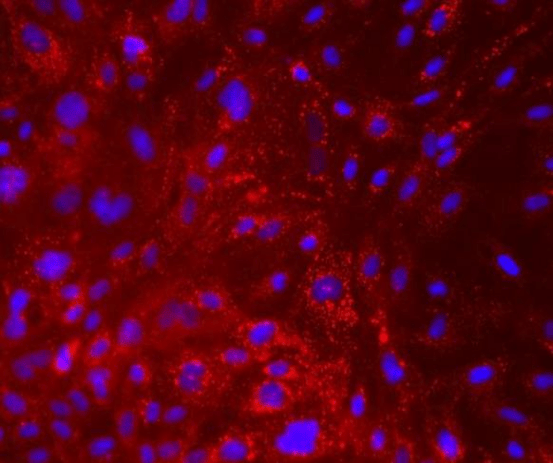
Stem Cells Work in Two Ways: Anti-inflammatory + Lipogenesis Promotion
Led by Dr. Roni Tadmor-Levi, master's student Lior Sharabi, and Professor Nurit Argov-Argaman, the study is the first to prove that MSCs and their "secretome" (released signaling molecules) have a dual protective effect on bovine mammary epithelial cells:
Anti-inflammatory and stress reduction: In a simulated stress environment, stem cell secretions can significantly reduce inflammatory responses and alleviate cellular stress.
Lipogenesis promotion: Fat-related gene activity is enhanced, and triglyceride synthesis increases, directly boosting milk fat content.
"This is the first time we have discovered that stem cells can directly induce lipogenesis," emphasized Dr. Tadmor-Levi. "Even when using only the secretions, without cell contact, this effect can be achieved under all tested conditions."
From Laboratory to Pasture: Natural Molecules May Become Feed Additives
High-yielding dairy cows often suffer from chronic inflammation and mastitis due to metabolic stress, leading to reduced yield and compromised animal welfare. MSC-derived factors, through a non-contact mechanism, can soothe stressed cells while maintaining fat synthesis, providing a new path to improve milk yield, quality, and cow health. More importantly, their active molecules can be converted into feed additives or supplements through extraction technology, enabling large-scale application.
Nutritional Upgrade: Natural Fat Increase Without Artificial Intervention
Professor Argov-Argaman pointed out that milk fat is not only key to taste but also a natural carrier of energy, vitamins A and D, and essential fatty acids. "Increasing fat content through biological means can avoid chemical additives or complex processing, making milk more nutritious and safer."
New Paradigm of Precision Management: Synergizing with the Cow's Physiological System
This study marks the transition of dairy farming toward precision and biologically friendly practices. Professor Argov-Argaman emphasized: "The goal is not only to increase production but also to protect animal health and provide consumers with higher-quality milk. We are using biological tools to work in cooperation with the cow's own system, rather than against it."
The research team is currently advancing technology translation and exploring the feasibility of MSC secretions in commercial farming. This breakthrough may provide an "Israeli solution" for the sustainable development of the global dairy industry and redefine the balance between high yield and health.