
By analyzing data from the American Association of Variable Star Observers (AAVSO) international database and the Small and Moderate Aperture Research Telescope System (SMARTS), astronomers have observed a nova named LMCN 2009-05a in the Large Magellanic Cloud (LMC). The research results, published on the preprint server arXiv on August 19, reveal the nature and characteristics of this nova.
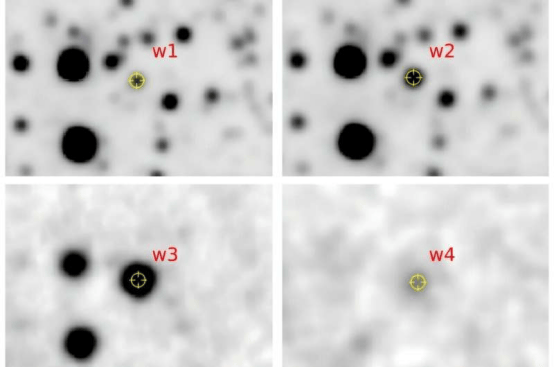
A nova is a star that suddenly becomes very bright and then slowly returns to its original state over a period of several months. Such a powerful outburst results from the accretion process in a close binary system consisting of a white dwarf and its companion star. Therefore, studying novae can help us better understand fundamental astrophysical processes, including stellar evolution.
Novae are also excellent sites for studying dust formation, which may occur from a few weeks to several months after the outburst.
LMCN 2009-05a was first reported in May 2009. It is a nova that exhibited dust formation. A team of astronomers led by Mohit Singh Bisht from the Indian Center for Space Physics decided to carefully observe this eruption to further understand its characteristics.
According to the new study, data from AAVSO and SMARTS indicate that LMCN 2009-05a is a nova of moderate speed. Its brightness dropped by two magnitudes from maximum light in just 46 days. The absolute magnitude of LMCN 2009-05a was measured at -6.65, indicating that it is a relatively low-luminosity nova with an outburst luminosity of approximately 46,400 times that of the Sun.
Optical and near-infrared light curves show that a significant amount of dust formed in the ejecta of LMCN 2009-05a between 78 and 155 days after the outburst. The dust temperature measured on day 395 after the outburst was approximately 700K.
By analyzing the spectroscopic observations of LMCN 2009-05a, Bisht's team found that the spectrum was initially dominated by hydrogen Balmer lines and iron lines, presenting a P Cygni profile. Overall, the results indicate that the abundances of nitrogen and oxygen are significantly enhanced relative to solar values.
In addition, the study found that the white dwarf progenitor of LMCN 2009-05a has a relatively low mass, approximately 0.77 solar masses. Based on the collected data, astronomers also calculated that the expansion velocity of the ejecta is about 690km/s.
Summarizing the results, the paper's authors made several comments on the overall nature of LMCN 2009-05a.
The researchers concluded: "The spectroscopic evolution of LMCN 2009-05a indicates that it is a typical nova of moderate speed. This nova is characterized by significant dust formation and changes in ionization structure. It conforms to the D-type light curve morphology."