
A collaborative study by the U.S. Department of Agriculture's Agricultural Research Service (ARS) and several universities has found that the tomato NN line, developed 30 years ago, shows significant resistance to Tomato Brown Rugose Fruit Virus (ToBRFV). This virus has posed a serious threat to the global tomato industry in recent years, causing leaf deformation, fruit discoloration, and substantial yield losses.
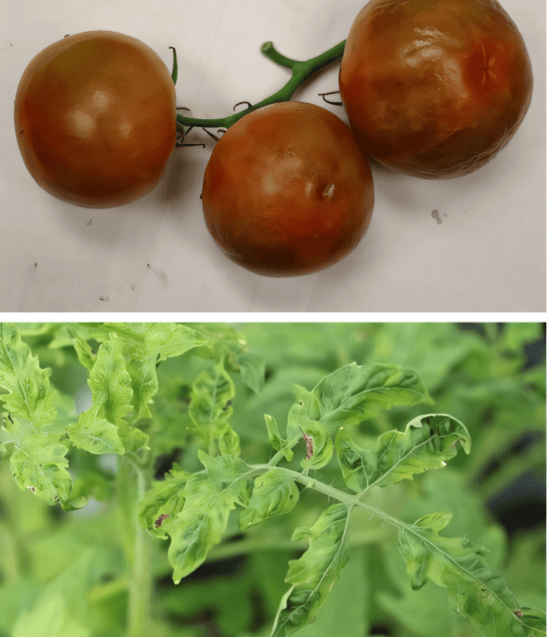
ToBRFV is a pathogen transmitted through seeds and contact, capable of infecting crops such as tomatoes and peppers, and can overcome the antiviral genes of existing commercial varieties. The virus spreads rapidly through contaminated equipment, clothing, or plant material. Currently, the most effective control measures focus on prevention of contact, including strict disinfection and maintaining a clean growing environment.
Kai Ling, a plant pathologist at the U.S. Vegetable Laboratory, pointed out: "To mitigate the impact of ToBRFV, new sources of antiviral genes must be found. While preventive measures are important, promoting varieties with genetic resistance is the fundamental strategy." The laboratory is located in Charleston, South Carolina.
The latest study, published in the Plant Biotechnology Journal, shows that the tomato NN line expressing the N gene is resistant to ToBRFV at 22°C, but its resistance weakens under high-temperature conditions of 30°C. The line was developed in the 1990s by a team led by ARS plant molecular geneticist Barbara Baker at the Plant Gene Expression Center in Albany, California. Its resistance gene originates from a wild relative of tobacco.
Ling added: "Temperature is a key environmental factor affecting the interaction between host and pathogen. In-depth research into the regulatory mechanisms of temperature on the genetic resistance of tomato NN is of great significance for future variety breeding."
This discovery provides a new direction for breeding tomato varieties resistant to ToBRFV. The researchers stated that the results demonstrate the potential of using the tomato NN line to control virus spread and will provide new solutions for global tomato crop protection.