
As July arrives, the invasive pest spotted lanternfly is once again entering its active season in Pennsylvania, USA. This pest, which first appeared in the United States in 2014, poses a serious threat to the state's $7 billion grape and wine industry. A team led by Flor Acevedo, Assistant Professor of Entomology at Penn State University, has revealed the mechanisms of its damage through experiments and is calling on the public to participate in prevention and control.
Grape Industry: Economic Pillar Under Threat from Pest
According to data from the Pennsylvania Wine Association, the state has more than 400 wineries and 14,000 acres of vineyards, with 70% concentrated in Erie County. However, the feeding behavior of the spotted lanternfly is weakening this economic engine:
Lethal Preference: Although the lanternfly is a polyphagous pest, it poses a fatal threat to grapevines and the invasive tree of heaven (introduced to Philadelphia in 1784), which can lead to the death of grapevines.
Quality Decline: The pest's sap-sucking reduces the sugar content and phenolic compounds in the fruit (key components affecting wine color and flavor). Consecutive years of infestation can cause significant declines in yield.
Laboratory Insights: Grape Variety Determines Pest Survival
Acevedo's team discovered through controlled experiments:
Poor Adaptation to Single Food Source: Lanternflies fed solely on grapevines showed higher mortality, delayed development, and reduced egg production, but could still survive to the reproductive stage, meaning vineyards could become long-term habitats for them.
Poor Adaptation to Single Food Source: Lanternflies fed solely on grapevines showed higher mortality, delayed development, and reduced egg production, but could still survive to the reproductive stage, meaning vineyards could become long-term habitats for them.
Economic Chain Reaction: Field cage experiments showed that after each grapevine was infested with 20–350 lanternflies, the phenolic content in red wine decreased. Two consecutive years of infestation led to yield losses, directly threatening growers' income and wine quality.
Industry Response: Monitoring, Pesticides, and Tourism Pressure Coexist
Currently, wineries in infested areas have established pest monitoring systems and are using insecticides, but unaffected areas remain concerned about the spread of the pest. Organic vineyards face greater challenges due to restrictions on insecticide use. In addition, the lanternfly has forced agritourism venues to strengthen outdoor cleaning to maintain the visitor experience.
Pest Characteristics: Hidden Egg-Laying Increases Spread Risk
Acevedo pointed out that the lanternfly's "indiscriminate egg-laying" behavior (eggs can attach to car tires, rocks, fabrics, etc.) makes it highly prone to spread through human activities. The egg masses appear as light gray-brown muddy patches, about one inch long. After hatching, the nymphs migrate to young plant buds to feed.
Public Participation in Control: Squeezing, Freezing, or Disinfecting Can Block Spread
Researchers are calling on the public to participate in prevention and control:
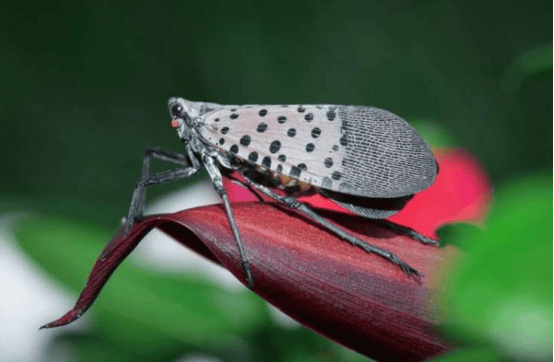
Identification Features: Adults have gray-red wings with spotted patterns and lay eggs in clusters on various surfaces.
Elimination Methods: Upon finding egg masses or adults, they can be crushed, soaked in soapy water, or frozen for several days.
Transportation Taboos: Avoid moving items that may carry egg masses across regions during the lanternfly's active period.
Expert Warning: The Destructive Nature of This Beautiful Pest
"Although the lanternfly has a unique appearance, its aggressiveness may destroy both ecology and economy," Acevedo emphasized. "Only through scientific control and public participation can we protect the future of Pennsylvania's grape industry."
Currently, the research team is working with agricultural departments to develop integrated management plans based on varietal resistance and ecological regulation to reduce reliance on chemical pesticides.