
Mechanical engineering researchers at the UCLA Samueli School of Engineering have designed a mattress that helps prevent bedsores by alternately applying pressure to the body, sometimes by increasing peak pressure rather than decreasing it to restore blood flow.
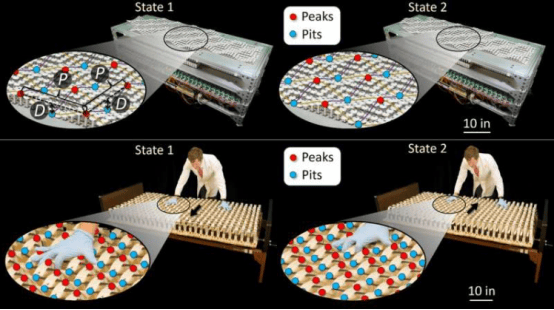
Common bedsore treatment protocols include moving and turning bedridden patients every two hours. However, this recommendation is both expensive and cumbersome, leading to inconsistent care and potential injury to caregivers. UCLA researchers developed a prototype alternating pressure mattress to address this issue. Details of the study were published in the journal Science Robotics.
Pressure ulcers, also known as bedsores, are caused by prolonged pressure on a part of the body that restricts blood flow. This condition is particularly troublesome for people who are bedridden for long periods.
Bedsores are a serious health problem. According to data from the Agency for Healthcare Research and Quality under the U.S. Department of Health and Human Services, more than 60,000 people in the United States die each year from bedsores. In acute care facilities across the country, 2.5 million people receive treatment for bedsores each year, with treatment costs reaching $11 billion, second only to the costs of treating cancer and cardiovascular disease.
Although bedsores can occur anywhere there is prolonged pressure, they most commonly appear on the skin over bony areas such as the sacrum, heels, elbows, and knees.
Jonathan Hopkins, professor of mechanical and aerospace engineering at the UCLA Samueli School and lead researcher, said: "We set out to develop an affordable, versatile, and practical mattress that can more effectively prevent pressure ulcers."
Hopkins' team had previously developed a mattress equipped with 1,260 linear actuators that could be controlled independently to test how different surface patterns affect blood flow and blood pressure. That research led to the design of an alternating pressure mattress that uses a flexible mechanism grid structure to achieve smooth transitions between two alternating checkerboard-like surface patterns while minimizing driving energy and cost.
To demonstrate the mattress's performance, the researchers tested their design on a standard bed frame, placing a foam pad with embedded sensors on the mattress and installing a 220-pound (approximately 109kg) human mannequin. As the mattress switched between the two pressure states, the sensors tracked pressure levels across the body, releasing pressure at the valleys and applying pressure at the peaks.
The pressure data was limited to the average occlusion pressure threshold of 32mmHg — above this average pressure, blood and lymph fluid cannot flow into the tissue, leading to bedsores.
The design incorporates nearly 30 balancing springs to ensure smooth and gentle transitions between the two pressure states. The researchers also developed a software tool that uses the patient's height and weight to determine the optimal number and placement of balancing springs, minimizing the force required to activate the mattress for patients of different body types. By installing several low-power linear actuators structurally, the mattress can automatically switch between different states. Caregivers can also easily activate the mattress.
"Imagine the black squares on a checkerboard rising to support the patient while the white squares retract to relieve pressure in place," Hopkins said. "Then, after some time, the white squares rise and the black squares sink to relieve the pressure that was just applied — peaks become valleys and vice versa. This cycle repeats, with the hope of ensuring that blood flow is not continuously blocked."
The study results also showed that increasing the pressure differential within a comfortable range is more effective at restoring blood circulation to compressed areas. Therefore, instead of reducing the overall peak pressure, the team focused on ensuring an increase in the pressure differential between the raised and lowered states of the mattress, while alternately adjusting the time different body parts bear maximum pressure on the mattress. Alternating pressure means that contact points under pressure are minimized to no more than 50% of the time.
Currently available alternating pressure mattresses for bedsore prevention typically use inflatable air chambers that periodically adjust the overall pressure of the mattress. The UCLA system uses embedded sensors and flexible mechanisms to locally change the pressure on the mattress surface. This allows for more precise pressure redistribution based on real-time data and customization according to individual user characteristics (such as height and weight).
Most components of the mattress can be cleaned, and the foam pad with embedded sensors is replaceable. It can also improve air circulation under the patient and help reduce fluid accumulation typically associated with uneven pressure distribution.
The UCLA Technology Development Group has patented the concept, and patents for other related mechanisms are also being filed. The prototype is currently undergoing volunteer testing in a professional laboratory to evaluate its effectiveness in real-world environments.