
Researchers at Tohoku University in Japan have made significant progress in rechargeable magnesium battery technology by developing a new prototype battery capable of operating at room temperature. The research results were published in the journal Communications Materials, marking an important step toward the practical application of magnesium-based energy storage technology. This breakthrough provides a new direction for developing sustainable magnesium-based energy storage solutions.
The scarcity of lithium resources has limited the capacity expansion of lithium-ion batteries, whereas magnesium is abundant in the Earth's crust. Professor Tetsu Ichitsubo of Tohoku University explained: "Magnesium has not become a mainstream battery material because its reaction kinetics are too slow to operate at room temperature. Imagine if your device's battery could only work under extreme temperatures — it would be practically useless for everyday life."
The research team successfully addressed the problem of slow magnesium ion diffusion at room temperature by designing a novel amorphous oxide cathode material. This cathode utilizes an ion-exchange process between lithium and magnesium to create diffusion pathways, allowing magnesium ions to move more freely. This design enables reversible magnesium ion insertion and extraction at room temperature, laying the foundation for the practical application of rechargeable magnesium batteries.
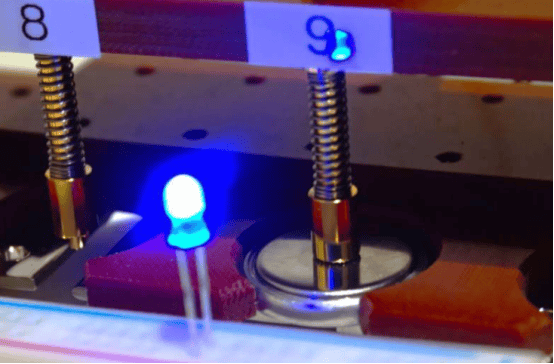
In performance tests, the researchers constructed a complete prototype full cell for evaluation. Professor Ichitsubo stated: "We fabricated a prototype full cell to test the battery's operation and found that even after 200 cycles, it could still deliver sufficient energy. This was enough to continuously power a blue light-emitting diode." The battery achieved positive voltage discharge for the first time, marking a clear difference from earlier studies.
Through rigorous chemical analysis, the research team confirmed that the battery capacity originates from genuine magnesium ion insertion processes rather than side reactions. This finding validates the feasibility of oxide cathodes supporting rechargeable magnesium battery operation under normal temperature and pressure conditions, establishing material design guidelines for next-generation magnesium-based energy storage technologies.
The progress in rechargeable magnesium battery technology brings new possibilities for developing safe and sustainable energy storage systems. With further optimization, magnesium-based energy storage technologies are expected to become an important complement in the field of energy storage.