
Chinese researchers have achieved an innovative breakthrough by inventing a transparent, colorless, and unidirectional solar concentrator that can be directly coated onto standard window glass to collect sunlight without altering the window's appearance. The technology was designed by a research team at Nanjing University in Jiangsu Province, using cholesteric liquid crystal (CLC) multilayer films with submicron lateral periodicity.
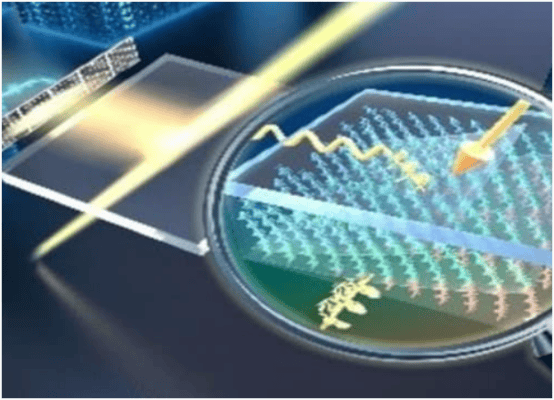
According to the scientists, this unique diffractive solar concentrator (CUSC) can selectively direct sunlight to the edges of the window where photovoltaic (PV) cells are installed. Dr. Dewei Zhang, a researcher at Nanjing University and first author of the study, stated that by designing the cholesteric liquid crystal film structure, the team created a system that selectively diffracts circularly polarized light and guides it into the glass waveguide at steep angles.
Unlike traditional luminescent or scattering-based concentrators, the new CUSC provides broadband, polarization-selective diffraction and efficient waveguiding while maintaining complete visual clarity. It overcomes the problems of visual distortion, low efficiency, and poor scalability found in conventional concentrators. Professor Zhang revealed that the device achieves an average visible light transmittance of approximately 64.2% and a color rendering index as high as 91.3%, enabling up to 38.1% of the incident green light energy to be collected at the edges. These optical properties allow the coating to generate clean energy while keeping the glass clear and natural, making the window visually indistinguishable from ordinary glass.
The team also emphasized the system's excellent scalability. Simulation results show that a standard 6.5-foot-wide (two-meter-wide) CUSC window can concentrate sunlight to 50 times its normal intensity, significantly enhancing energy collection potential. This performance level can reduce the required photovoltaic cell area by up to 75%, lowering material costs and opening new design possibilities for energy-efficient buildings.
The team's experiments demonstrated that a one-inch-diameter prototype can directly power a 10 milliwatt (mW) fan under outdoor sunlight. The system is also compatible with high-performance photovoltaic cells, such as gallium arsenide (GaAs) compound semiconductors, which can further improve overall energy conversion efficiency.
Dr. Hu Wei, Professor in the Department of Computer Science and Technology at Nanjing University and corresponding author, stated that the CUSC design represents a step forward in integrating solar technology into the built environment without sacrificing aesthetics. Professor Hu noted that the multilayer CLC films are prepared using photo-alignment and polymerization techniques and can be scaled up through roll-to-roll production processes, making it a practical and scalable strategy for carbon reduction and energy self-sufficiency.
In addition, the design exhibits long-term stability under prolonged environmental exposure and can be seamlessly upgraded onto existing window structures, offering a practical solution for large-scale sustainable urban upgrading. The team plans to further improve the broadband efficiency and polarization control of the technology and explore applications beyond architecture, such as agricultural greenhouses and transparent solar displays. Their goal is to transform passive glass in buildings around the world into active, energy-generating surfaces. The research has been published in the journal PhotoniX.