
Researchers at the Massachusetts Institute of Technology (MIT) have developed a novel machine learning-based tool called Alpha-Fuel-Cell, which can significantly enhance the performance of direct methanol fuel cells (DMFCs). The related research results were published in the journal Nature Energy.
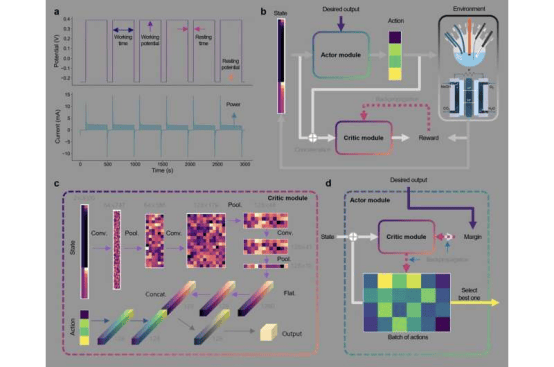
Direct methanol fuel cells, as a highly promising energy solution, can convert the chemical energy in methanol into electrical energy and have the potential to power portable power systems for large electronic devices and vehicles. However, their performance degrades significantly over time due to the gradual decline in efficiency of the materials (electrocatalyst surfaces) that catalyze the cell reactions. Previously, the method of adjusting fuel cell voltage to clean the surface and prevent the accumulation of toxic substances was impractical for real-world applications because manual regulation had to account for numerous physical and chemical processes.
The new computational tool, Alpha-Fuel-Cell, can monitor the state of the catalyst and adjust the applied voltage accordingly. The study found that, compared with traditional manual voltage operation strategies, it can increase the average power output of direct methanol fuel cells by 153%.
The research team aimed to evaluate the potential of artificial intelligence models in improving the performance of methanol fuel cells, demonstrating the effectiveness of machine learning techniques in optimizing the voltage required to clean electrocatalyst surfaces in real systems. Alpha-Fuel-Cell consists of an actor and a critic. The actor analyzes the past operation of the fuel cell to control the system, while the critic evaluates the value of actions based on the fuel cell’s state. It adopts an "actor-critic" architecture and learns new knowledge through trial and error. Its evaluation system includes a state branch that analyzes the fuel cell's condition (using convolutional neural networks) and an action branch that identifies actions (relying on standard feedforward neural networks).
This "actor-critic" neural architecture does not require large amounts of training data. The researchers used a dataset of approximately 1,000 voltage-time trajectories collected in a real environment over just two weeks and achieved excellent results. The controller is a real-time, goal-adaptive architecture that learns directly from experimental data without the need for a simulator. It is the first demonstration of combining artificial intelligence with energy devices, maintaining maximum fuel cell power through automatic catalyst self-healing and identifying the optimal rest periods for battery recovery.
Currently, the new method designed by the research team will be further refined and tested in broader experiments and real-world scenarios. In the future, it is expected to improve the performance and extend the service life of direct methanol fuel cells without requiring expensive equipment. The researchers also plan to scale the method from individual laboratory cells to larger real-world stacks, incorporate safety and lifetime constraints, and test its generalization across other batteries and electrochemical systems.