
Japanese scientists have developed a new method that not only improves the performance of sodium-ion batteries but also extends their service life. Sodium is the sixth most abundant element on Earth and is more readily available than lithium. Sodium-ion batteries are regarded as a cost-effective and sustainable alternative to lithium-ion batteries, but they also face challenges in certain situations.
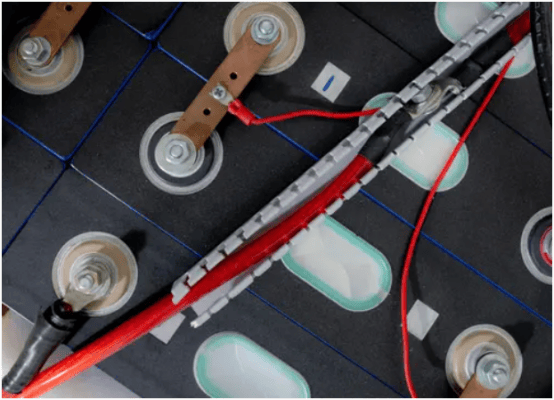
Researchers have recently explored the critical role of cathode material design in battery lifespan and stability. Layered sodium manganese oxide (NaMnO₂) has attracted increasing attention as a cathode material for sodium-ion batteries.
Professor Shinichi Komaba of Tokyo University of Science stated: "Our research results confirm that manganese-based oxides are a promising and sustainable solution for developing high-durability sodium-ion batteries. Due to the relatively low cost of manganese and sodium, this research will bring more affordable energy storage solutions for various applications such as smartphones and electric vehicles, ultimately leading to a more sustainable future."
The researchers revealed that NaMnO₂ has two crystal forms: α-NaMnO₂ and β-NaMnO₂. The α phase has a monoclinic layered structure, with planar MnO₂ layers composed of edge-sharing distorted MnO₆ octahedra alternately stacked, and Na ions located between them. β-NaMnO₂ has corrugated or zigzag edge-sharing distorted MnO₆ octahedral layers, with Na ions also located between them. According to the press release, the synthesis of β-NaMnO₂ usually requires higher temperatures, often resulting in sodium-deficient phases. Attempts to prevent sodium-deficient phases produce non-equilibrium β phases with multiple defects, the most prominent of which are stacking faults (SF) formed by the sliding of crystal bc planes, producing stacking fault sequences similar to the α phase.
Electrodes made from β-NaMnO₂ containing SF suffer severe capacity degradation during charge/discharge cycles, limiting practical applications, and SF complicates the understanding of the solid-state chemistry of the material.
Professor Shinichi Komaba said: "In previous studies, we found that among metal dopants, Cu is the only dopant that can successfully stabilize β-NaMnO₂. In this study, we systematically explored how Cu doping suppresses SF and improves the electrochemical performance of β-NaMnO₂ electrodes in sodium-ion batteries."
The study, published in the journal Advanced Materials, shows that NMCO-12 exhibits no capacity fade over 150 cycles, indicating that the SF-free β phase has high reversibility and can withstand anisotropic platelet sliding and drastic lattice volume changes during sodium ion insertion/extraction. These findings highlight the significant impact of manganese-based oxides on sodium-ion batteries.
In addition, the study also shows that stabilizing SF through copper doping can address the supply chain vulnerability issues commonly faced by metals such as lithium, with potential implications for grid energy storage, electric vehicles, and consumer electronics.