
In a world where automation is advancing rapidly, collaboration between robots is no longer the stuff of science fiction. Imagine dozens of robots safely transporting goods in a warehouse without collisions; robots delivering dishes to the correct tables in a restaurant; or a team of robots in a factory dynamically adjusting their tasks according to demand.
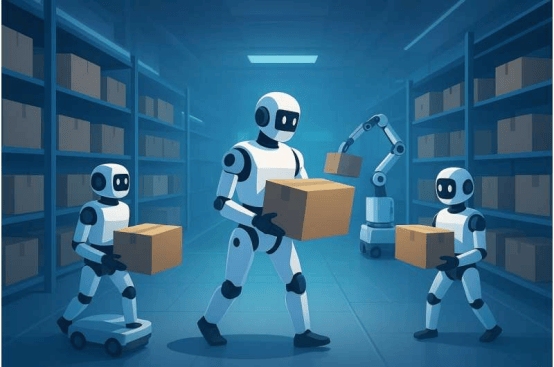
This future has become possible thanks to an open-source framework based on ROS2, which enables multiple robots to work together in an intelligent, flexible, and safe manner. The achievement was published in the journal IEEE Access.
Moving from theory to practice, studying how robots learn to collaborate in navigation is crucial. The key to robot collaboration lies in their communication capabilities and real-time decision-making abilities. The system integrates three important features:
Autonomous Navigation: Each robot uses algorithms similar to GPS systems to calculate the optimal route, but these algorithms adjust according to the dynamic environment. With tools such as Gazebo, robots can train in a virtual world before operating in the real world. If they encounter unexpected obstacles, such as a fallen box, they immediately recalculate their path.
Adaptive Behavior: The system uses "behavior trees" — a dynamic instruction manual. For example, if a robot gets stuck, it will first try to turn, then reverse. If the problem persists, it will request help from the central system. This approach not only prevents collisions but also allows the system to scale — from two robots in a laboratory to twenty robots in a factory.
Computer Vision and Task Allocation: The eyes and brain of the collaborative system ensure that robots know where they are and what they need to do. The system combines two technologies: ArUco markers (similar to QR codes for robots — small printed symbols used as reference points in the environment) and distributed cameras to detect these markers and calculate the precise position of each robot, with an error of no more than 3 centimeters.
The robots seem to carry an ever-updating internal map. Another technology is intelligent task allocation: the system prioritizes the nearest available robot, much like a delivery person choosing the shortest route. If one robot fails, another automatically takes over, ensuring the task never stops.
To validate the system, the researchers simulated complex scenarios. They used an industrial warehouse where robots transported packages between stations marked with ArUco identifiers while avoiding congestion. The team also tested a restaurant scenario where robots delivered dishes to specific tables and coordinated with each other to avoid crossing in narrow corridors. Finally, they tested heterogeneous teams (from small robots to robotic arms) collaborating on experiments in the laboratory.
The final results are convincing: the robot positioning accuracy reached an average of 2.5 centimeters. The system demonstrated strong robustness: even if one robot failed, another could take over its task within seconds.
Finally, scalability — a key issue in robotics — has been addressed, as the system works equally well with 5 or 15 robots and can adjust according to environmental needs. This framework is not only for robotics experts.
It is based on the widely used ROS2 platform, is open-source, and can be customized by any company. Hospitals can program robots to deliver medication, logistics centers can optimize freight transportation, and museums can even offer autonomous guided tours. In addition, it can reduce reliance on human operators for repetitive tasks, freeing personnel to focus on more strategic roles.