
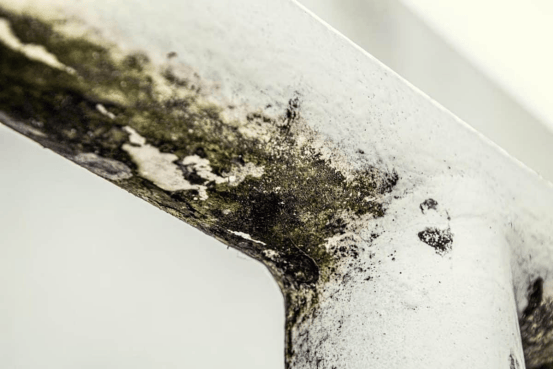
According to World Health Organization statistics, 10% to 50% of residential buildings worldwide are affected by mold. High-humidity environments (such as bathrooms, kitchens, and poorly ventilated areas) are the most common causes of mold growth. Mold not only affects aesthetics but also poses health risks, triggering respiratory diseases such as allergies and asthma. Modern decorative materials contain organic substances, and ordinary dust may also contain organic matter that supports fungal growth, making them prone to mold infestation.
Phosphogypsum is a waste product from phosphoric acid production. Russia accumulates about 14 million tons of it annually, with a total stockpile exceeding 140 million tons, yet only 15% is recycled. Previously, its use was limited due to poor moisture resistance, frost resistance, and susceptibility to biological corrosion. Although attempts have been made to use it in agriculture, road construction, and building materials production, the results were unsatisfactory.
Scientists from Perm Polytechnic University have found a new method for utilizing phosphogypsum in building materials through comprehensive research. They introduced organic-mineral additives to improve its moisture resistance and resistance to biological damage. Using X-ray analysis, the mineral composition of phosphogypsum was determined, with gypsum accounting for 94.94%. It has poor resistance to biological erosion and is easily corroded. To enhance durability, the scientists prepared experimental samples using organic-mineral modifying additives containing the multifunctional foaming agent IA 1215, calcium carbonate, and alkali metals.
The samples were treated with mold spores and placed in environments conducive to microbial growth, such as agar culture media and moist soil at 30°C. After 28 days, inspection revealed that samples without additives were severely affected by mold, scoring 5 on the assessment scale (0–5). In contrast, samples with the modifying additives showed almost no damage, with only slight mycelial growth observed under the microscope, corresponding to a score of 0–1. Additionally, phosphogypsum is weakly alkaline (pH 8.0), which is unfavorable for microbial growth, as most molds prefer neutral or acidic environments with a pH of 5–7.
The test results indicate that the modified samples maintain structural integrity at humidity levels as high as 85%, while traditional gypsum begins to deteriorate at 60–65% humidity. Moreover, phosphogypsum, as an industrial by-product, is affordably priced.
This improved composition exhibits strong resistance to biological damage and is suitable for producing building blocks, panels, or as fillers in finishing and plastering compounds. It is particularly ideal for interior walls and partitions in high-humidity rooms, with a service life more than twice that of existing similar materials.
This technology enables the effective utilization of industrial waste, reduces stockpiles, and produces building products with better performance and longer service life. The research results have been published in scientific articles.