
Filling abandoned oil and gas wells with bio-oil made from plant residues such as corn stalks and forest debris can sequester carbon deep underground, helping to remove carbon dioxide from the atmosphere. A research team led by Mark Mba Wright, Professor of Mechanical Engineering at Iowa State University, is focusing on this emerging approach. The research has dual appeal: it can sequester carbon from underutilized waste for the long term while also reducing emissions and safety risks from hundreds of thousands of abandoned oil wells in the United States.
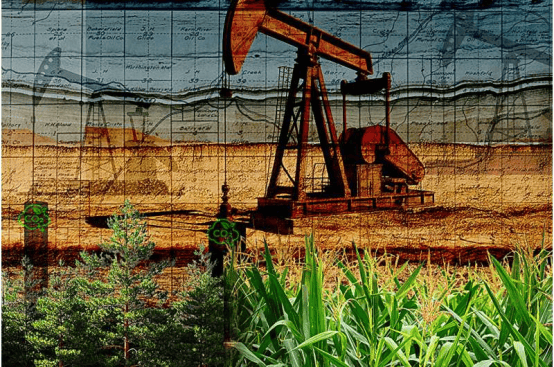
Mba Wright stated that waste is underutilized and abandoned oil wells need to be plugged. Bio-oil sequestration is a rich resource that meets urgent needs. According to his team's research, a network of 200 mobile bio-oil production facilities could enable economically viable scaling of the technology, which already has limited commercial applications. The study, published in the journal Energy Conversion and Management, estimates that the proposed system could sequester carbon dioxide at a cost of approximately $152 per ton, which is competitive with other carbon dioxide removal methods and requires less upfront investment.
The core of the system is fast pyrolysis, which converts dried biomass particles into liquid bio-oil in an oxygen-free environment at high temperatures (over 1,000°F) for a few seconds. The carbon in the organic matter originates from carbon dioxide absorbed from the air through photosynthesis while the plants were alive. The solid byproduct, biochar, can be sold to farmers as a soil amendment, and the gaseous byproducts are captured and reused as fuel to generate the high heat required for pyrolysis. The primary goal of fast pyrolysis is to produce bio-oil.
Injecting bio-oil into empty fossil fuel wells maximizes carbon capture potential by utilizing existing underground wellbores, which would otherwise cost about $1 million to plug. Filling an average crude oil well with a width of about 1.6 feet and a depth of nearly 2.6 miles requires more than 216,000 gallons of liquid. The 2021 Bipartisan Infrastructure Law allocated $4.7 billion to plug approximately 120,000 abandoned wells, but the United States has between 300,000 and 800,000 unrecorded abandoned wells.
Under the proposed system, each mobile fast pyrolysis unit can process approximately 10 tons of feedstock per day. In the Midwest, the main biomass source is corn stover, while in the West, it is woody debris cleared from forests to reduce wildfire risk. The researchers also studied switchgrass and oriented strand board as feedstocks. The bio-oil is stored at centralized terminals for transportation to well sites.
The study estimates that the cost to build the unit is approximately $1.3 million, and the bio-oil must be sold for at least $175 per ton. The cost of carbon removal varies by feedstock. For woody materials, the carbon removal cost is about $100 per ton. When accounting for carbon in biochar and learning rates, the abatement cost is even lower.
Peter Reinhart, CEO and co-founder of Charm Industrial, stated that companies are seeking carbon removal credits to fulfill their emission reduction commitments, and bio-oil sequestration is one of the high-quality and cost-effective methods. Charm has contacted Iowa State University to seek an independent detailed assessment of the system's potential to verify its carbon sequestration volume and economic benefits.
Mba Wright noted that the system has significant advantages compared to mainstream "direct air capture" technology. Direct air capture systems have similar per-ton abatement costs but much higher construction costs and no additional benefits. Reinhart said that the techno-economic analysis by Mba Wright and his colleagues will help companies make reliable investments in net-zero portfolios and open new revenue streams for rural areas.