
On April 21, 2026, CATL hosted the "Polar Domain Rendezvous" Super Tech Day in Beijing, officially unveiling six major innovations, including five core battery products: the third-generation Shenxing Extreme Superfast Charging Battery, the third-generation Qilin Battery, the Qilin Condensed Matter Battery, the second-generation Xiaoyao Super Hybrid Battery, and the Sodium New Battery. Concurrently, CATL announced its Ultra-Swappable Integrated All-Scenario Replenishment Network Plan. Through a multi-chemistry synergistic evolutionary layout, the company aims to comprehensively cover all-scenario travel needs, including high-end long-range, extreme fast charging, full-temperature adaptability, and efficient hybrid systems, driving the new energy sector from "single-point breakthroughs" towards "full-scenario coverage."
At the conference, Wu Kai, an academician of the Chinese Academy of Engineering and Chief Scientist of CATL, systematically elaborated on the advantages, disadvantages, and development directions of different material systems. He pointed out that lithium iron phosphate (LFP) is approaching its theoretical energy density limit, making it suitable for an ultimate balancing strategy centered on extreme fast charging. Ternary materials, leveraging their high energy density advantage, remain the core competitive frontier globally. Sodium-ion batteries show vast potential in high-temperature, extreme cold, and energy storage applications. "Regardless of consumer differentiation needs, energy security, or social development, the lithium battery industry must adhere to the synergistic development of multiple chemical systems," he stated.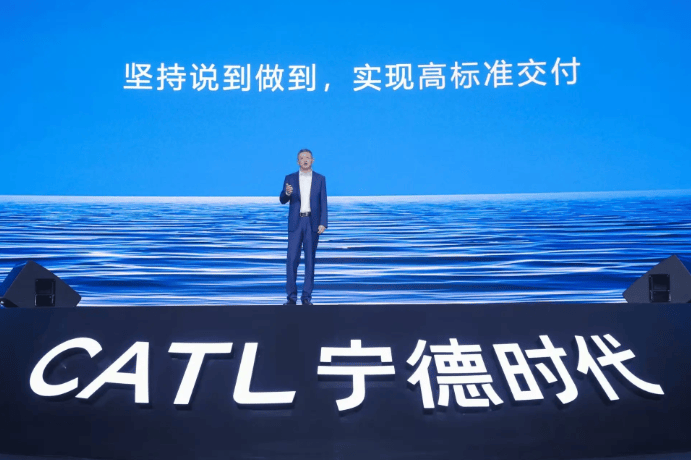
Full Matrix Battery Products Redefine Industry Benchmarks
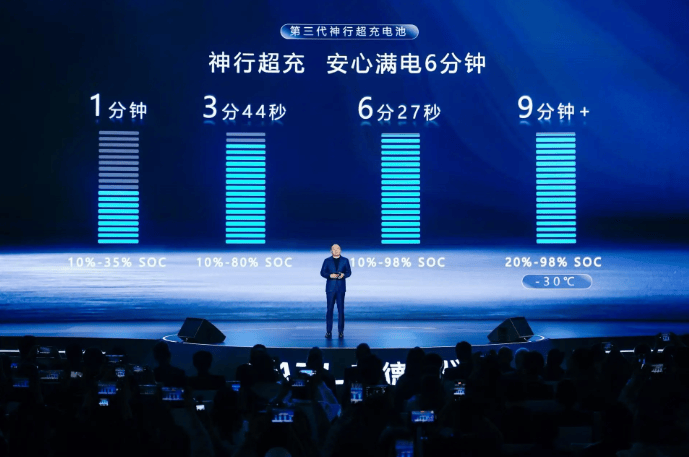
The third-generation Shenxing Extreme Superfast Charging Battery focuses on the core pain point of balancing "extreme fast charging with longevity." By reducing heat generation, enhancing heat dissipation, and improving precision control, it overcomes the industry-wide challenge of lifespan degradation caused by temperature rise. This battery achieves the world's strongest superfast charging capability, equivalent to 10C with a peak of 15C. It can charge from 10% to 35% SOC in just 1 minute, 10% to 80% SOC in just 3 minutes and 44 seconds, and 10% to 98% SOC in just 6 minutes and 27 seconds. In extreme cold conditions of -30°C, charging from 20% to 98% SOC takes approximately 9 minutes. Combined with the battery's self-heating technology and the ultra-swappable integrated replenishment network, it achieves low-temperature superfast charging without reliance on specific charging piles. Tests show that after 1000 complete cycles, the capacity retention rate remains over 90%, balancing extreme performance with long-term durability. The launch of this new battery immediately invited comparisons with BYD, the second-largest battery manufacturer. BYD's flash charging technology achieves 10% to 70% SOC in 5 minutes, and 10% to 97% SOC in 9 minutes. At -30°C, it manages 20% to 97% SOC within 12 minutes. This means at room temperature, CATL's battery is over 2 minutes faster than BYD's, and at -30°C, it's roughly 3 minutes faster.
The third-generation Qilin Battery sets a high-end benchmark with breakthroughs in both lightweight design and extended range. With a cell energy density of 280Wh/kg, it effortlessly achieves a 1000 km range and comes standard with 10C superfast charging. The battery pack weighs only 625kg, representing a weight reduction of 255kg and a space saving of 112L compared to a rival 1000-km-range LFP model. This significantly optimizes overall vehicle performance: energy consumption per 100 km is reduced by over 6%, based on an annual driving distance of 20,000 km and a fleet of one million vehicles, annual electricity savings reach 156 million kWh, reducing carbon emissions by 78,500 tons; the 0-100 km/h acceleration time is shortened by approximately 0.6 seconds; moose test entry speed is increased by 8%; extreme hazard avoidance capability is enhanced by 15% to 25%; and the 100-0 km/h braking distance is reduced by approximately 1.44 meters, balancing handling and safety.
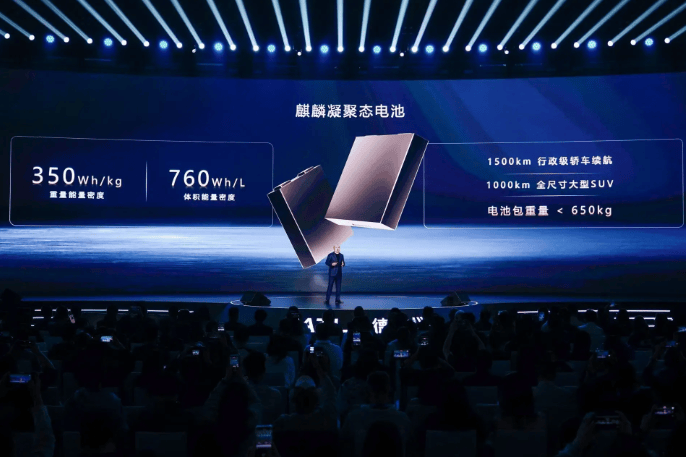
The Qilin Condensed Matter Battery achieves a dual leap in range and safety by upgrading the traditional liquid electrolyte to a condensed state electrolyte. This fundamentally ensures "no leakage, no combustion," completely eliminating safety risks associated with electrolyte leakage. Its gravimetric energy density reaches 350Wh/kg, and its volumetric energy density is 760Wh/L. The battery pack weighs less than 650kg, enabling a range of 1500 km for executive sedans and 1000 km for full-size SUVs, providing a new power option for high-end models.
The second-generation Xiaoyao Super Hybrid Battery opens a new competitive front in the hybrid segment. It offers an all-electric range of up to 600 km and comes standard with 10C superfast charging across the lineup. It pioneers a "Super Hybrid System" technology, covering all-scenario hybrid needs via three routes: LFP, Super Hybrid, and Ternary. The LFP version provides a 500 km electric range, suitable for "one charge a week" for daily commutes. The Super Hybrid version, featuring an olivine crystal structure core, achieves an energy density of 230Wh/kg, increasing range by over 15% compared to a single LFP battery. The Ternary version breaks through a 600 km all-electric range, with a combined range of 2000 km. In terms of power, it delivers a full-charge instantaneous power of 1.5 megawatts and stably outputs 1.2 megawatts even at a 20% SOC depleted state, completely solving the "power degradation under low charge" pain point. Even with a state of charge as low as 10%, it can handle extreme scenarios like desert off-roading. For safety, the bulletproof-grade underbody coating withstands impacts up to 1500 Joules (10 times the national standard), and its waterproof sealing capability endures 200 hours of submersion in 2-meter deep water without degradation.
The Sodium New Battery pushes sodium-ion battery technology from breakthrough to mass production. CATL has overcome four major industry bottlenecks: extreme water control, hard carbon gas generation, aluminum foil adhesion challenges, and the scaling of self-generated anodes, solving over a hundred engineering issues. This battery is scheduled for mass production by the end of 2026. Leveraging its full-temperature adaptability, it demonstrates unique advantages in extreme cold, high-temperature scenarios, and energy storage applications, helping to reduce reliance on lithium resources and strengthen the foundation of energy security.
Ultra-Swappable Integrated Replenishment Network Builds an All-Scenario Replenishment Ecosystem
CATL clarified its view on the future replenishment landscape, which it sees as a "tripartite division of home charging, public charging, and battery swapping," with the ultra-swappable integrated model being the optimal form. The company announced that its passenger car "Chocolate" and heavy truck "Qiji" battery swap stations will be standard-equipped with Shenxing extreme superfast charging piles, enabling "swap or charge, superfast synergy."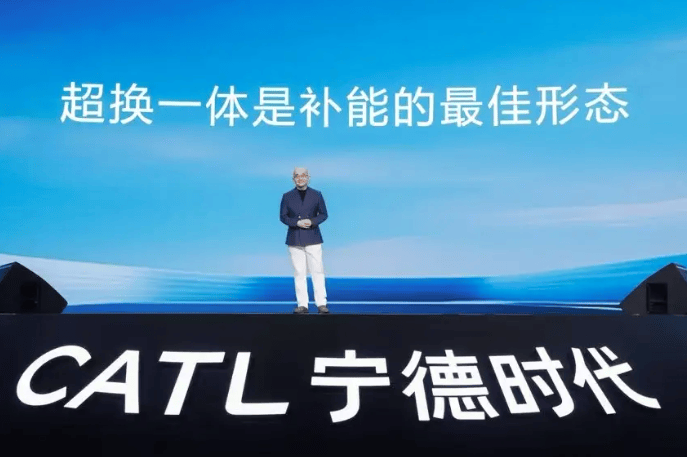
At the network level, the ultra-swappable integrated stations share transformer stations and charging modules, reducing the overall electrical loss rate by over 13 percentage points compared to market-available charging stations with integrated storage. In emergency scenarios, they can enable reverse discharging from the batteries, achieving equipment reusability rates of over 85%. The service capacity per parking space is three times that of a charging station with integrated storage, while the initial fixed investment cost is only one-fifth. For the battery products, the Chocolate Swap Block No.26 battery is based on an 800V high-voltage architecture, initially launching with a 75kWh version. Capacity will be expanded later, with the product fully adaptable to B to C-segment 800V vehicles, covering the complete A0 to C-segment vehicle matrix.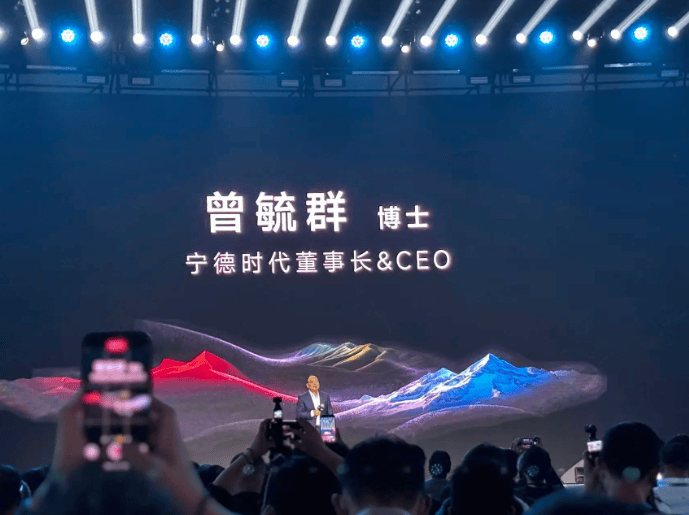
In terms of network construction, CATL plans to have built a total of 4,000 ultra-swappable integrated stations by the end of 2026, covering nearly 190 cities and the 12 vertical, 11 horizontal expressway network. Partnering with its first batch of partners, including Changan, Chery, GAC, SERES, SAIC-GM-Wuling, and BAIC, CATL will jointly build a super-swappable sharing network centered on technology sharing, interoperability, and joint investment. The goal is to establish an infrastructure of over 100,000 shared replenishment points by the end of 2028.
Dr. Robin Zeng, Chairman of CATL, emphasized that industry innovation must adhere to rigorous scientific research spirit. For Chinese technology to reach the world, the core lies not in speed and scale, but in the quality of innovation, verification capability, and brand credibility. With this Super Tech Day, CATL has completed a full-chain layout from battery products to replenishment infrastructure. Through multi-chemistry system synergistic evolution and the construction of an ultra-swappable integrated ecosystem, it provides optimal solutions for users' all-scenario travel needs, propelling the new energy industry into a new era of all-scenario energy freedom.