
A study conducted by Ecuadorian researchers and published in the journal Construction and Building Materials evaluated the performance of concrete using rice husk ash (RHA), crushed PET plastic, and waste tire rubber as partial replacements for fine aggregate. The research team systematically tested concrete mixtures with fine aggregate replaced by these materials at weight ratios of 2.5%, 5%, and 10%, comparing them to traditional concrete. The evaluation metrics included slump, density, air content, compressive strength, splitting tensile strength, and modulus of elasticity.
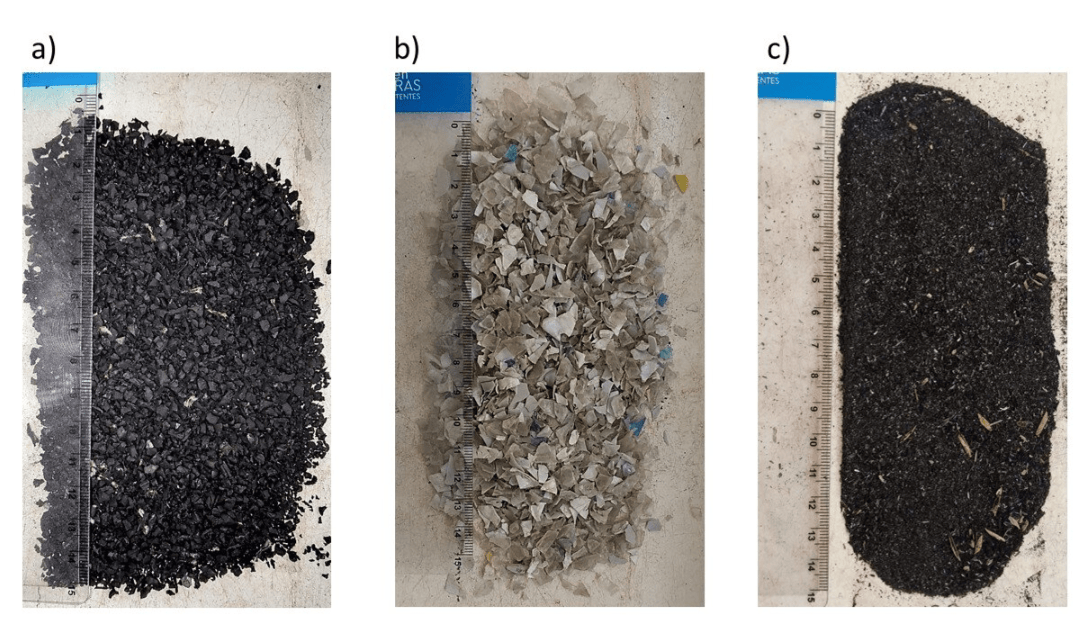
The results showed that rice husk ash exhibited the best overall performance. At a 2.5% replacement rate, the 28-day compressive strength decreased by only 1.6%. Scanning electron microscopy (SEM) analysis confirmed an improved bond in the interfacial transition zone (ITZ) between the aggregate and cement paste. The excellent performance of rice husk ash is attributed to its high silica content and pozzolanic activity, although its high water absorption requires adjustments to the water-cement ratio to maintain workability. The study considers a 5% replacement rate technically feasible.
At a 2.5% replacement rate, PET plastic caused a decrease in compressive strength of about 10% and tensile strength of about 18%. Due to its hydrophobicity and non-reactive nature, it does not form chemical bonds with the cement matrix, but it maintains good workability without requiring adjustments to the water-cement ratio. The mechanical losses observed at a 5% replacement rate are considered acceptable for non-structural or low-demand applications.
Waste tire rubber showed the most significant decline in mechanical properties. SEM analysis revealed a less continuous interface between the rubber and cement paste. However, performance losses were still manageable at replacement rates not exceeding 5%.
Statistical analysis (ANOVA and Tukey's test) confirmed that both the material type and replacement level have a significant impact on mechanical properties. At replacement rates below 5%, the decrease in compressive and tensile strength was typically under 25%. When the replacement rate reached 10%, the decline in mechanical properties was more pronounced, with the modulus of elasticity decreasing by up to 34%. From a technical perspective, a 5% replacement level represents a balance between sustainability and structural performance.
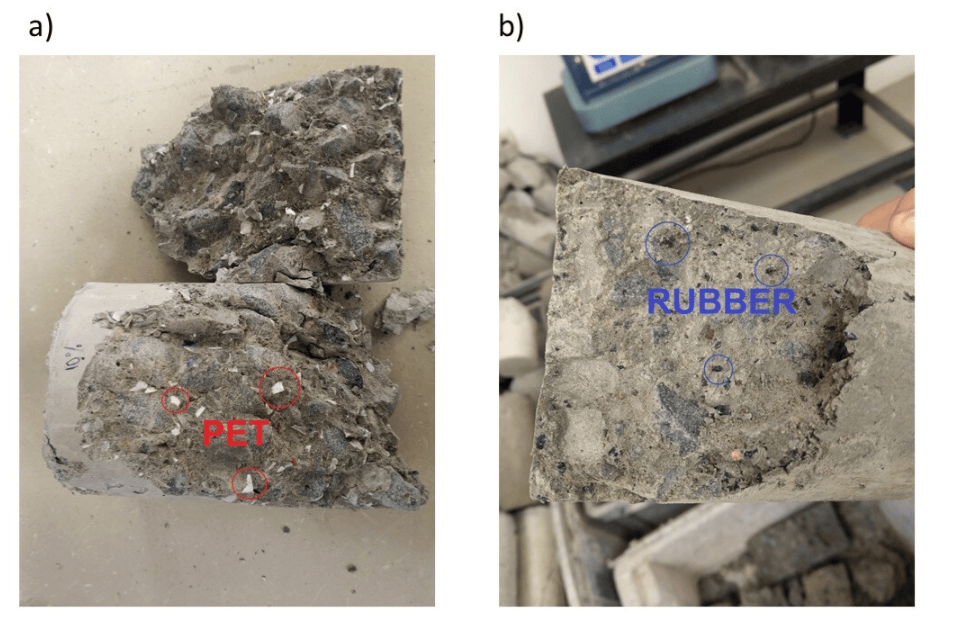
Thermogravimetric analysis (TGA) indicated that rice husk ash has more stable thermal properties, while PET and rubber exhibited greater mass loss at moderate replacement rates due to their polymer characteristics. The quality of the interfacial transition zone is a key factor determining performance.
The research background notes that globally, approximately 2.3 billion tons of municipal solid waste were generated in 2023, a figure expected to reach 3.8 billion tons by 2050. About 35% of PET is incinerated, producing an estimated 534 million tons of CO2 equivalent annually. The construction industry accounts for 40% to 50% of global CO2 emissions, consumes nearly 40% of global energy and 60% of raw materials, with an annual demand for sand as high as 50 billion tons.
More information: Authors: Valeria Franco-Quiñonez et al., Title: "Sustainable Concrete with Rice Husk Ash, PET, and Tire Rubber as Fine Aggregate Replacements," published in: Construction and Building Materials (2025).