
In the vast expanse of the universe, the origin and evolution of the moon have always been the ultimate question for human exploration. On April 22, 2026, an exciting piece of news came from Beijing: Approved by a review and vote of the Commission on New Minerals, Nomenclature and Classification of the International Mineralogical Association, the new lunar mineral discovered and reported by the team of Academician Hou Zengqian from the State Key Laboratory of Deep Earth and Mineral Exploration of the Chinese Academy of Geological Sciences — Magnesiochangesite-(Ce) — was officially certified. This is the eleventh new lunar mineral discovered by humanity, and China has tied with the United States as the country with the most lunar mineral discoveries.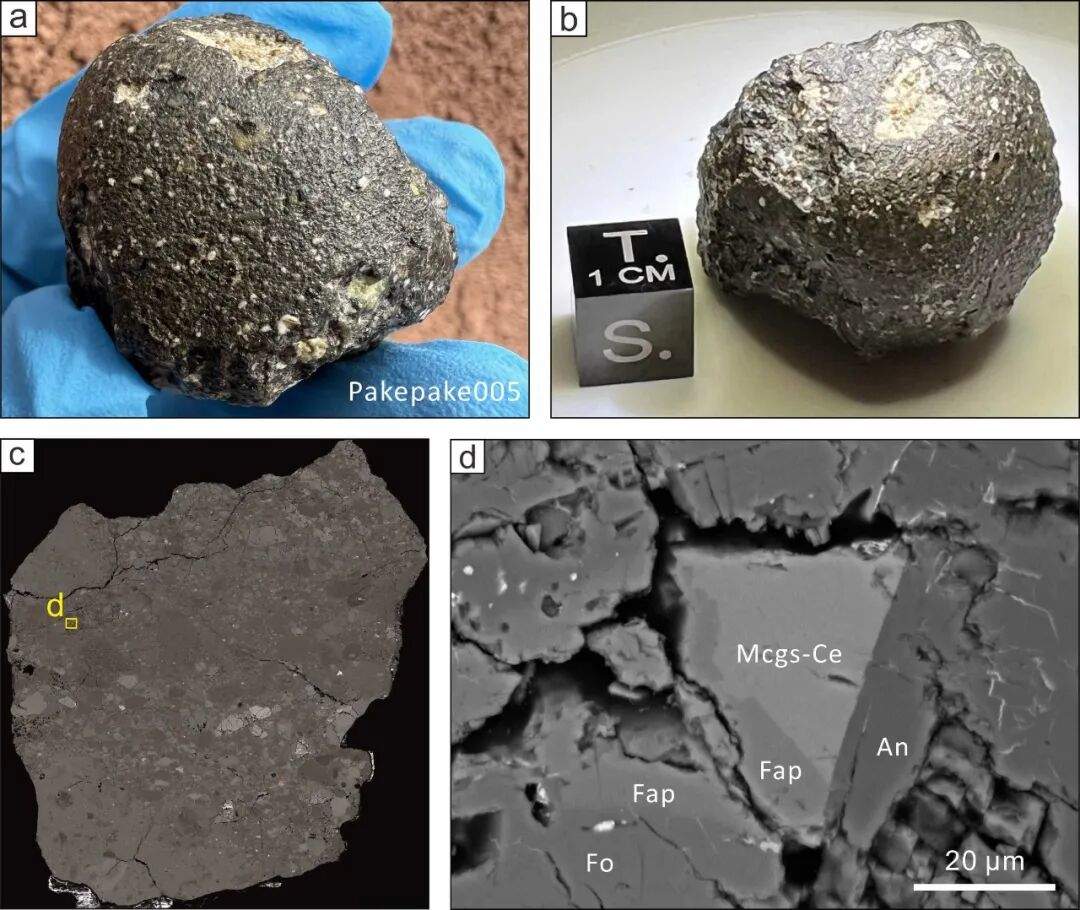
This discovery not only expands the boundary of human understanding of the material world but also provides unprecedented mineralogical evidence for understanding the early magmatic activities on the moon and even on Earth, as well as the differentiation mechanisms of rare earth elements.
From 44 Grams of Meteorite to a World of One Billionth
The story begins on January 22, 2024. On that day, a spherical meteorite weighing only 44 grams fell in the Taklamakan Desert in Xinjiang. This small, dark-crusted stone quickly caught the attention of scientists.
Approved by the Nomenclature Committee of the Meteoritical Society, the meteorite was named Pakepake005 and was officially certified as lunar fragmental breccia. This is the first lunar meteorite discovered and officially approved on Chinese territory, filling a gap in China's indigenous lunar meteorite discoveries.
Pakepake005 meteorite, despite weighing only 44 grams, records two key geological events on the moon: the impact event of the Imbrium Basin 3.92 billion years ago that reshaped the lunar surface, and the very low-Ti basaltic magmatic activity 3.49 billion years ago that proves the moon's interior remained hot.
Within this meteorite, the research team discovered an even more astonishing secret. Through a systematic study of the sample, they found a mineral completely unknown to the natural world. After a series of rigorous scientific tests, including physical property determination, spectral vibration studies, chemical composition analysis, and crystal structure refinement, the team ultimately confirmed that this is a new mineral of the merrillite group that is rich in magnesium and light rare earth elements.
Magnesiochangesite-(Ce) — a name embodying China's lunar exploration cultural heritage — was thus born.
A Milestone in Lunar Mineralogy
Filling a Gap in Lunar Mineralogy
Magnesiochangesite-(Ce) is a completely new rare-earth phosphate mineral belonging to the trigonal system, making it a new member of the gadolinite supergroup and merrillite group. Previously, humanity had discovered only ten minerals on the moon, and Magnesiochangesite-(Ce) is the third new lunar mineral discovered in lunar meteorites after teams from the United States and Germany.
Consequently, the total number of new lunar minerals discovered by China has reached four, tying for first globally with the United States. This achievement marks that China's lunar mineralogy studies have ascended to the forefront of the world.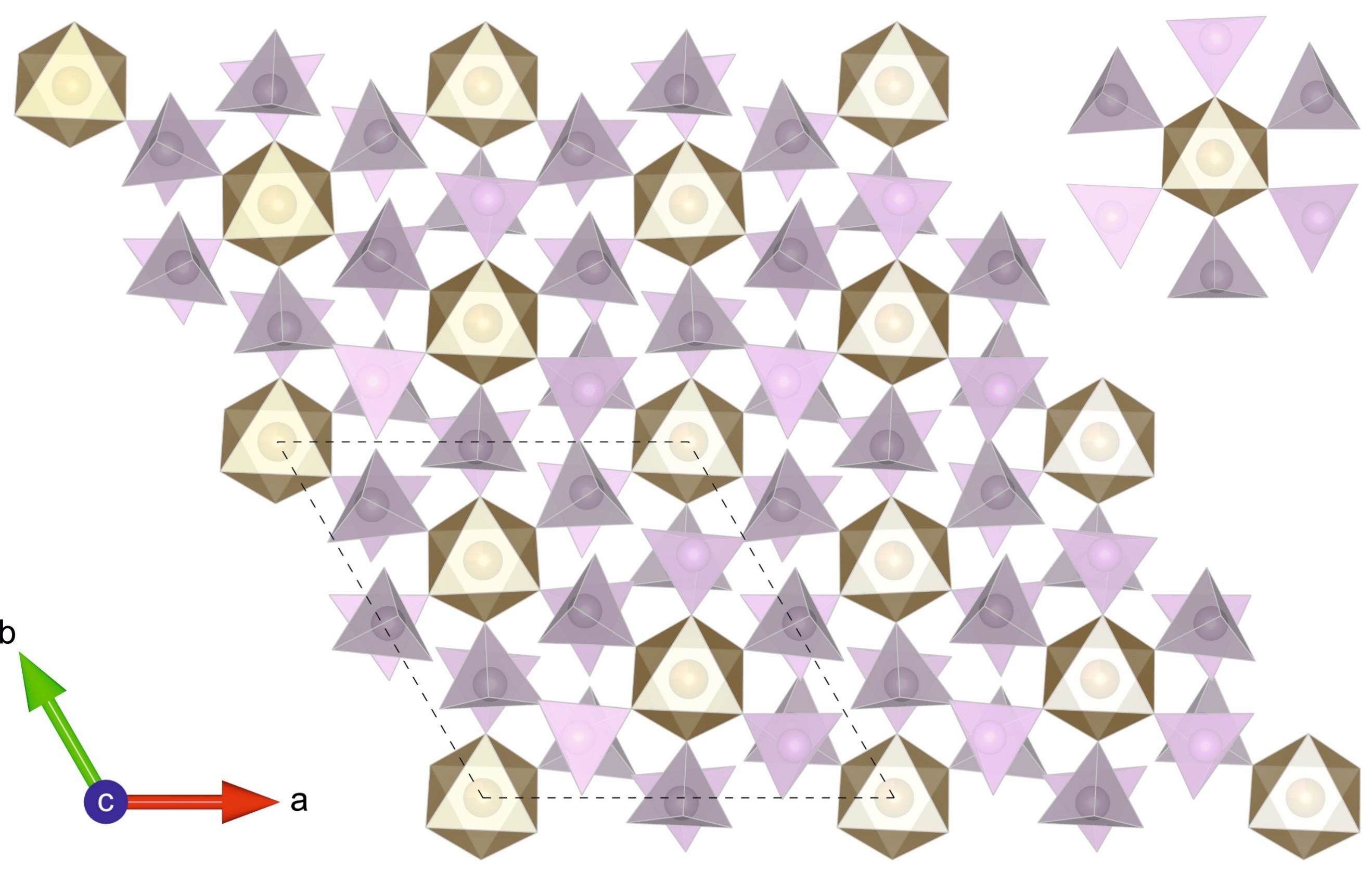
Precise Identification of Extremely Small Grains
The identification of Magnesiochangesite-(Ce) was extremely challenging. The mineral mainly occurs in subhedral granular to euhedral columnar forms around the edges of anorthite, forsterite, and fluorapatite, with grain sizes of about 3 to 25 microns, generally less than 10 microns — roughly equivalent to 1/25th of the diameter of a human hair.
At such minute scales, the research team employed domestic high-tech instruments like high-resolution Secondary Ion Mass Spectrometry (SIMS) to complete a series of precision measurements, including physical property determination, spectral vibration studies, chemical composition analysis, and crystal structure refinement. This process broke the previous monopoly held by foreign technology, showcasing China's capacity for independent innovation in cutting-edge deep space exploration technologies.
Revealing Complex Element Substitution Mechanisms
As the primary discoverer of Magnesiochangesite-(Ce), Dr. Wang Yanjuan from the Chinese Academy of Geological Sciences also extended her research scope to merrillite within lunar and Martian meteorites as well as Earth's ultra-deep diamond inclusions, conducting a systematic comparative study.
The study found that the chemical composition of merrillite in lunar samples is far more complex than previously understood, with iso- and heterovalent substitutions at multiple crystallographic positions, potentially generating different combinations of charge-balancing mechanisms. This discovery has profound implications for lunar mineralogical research.
Magnesiochangesite-(Ce) Exhibits Unique Physicochemical Characteristics:
Optical & Physical Properties: Colorless and transparent, with a vitreous luster and brittleness. It features a conchoidal fracture and exhibits significant fluorescence.
Chemical Composition: Rich in the rare earth element cerium (Ce) and magnesium (Mg). 'Cerium' and 'Magnesium' indicate the mineral's enrichment in these elements, while 'Changesite' reflects the heritage of China's lunar exploration program.
Crystal Structure: Belongs to the trigonal system, as a new member of the gadolinite supergroup (merrillite group). Its structural model provides key mineralogical evidence for studying the differentiation mechanisms of rare earth elements during lunar magma evolution.
Paragenesis: Mainly occurs in subhedral granular or columnar forms on the margins of anorthite, forsterite, and fluorapatite, revealing enrichment patterns of rare earth elements during the fractional crystallization of lunar magma.
Providing a New Perspective on Lunar Magma Evolution
The discovery of Magnesiochangesite-(Ce) offers crucial mineralogical evidence for studying the evolution of lunar magma. Its unique chemical composition and crystal structure reveal differentiation mechanisms of rare earth elements during early lunar magmatic activity, providing new clues for understanding the thermal evolutionary history of the moon's interior.
The study indicates that the two key lunar geological events recorded in the Pakepake005 meteorite — the Imbrium Basin impact 3.92 billion years ago and the very low-Ti basalt magmatism 3.49 billion years ago — are closely related to lunar magmatic activity. The presence of Magnesiochangesite-(Ce) further demonstrates that complex magmatic differentiation processes once occurred within the moon.
Expanding Understanding of REE Differentiation Mechanisms
Rare earth elements (REE) are critical strategic resources for high-tech industries. The enrichment of light rare earth elements in Magnesiochangesite-(Ce) provides a natural laboratory for studying differentiation mechanisms of REE during planetary magma evolution. This discovery is significant not only for lunar research but also offers insights for studying the metallogenesis of REE resources on Earth.
Inspiration for New Luminescent Materials
Magnesiochangesite-(Ce) shows a clear fluorescent effect, and its unique luminescent properties could serve as an important reference for developing new luminescent materials. These properties have potential applications in areas such as optoelectronic devices, fluorescent probes, and biological imaging.
Deepening Understanding of Merrillite Group Mineralogy
The research team conducted systematic comparisons of merrillite in lunar and Martian meteorites and Earth's ultra-deep diamond inclusions, discovering that the chemical composition of this mineral group is much more complex than previously recognized. This advance will deepen the theoretical framework of merrillite mineralogy and provide crucial correlative samples for understanding planetary material composition.
The discovery of Magnesiochangesite-(Ce) brings the number of identified new lunar minerals in China to four, tying for the global lead with the United States. This achievement not only underscores China's comprehensive strength in the field of deep space exploration but also contributes valuable Chinese wisdom to international lunar scientific research.
Currently, the holotype and cotype specimens of Magnesiochangesite-(Ce) are housed in the Geological Museum of China and the Institute of Geology, Chinese Academy of Geological Sciences, respectively, and are open for study to scientists worldwide.
Academician Hou Zengqian's team from the Chinese Academy of Geological Sciences indicated it will continue its intensive work in lunar and planetary mineralogy, aiming to carry forward China's deep space exploration to higher levels. As more lunar samples are studied, humanity's understanding of the origin and evolution of the moon will deepen.