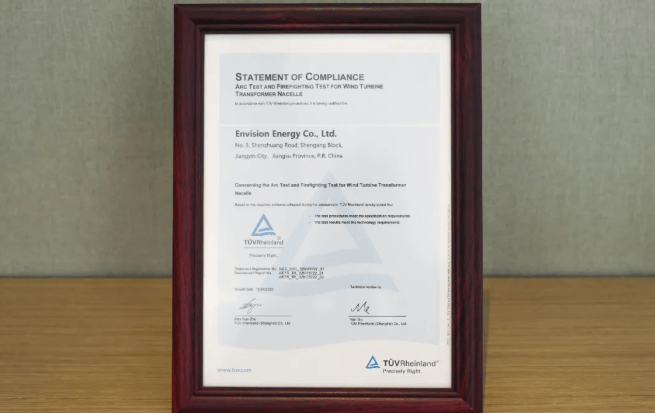
Recently, Envision Energy's ETOP model with an integrated transformer successfully passed the world's first 1:1 full-scale live transformer compartment internal arc and fire suppression test. Conducted by the Shandong Product Quality Inspection and Research Institute and witnessed by TÜV Rheinland, this test achieved groundbreaking results under extreme conditions of 12kV voltage and 25kA current, in accordance with international standards such as IEC 62271-202, IEEE C37.20.7, and the XF 499.1-2010 fire protection code. The test also utilized real fuel oil to simulate a fire ignition scenario, systematically verifying the response speed and fire-extinguishing effectiveness of the fire protection system.
This breakthrough not only fills the technical gap in comprehensive performance testing of side compartments for large wind power equipment in China but also marks Envision Energy's ETOP model as an industry leader in fire safety design—transitioning from "passive suppression" to "active prevention" and from "single-point protection" to "system-level isolation." At the certificate awarding ceremony for the TÜV Rheinland Declaration of Conformity for Onshore Wind Turbine Transformer Compartment Arc & Fire Suppression Testing held on April 16, Zhu Guo, General Manager of the Industrial Services & Energy and Environment Division for TÜV Rheinland Greater China, stated that as EU wind power market access standards continue to rise, future certification requirements for wind turbines will become even more stringent. Envision Energy's proactive initiative to conduct comprehensive internal arc tests and fire suppression tests on wind turbine nacelle transformer compartments, systematically evaluating safety and reliability with rigorous scientific testing methods, provides solid assurance for the safe and stable operation of large megawatt turbines. This test fully demonstrates Envision Energy's higher pursuit of product quality and design standards, which aligns perfectly with the globally increasing expectations for safety and quality.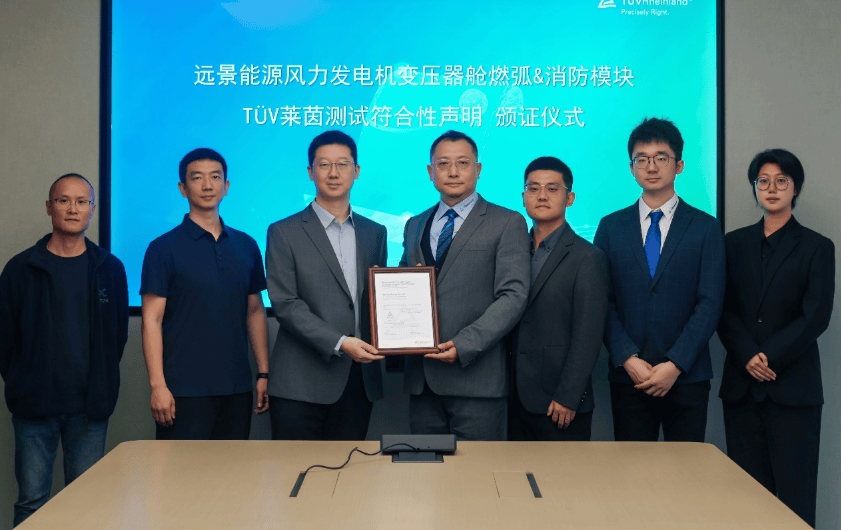
Envision's "Systematic Safety Approach"
— From Passive Fire Suppression to Active Prevention
With the trend towards larger wind turbines, the ETOP (transformer-on-top) solution—which relocates core electrical equipment like step-up transformers and inverters from the tower base to the nacelle—offers significant advantages such as reduced line losses, smaller land footprint, and environmental friendliness. This has made it a mainstream technical route in the wind power industry in recent years.
However, positioning high-voltage equipment within the nacelle introduces new safety challenges. Common ignition sources, such as loose electrical connections and short-circuit arcs, coexist with various lubricants used in mechanical drive trains and yaw systems, as well as combustible materials like composites widely used within the nacelle. According to global wind power fire statistics, between 15 to 25 fires occur per 10,000 turbines annually, with over 75% originating inside the nacelle, resulting in annual economic losses exceeding €1 billion. This high degree of integration in the ETOP design makes nacelle fire and safety prevention an even more severe challenge.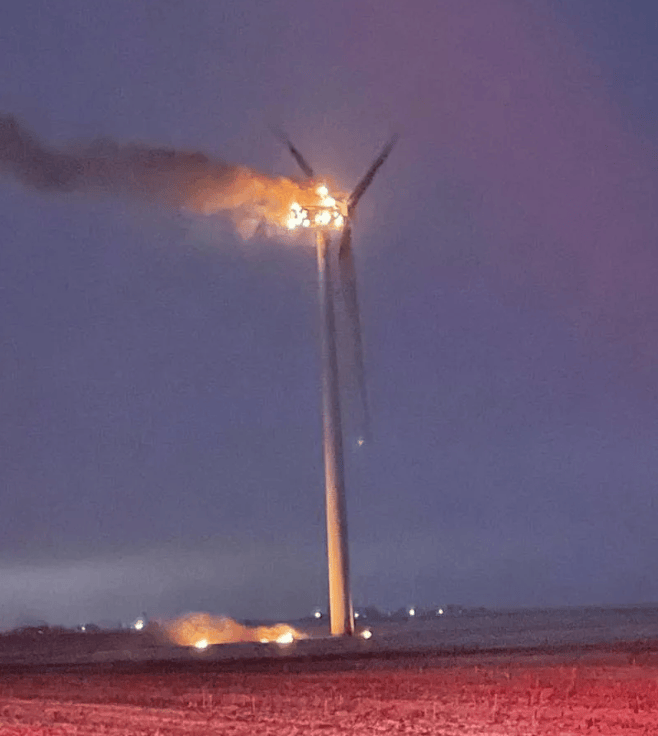
Facing the safety risks of the ETOP route, the industry has generally resorted to "passive responses" or on-paper designs — adding more fire suppression equipment or fire-resistant insulation materials in an attempt to control losses after a fire has broken out.
Envision, however, chose a different path from the very beginning. "Our ETOP solution is the industry's first case of proactively preventing incidents and ensuring safety and reliability through design and test validation before they happen," said Xi Yanyang, Domestic Onshore Wind Turbine Systems Lead Engineer at Envision Energy. "During the initial design phase, we systematically compared the safety of various layouts and ultimately selected the safest independent side-compartment solution."
The core philosophy of this solution is "prevention first, combining prevention and suppression," building multiple defense layers based on systems engineering principles:
From the source control perspective, Envision centralizes and lays out the core components required for transformer-on-top in an independent side compartment, physically isolating them from the main nacelle compartment—keeping the "fire source" away from the "fuel." Simultaneously, the transformer is in a reliable secondary enclosure and equipped with a differential protection system and an arc flash monitoring and protection system. This allows for sensitive detection of potential internal grounding issues within the transformer and enables rapid protection during the latent fault phase.
In terms of material selection, Envision has introduced a fireproof coating capable of withstanding a 1000°C flame temperature for over an hour, a first in the industry, significantly enhancing the fire resistance of the nacelle cover. Cables and interior materials are selected from flame-retardant or non-combustible ones. The lubrication and hydraulic systems incorporate leakage prevention and oil collection measures, and the oils selected meet high flashpoint and flame-retardant performance requirements.
In monitoring and early warning, smoke and temperature fire detection devices are installed for high-risk components within the nacelle, such as the generator, converter, gearbox, and hydraulic system. These devices interlock with the turbine's control system, automatically executing control measures, such as shutting down the turbine and cutting off non-essential power supplies, upon the appearance of fire signs or abnormal operating conditions.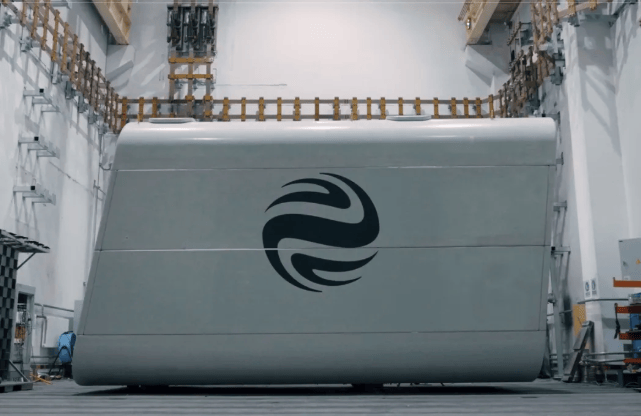
World's First Simultaneous Arc & Fire Suppression Test:
Reserving the Strictest Challenge for the Lab
In March 2026, Envision's ETOP model faced a "major exam"—the world's first simultaneous internal arc and fire suppression test on a nacelle side compartment conducted according to international standards.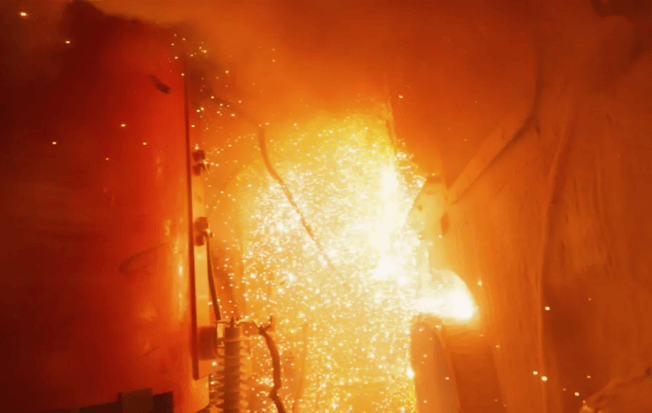
The rigor of the test was unprecedented: under 12kV voltage and 25kA current, the arc duration was set at twice the actual electrical control trip time to conduct a more stringent arc experiment; for the fire suppression performance test, a standard oil pan fire scenario was constructed, utilizing a thermocouple network to accurately monitor the suppression response time and the structural integrity of the nacelle cover against fire.
The test results validated the multi-layered protection capability of Envision's ETOP model: the side compartment maintained its structural integrity under the high temperature and pressure impact of the internal arc, without fragmentation or disintegration; the fire suppression system responded rapidly upon ignition, with the suppression time meeting the XF 499.1 standard requirements.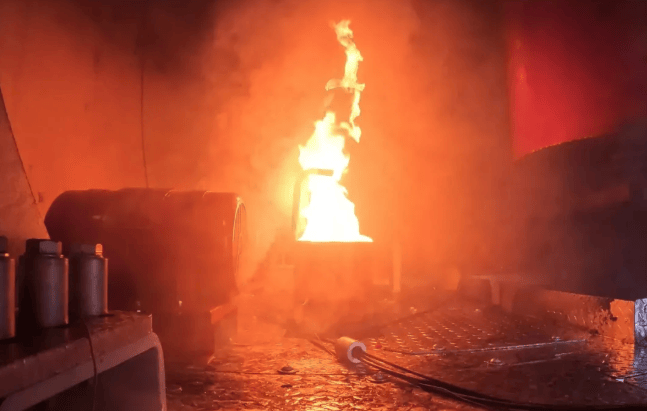
"This series of crucial and robust data obtained from the test not only provides a scientific basis for Envision Energy to optimize wind turbine nacelle design and enhance product safety protection performance but also lays a solid foundation for it to successfully pass the international authoritative certification of TÜV Rheinland and to expand into the global high-end market," said the relevant project manager from Shandong Product Quality Inspection and Research Institute.
Leading the Industry: Envision's Commitment to "High Reliability"
Why has Envision invested so heavily in ETOP fire safety?
The answer may trace back to Envision's long-standing foundational principle of "high reliability, high performance." From the cumulative delivery of over 12,000 units each of self-developed gearboxes and main bearings, to having over 700 in-service and self-manufactured large-sized sliding bearings operating without significant failures, Envision has always treated reliability as the lifeline of its products.
This philosophy is extended to the ETOP route. Envision looks beyond just the transformer's electrical performance and collectively syncs the entire system's workflow—ensuring synergistic precision between the generator and inverter to capture maximum energy, while using typical wind frequency distribution as input for the transformer's electromagnetic design. It selects the maximum annual energy production solution from thousands of options, subjecting all critical components to rigorous testing specifically tailored for wind turbine scenarios.
"Envision possesses extensive application experience with complete turbine systems. By combining this with research results on transformer manufacturing technology, we can derive the most suitable transformer design for Envision's turbine system," stated Xi Yanyang. "In addition to passing the routine and type tests required by standards, we also conduct multiple special tests designed specifically for wind turbine application scenarios to ensure that every ETOP unit we deliver can withstand the most stringent tests."
During the certificate ceremony, Yang Yawen, General Manager of Envision Energy's Wind Turbine Product Line, noted that the industry has developed rapidly recently with emerging technologies constantly appearing, leading to increasing quality incidents. Envision has always held quality as its bottom line, representing that extreme validation is the most stringent requirement for product reliability. "Only by passing ground tests convincingly can we guarantee future air operational safety. The success of this test bolsters our confidence in reaching for extremes. Going forward, Envision will also work together with authoritative bodies like TÜV Rheinland to co-create industry benchmarks and lead its development. Erecting multilayered defenses systematically with a proactive mindset to dissolve perils before they occur isn’t just grasping Envision's commitment to high dependability—this constitutes how Chinese wind power is setting a trend by shifting from expanding industrially to pioneering expertise and specification leadership."