
Since the introduction of Mendeleev's periodic table, the separation of lanthanides has remained one of the most challenging problems in chemistry and mining. The ionic radii of the 15 lanthanide elements differ by only ~0.01 Å, approximately one seven-millionth of a human hair. A research team from the Guangzhou Institute of Geochemistry, Chinese Academy of Sciences, published a groundbreaking achievement in *Nature*, realizing for the first time atomic-level precise separation of lanthanides with 100% selectivity. This technological breakthrough, described as "disruptive," offers a novel solution for high-purity rare earth manufacturing and nuclear waste treatment.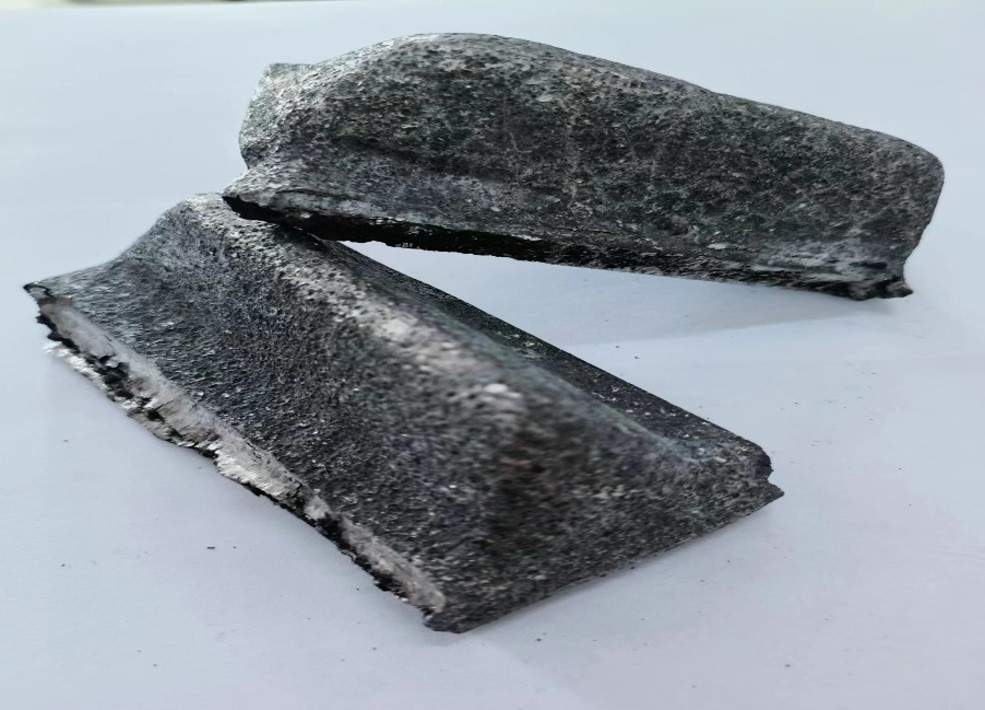
A Century of the "Separation Challenge"
Often referred to as "industrial monosodium glutamate," lanthanides are widely used in cutting-edge fields such as smartphones, permanent magnets for wind turbines, laser guidance, and medical imaging. Each of the 15 members possesses unique physical and chemical properties related to optics, electricity, magnetism, and catalysis, making them indispensable core materials for high-tech industries.
However, for over a century, the high-purity extraction of lanthanides has been hampered by the "lanthanide contraction"—the average difference in ionic radius between adjacent elements is merely about 0.01 Å. Their extremely similar chemical properties make precise separation exceedingly difficult.
Traditional solvent extraction technologies rely on multi-stage cascade processes, characterized by high energy consumption and significant wastewater discharge. Separating one ton of rare earth oxides typically consumes several tons of chemicals and generates large amounts of radioactive waste residue. The principle of solvent extraction involves dissolving lanthanides in an acidic solution, where the "dance" of extractant molecules allows selective transfer into an organic phase. Although this method has seen major improvements since its industrialization in the 1960s, it still operates on the level of "differences in chemical affinity" and cannot achieve true physical size-based screening, let alone atomic-scale precision.
With explosive growth in demand for critical metals from sectors like new energy and electronic information, the traditional "multi-stage cascade, stepwise purification" separation model can no longer suffice. The industry urgently needs a new technology capable of achieving precise separation of lanthanides at the molecular or even atomic scale.
Membrane Technology Breakthrough with 100% Selectivity
From "Chemical Extraction" to "Atomic Screening"
The novel separation pathway designed by the research team involves constructing high-precision nanochannel membrane materials, utilizing an ion-sieving mechanism to achieve atomic-level precise separation of highly similar lanthanides, attaining 100% selectivity and breaking away from the traditional separation paradigm relying on chemical affinity differences.
Initial progress has demonstrated feasibility in separation strategy: under the optimized extraction system, the permeation percentage of lanthanides has significantly increased, with faster permeation kinetics reaching up to 95% within 24 hours, indicating that channel-size-based screening can completely separate differently sized ions to opposite sides.
Synergistic Precise Recognition by Membrane Materials and Ligands
Subsequent research findings further enriched the screening pathway: mimicking the single-file ion adsorption mechanism of biological calcium channels, a channel structure capable of single-file adsorption of target ions was constructed. Transforming the adsorption material directly into a separation membrane allows both rapid permeation of target metal ions and precise exclusion of competing ions, fundamentally overcoming the bottleneck of poor compatibility between traditional membrane separation and heavy metal ions.
Simultaneously, by designing specific chelating ligands to coordinate with metal ions, elements can be precisely separated under mild conditions, providing a new molecular tool for the efficient enrichment of lanthanides. These two pathways together form a dual guarantee of "molecular recognition + nano-confined screening," ensuring that every ion is "precisely identified" at the moment it passes through the membrane.
Scalability for Nuclear Waste and Complex Separation Tasks
The new strategy also exhibits strong scalability for spent fuel reprocessing and rare earth separation. Simply coupling chemical oxidation with GOM (graphene oxide membrane) screening and solvent extraction enables efficient group separation of lanthanides and actinides under highly acidic conditions. In strong acidic solutions, actinide elements are oxidized into linear actinyl ions, while lanthanides remain spherical, creating significant differences in size and spatial configuration. These differences allow screening through the specific channel sizes of GOM. It can be anticipated that the separation strategy can be further modified and expanded to accomplish other separation tasks within the nuclear fuel cycle.
From High-Purity Materials to Nuclear Waste Management
Transforming High-Purity Rare Earth Manufacturing for Cost Reduction and Efficiency Improvement
Industries relying on lanthanide-based fluorescent materials, laser crystals, and high-purity rare earth targets have long been constrained by purity bottlenecks. Atomic-scale screening technology can elevate the recovery purity of specific lanthanide ions to unprecedented levels, laying the foundation for manufacturing next-generation high-precision advanced materials. Introducing a precise screening step into rare earth hydrometallurgical processes can significantly shorten traditional multi-stage extraction flowsheets, reduce acid-base consumption and radioactive waste residue discharge, achieving "green metallurgy" combined with "high-value utilization."
Tackling a "World-Class Challenge" in Nuclear Waste Treatment
In spent nuclear fuel reprocessing, the separation of actinides from lanthanides is a core challenge (both groups exhibit extremely similar chemical behavior). By utilizing oxidation to convert actinides like uranium, neptunium, and plutonium into linear ions—creating a configurational difference compared to the spherical lanthanide ions—and coupling this with precisely controlled channel-size separation membranes, it is expected that separation purity standards on the order of one part per million can be achieved. This technology could provide critical support for high-level liquid waste volume reduction and geological disposal, significantly mitigating the long-term environmental risks posed by nuclear waste.
Securing Critical Metals Strategic Safety and Enhancing Resource Efficiency
Atomic-scale screening technology can also be applied to the separation of systems with highly similar elements, such as synergistic separation among lanthanides or extraction of specialized isotopes, extending to the ultrapure production of critical metals like gallium/indium, zirconium/hafnium, and tantalum/niobium. By integrating adsorption materials with membrane separation, it holds the potential to restructure resource extraction processes—shifting from a "separate after full extraction" paradigm to a "screen and enrich simultaneously" approach—enhancing supply chain stability for critical metals and maximizing resource utilization.