
A research team at the German Helmholtz Centre for Environmental Research has developed a two-stage electrochemical purification process specifically designed for removing short-chain perfluoroalkyl and polyfluoroalkyl substances (PFAS), particularly perfluorobutanoic acid (PFBA), from water. The relevant research findings have been published in the Chemical Engineering Journal.
PFAS are a general term for a class of synthetic chemical substances, with approximately 10,000 types currently known, of which 4,000 to 5,000 are used in industrial production sectors, covering outdoor clothing, food packaging, cookware, and cosmetics. Due to the potential risks of long-chain PFAS to human metabolism, hormone balance, reproductive, and immune systems, they have been regulated under the Stockholm Convention, with their production and use banned or restricted. Consequently, short-chain PFAS such as PFBA are increasingly being used as substitutes and are detected more frequently in the environment.
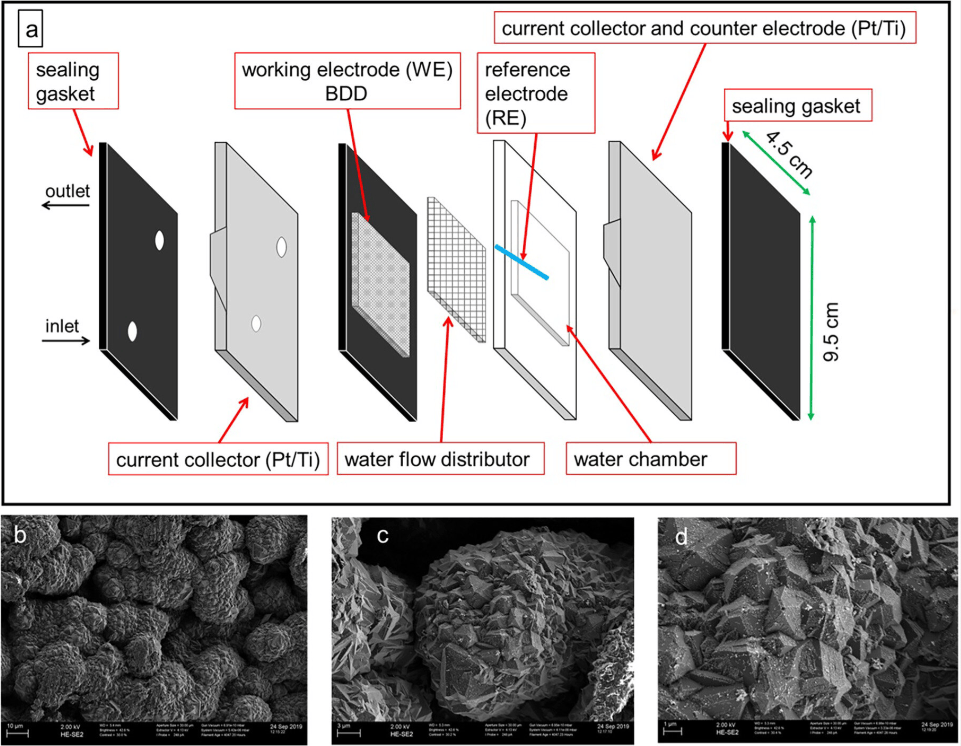
"This is why PFBA is highly soluble in water and has strong mobility. Therefore, it is difficult to remove PFBA from water using traditional water treatment methods such as activated carbon adsorption," said Anett Georgi, a chemist at the Helmholtz Centre for Environmental Research. To address this issue, the research team designed a two-stage water treatment process that first separates and concentrates PFBA through an electroadsorption step. Large volumes of water containing PFBA are passed through a flow cell, where electrodes made of textile-like activated carbon fiber felt carry a slight positive charge, allowing the negatively charged PFBA to accumulate on the activated carbon surface.
Navid Saeidi, an environmental engineer at the Helmholtz Centre for Environmental Research and first author of the paper, explained that by reversing the polarity of the voltage, PFBA can be released from the activated carbon surface, rinsed with a small amount of water, and collected as a concentrated solution. This method can increase the concentration of PFBA by up to 40 times. In the second stage, the concentrated PFBA is decomposed on boron-doped diamond electrodes through electrooxidation, where strong oxidation generated at the anode breaks down PFBA, with fluoride and carbon dioxide as the main byproducts.
This water treatment process enables all steps to be completed on-site, reducing transportation costs and energy requirements. By controlling PFBA adsorption through applied voltage, the activated carbon material can be repeatedly regenerated and reused multiple times, unlike other conventional techniques that require disposing of PFAS-contaminated activated carbon in waste incineration plants or high-energy regeneration processes. Katrin Mackenzie, a chemist at the Helmholtz Centre for Environmental Research, stated that as PFAS limits become increasingly stringent, there is a need for more efficient, reliable, environmentally friendly, and economical removal technologies. This water treatment process can serve as a supplement to traditional activated carbon adsorbers when dealing with complex PFAS contamination, specifically capturing short-chain PFAS. The research team has applied for a patent for this process, with potential application scenarios including municipal and industrial wastewater treatment, as well as locations such as airports facing PFAS issues due to groundwater contamination from firefighting foam.
Publication details: Authors: Navid Saeidi et al., Title: "A Two-Step Electrochemical Method for Efficient Degradation of Short-Chain PFAS in Water," Published in: *Chemical Engineering Journal* (2026). Journal Information: Chemical Engineering Journal