
Recently, high-content solid waste-based small precast components, jointly developed by Hubei Communications Investment Construction Group Co., Ltd. and Hubei Transportation Planning and Design Institute Co., Ltd., have successfully completed large-scale trial production for the Ezhou Airport Expressway Phase II project in Hubei Province, China. This trial production utilized an automated small precast component production line to manufacture over a hundred types of small components, including drain covers and hexagonal blocks, achieving a total solid waste content of more than 45%.
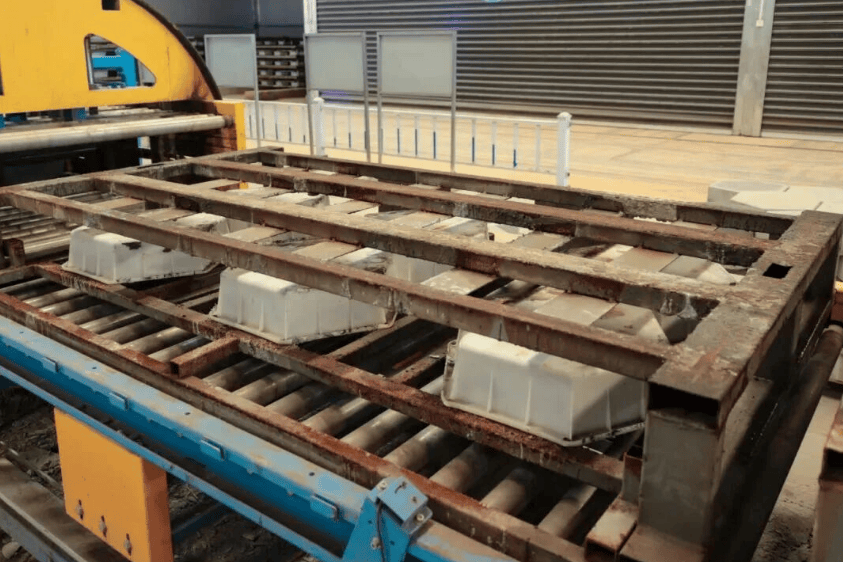
This technology originates from the key research and development project "Key Technologies for Green, Low-Carbon, and High-Value Comprehensive Road Utilization of Multi-Source Solid Waste in Expressway Expansion and Renovation" of the Hubei Provincial Department of Transportation. To address the industry pain points of high resource consumption and carbon emission intensity caused by traditional precast components relying on ordinary cement and natural sand and gravel, the R&D team, on one hand, developed a multi-source solid waste composite low-carbon cementitious material through processes such as collaborative activation of multi-source solid wastes, ultrafine grinding, and chemical excitation. Its hydration performance indicators meet the standards of 42.5-grade ordinary cement. On the other hand, multiple pretreatment steps, including desulfurization, modification, and calcination, are applied to phosphogypsum to produce environmentally friendly lightweight aggregates.
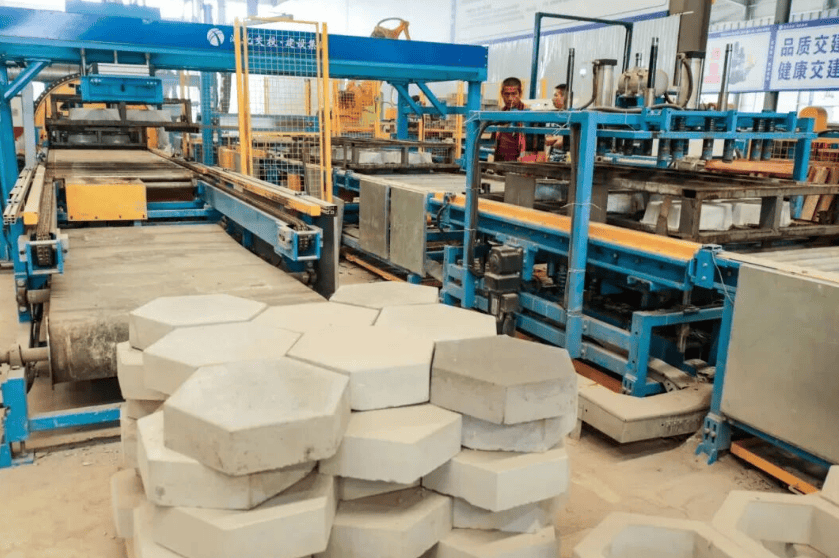
Experimental verification has shown that the solid waste-based low-carbon concrete fully meets the design requirements for C20 to C25 engineering grades, with each cubic meter of concrete capable of consuming approximately 1 ton of industrial solid waste, including more than 600 kg of phosphogypsum. Compared with traditional concrete components, the production cost of the new product is reduced by 8%, and the carbon emission intensity is decreased by more than 20%. The solid waste-based small precast components from this trial production will be first applied in the Ezhou Airport Expressway Phase II project and can subsequently be adapted for engineering scenarios such as highway drainage ditches, slope protection, and curb layout.