
Recently, in Guangdong Province, China, China Railway Guangzhou Engineering Bureau innovatively adopted a dual concrete mixing and pumping integrated vessel collaborative operation process during the construction of the main pier pile foundation of the Nanxin Expressway Xijiang Bridge, successfully achieving continuous pouring of deepwater large-diameter pile foundations. The No. 9 main pier of the bridge is located in the deepwater area of the main channel of the Xijiang River. The pile foundation has a diameter of 2.8 meters and an actual drilled depth of nearly 110 meters. Due to the heavy navigation traffic in the channel, neither channel closure nor traditional land transport methods could be implemented, imposing constraints on the construction conditions.
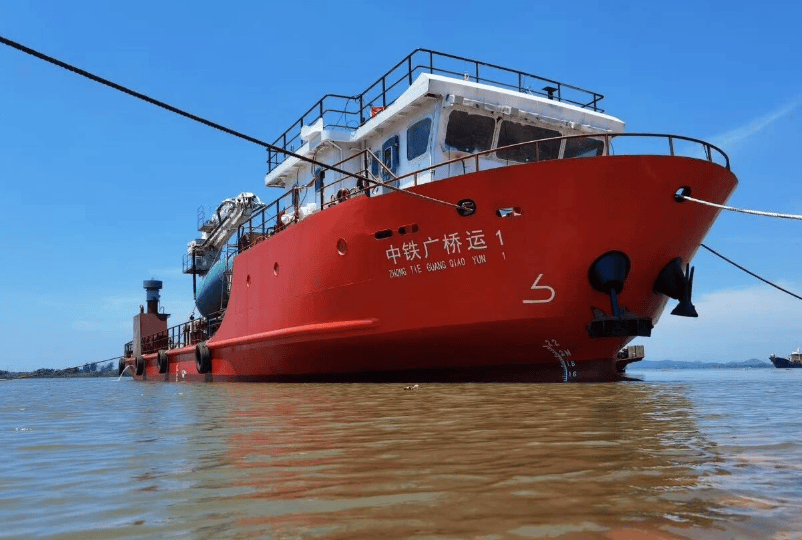
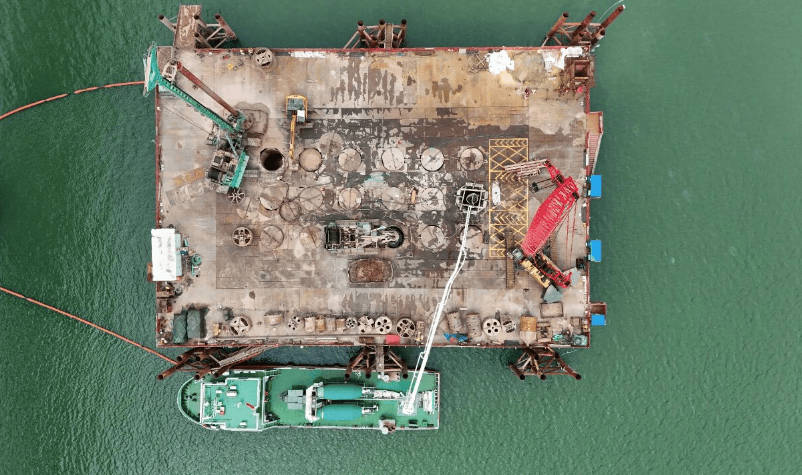
The project team pioneered a dual-vessel collaborative operation mode. Two concrete mixing and pumping integrated vessels berthed directly adjacent to the working platform, enabling an integrated "concrete transport and pumping" assembly line operation. They supplied materials alternately with seamless connection, maintaining "zero-interval" pouring for nearly 19 hours and 40 minutes, fundamentally resolving the challenge of concrete supply for waterborne independent piers. This mode replaces the traditional method of multiple loading/unloading and long-distance transfer from land to water, achieving "vessel to pile, direct vertical delivery" throughout the process, reducing the risk of high-altitude water operations for personnel and equipment turnaround hazards.
To tackle the difficulties of continuous pouring for deepwater ultra-long pile foundations, the project team conducted multiple rounds of technological research and mix optimization in advance, tailoring a proprietary concrete mix with long setting retardation, long slump retention, high stability, and high thixotropy. Through selection of raw materials, compounding of cementitious materials, and precise selection of admixtures, they comprehensively ensured the workability, fluidity, and resistance to segregation of the concrete. During construction, technical and laboratory personnel were present on site throughout, closely monitoring key indicators such as workability, slump, and slump flow, dynamically regulating the retarding effect, minimizing the impact of ultra-long pouring and temperature differences, and preventing hazards such as pipe blockage, segregation, and uneven initial setting at source, ensuring the compactness, integrity, and durability of concrete nearly 100 meters deep.
In terms of cost-effectiveness, the dual-vessel operation eliminates costs associated with land-based mixing plants, temporary wharves, and long-distance transport, shortens the construction period, and reduces material consumption and labor input. The project also optimized transport routes, promptly reported to maritime and channel authorities and other functional departments, strictly implemented safety management and control, and achieved "zero accidents" throughout the entire process.
This process innovation provides a replicable technical solution for the construction of independent piers in domestic inland river deepwater bridges. Once completed, the Nanxin Expressway Xijiang Bridge will alleviate traffic pressure on the Fokai Expressway, strengthen high-speed connectivity between Jiangmen, Foshan, and Guangzhou, and improve the transportation network in the western wing of the Guangdong-Hong Kong-Macao Greater Bay Area.