
A team led by Professor Kong Wei from the School of Engineering at Westlake University has successfully achieved high-quality integration of wafer-scale single-crystal molybdenum disulfide films on flexible substrates. The research team developed an oxide-based "dry transfer" strategy, advancing the transfer and integration technology for single-crystal two-dimensional semiconductors from the original "wet" approach to a "dry" method, providing a new pathway to overcome the long-standing technical bottleneck that has constrained the development of high-performance flexible electronics. The relevant research findings have been published in the journal Nature Electronics.
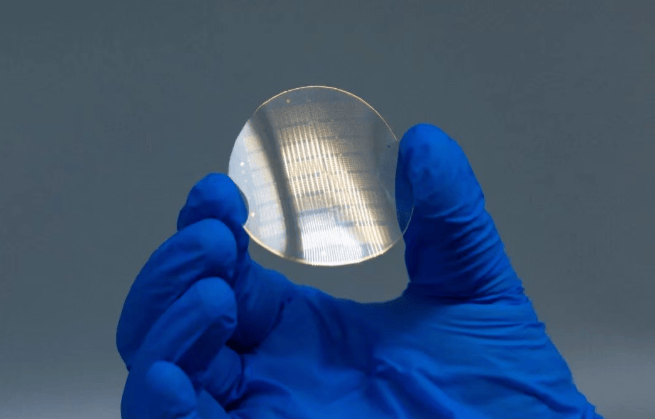
Two-dimensional semiconductor materials, such as single-crystal molybdenum disulfide, combine the flexibility of atomic-level thinness with excellent electrical properties, making them important candidate materials for developing high-performance flexible electronic devices. However, the clean, high-quality, and scalable transfer and integration of these materials has long been a challenge for the industry. The "dry transfer" process developed by Professor Kong Wei's team completely avoids direct contact between the molybdenum disulfide surface and polymers, water, or organic solvents, effectively preserving the material's intrinsic properties.
Wafer-scale, high-density flexible transistor arrays constructed based on this process have achieved multiple performance breakthroughs. The research team applied these transistor arrays to an active-matrix tactile sensing system, which was then attached to the surface of a soft robotic gripper. This system can sense and map pressure distribution in real time, helping the robot identify the shape, position, and size of objects.
Introducing the achievement, Professor Kong Wei stated, "Based on this process, the wafer-scale, high-density flexible transistor arrays we constructed have achieved multiple performance breakthroughs." This achievement provides new technical support for the deep integration of flexible electronics and robotic tactile sensing.