
At 8:14 a.m. on May 11, the Long March-7 Y11 carrier rocket, carrying the Tianzhou-10 cargo spacecraft, ignited and lifted off from the Wenchang Space Launch Site in China. Approximately 10 minutes later, the spacecraft successfully separated from the rocket and entered its designated orbit. Subsequently, the spacecraft's solar panels unfolded smoothly, marking the complete success of the launch mission. At 1:11 p.m., the spacecraft successfully docked with the rear port of the space station's Tianhe core module.
As the core vehicle for material resupply to the China Space Station, the Tianzhou series spacecraft are the world's most capable cargo spacecraft currently in service in terms of cargo transport capacity and comprehensive on-orbit support. To date, the Tianzhou series has achieved ten consecutive successful launches. Among them, Tianzhou-10 can be considered the most capable "logistics officer" for the space station, achieving multiple new breakthroughs in this mission. Regarding this, Pang Zhihao, the National Chief Science Communication Expert for Space Exploration Technology, provided a detailed interpretation to the Science and Technology Daily reporter.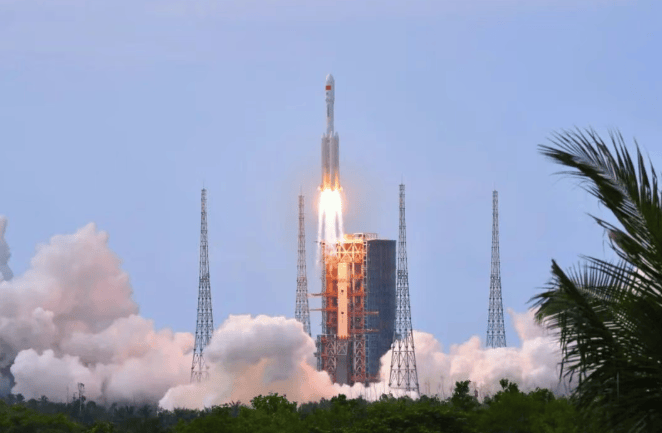
Question 1: Tianzhou-10 carries the largest number of test payloads ever. What supplies did it deliver to the space station?
Pang Zhihao explained that Tianzhou-10's total uplink mass was about 6.2 tons, of which approximately 5.2 tons consisted of over 220 items/sets of cargo for living, maintenance, and experiments.
Among these, the living supplies for the astronauts were very rich. Food included fresh fruits and vegetables like apples, green grapes, flat peaches, cherries, and tomatoes, as well as frozen foods such as frozen steaks and frozen chicken wings, allowing for more personalized astronaut menus. It also carried various residency consumables to meet the water, gas, and hygiene needs of the Shenzhou-23 and Shenzhou-24 crews in orbit. Furthermore, a new model of space treadmill was brought for the astronauts this time to help them combat muscle atrophy caused by weightlessness. Compared to the old model, the new treadmill features over ten optimizations.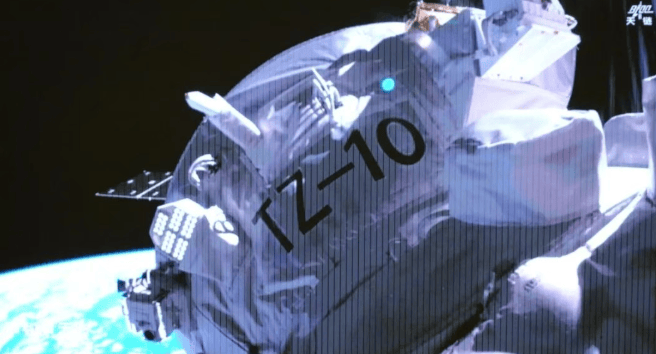
The space station maintenance and extravehicular equipment delivered this time included not only on-orbit replaceable units and tool spares for various space station and spacecraft systems, but also a new set of extravehicular spacesuits. Combined with the two sets delivered by the previous Tianzhou-9 mission, this will complete the overall upgrade of the extravehicular suits.
Tianzhou-10 also carried 67 items/sets of experimental supplies, with a total weight of 768.2 kilograms, and was equipped with 6 test payloads, the largest number ever. Using this equipment, astronauts will conduct 41 space science experiments.
Additionally, Tianzhou-10 will refuel the space station with 700 kilograms of propellant for attitude and orbit control and orbital altitude maintenance. This propellant is sufficient for the space station's use for about one year.
Question 2: Tianzhou-10 will be docked in orbit for up to 12 months. What work will it carry out?
Tianzhou-10's docked duration in orbit will reach 12 months, surpassing all previous cargo spacecraft. Pang Zhihao stated that Tianzhou-10 will achieve an upgrade from a "delivery person" to a "space steward."
During its time in orbit, as a "delivery person," Tianzhou-10 will support material resupply and propellant refueling operations. The experimental supplies and payloads it carries will be used for space embryology experiments on zebrafish, mice, and artificial embryos, research on mechanisms of bone loss due to weightlessness and myocardial remodeling, and other space life science experiments; microgravity experiments in fluid physics, materials science, and combustion science; verification of new technologies such as flexible monocrystalline silicon solar cells, extravehicular exposure experiments, and new sensor tests; as well as Earth and space astronomy research including greenhouse gas monitoring, atmospheric remote sensing, and cosmic ray observation.
Simultaneously, Tianzhou-10 will serve as a "space steward," supporting space station operations. Its main tasks include providing backup capabilities for attitude control and orbit maintenance for the space station complex; collecting 12 months' worth of domestic waste, experimental waste, and old equipment, which will be taken into the atmosphere for destruction at the end of the mission. It can also support emergency resupply/rescue missions.
Tianzhou-10 will also conduct self-technology verification, including validating the cargo spacecraft's stability under extreme conditions of temperature differences ranging from plus to minus 180 degrees Celsius, strong radiation, and micrometeoroids over 12 months. During its orbit, long-life assessments will be performed on the spacecraft's power, communication, thermal control, and propulsion systems, accumulating data for future deep-space exploration and ultra-long-duration missions.
Pang Zhihao believes the 12-month on-orbit docking holds significant mission value. He noted that reducing the Tianzhou launch frequency from "4 launches every 2 years" to "3 launches every 2 years," and extending the docking period from 6 months to 12 months, lowers the space station's operational costs; continuously supporting two astronaut crews and year-round scientific experiments improves the utilization rate of the space laboratory, maximizing the space station's efficiency; the cargo spacecraft's transition from short-term resupply to a long-term on-orbit service platform represents a technological leap.
Question 3: With ten consecutive successful Tianzhou missions, what technological progress has been achieved?
"Over the past decade, the Tianzhou spacecraft has achieved a systematic, multi-dimensional leap in payload capacity, speed, lifespan, intelligence, and cost, evolving from a 'test ship' into a world-leading 'space logistics and service platform,'" Pang Zhihao said.
He explained: First, the Tianzhou spacecraft's cargo transport capacity ranks first among all active spacecraft worldwide. Its payload capacity has increased from 6.9 tons to 7.4 tons, and its cargo ratio has risen from 51% to 53%. Moreover, propellant configuration is flexible, with the number of tanks expandable from 4 to 8.
Second, the rendezvous and docking time has been shortened from 2 days to a fastest time of 2 hours. Tianzhou-1 used the internationally standard rendezvous and docking protocol at the time, taking 2 days; Tianzhou-2 took 8 hours; Tianzhou-3 and Tianzhou-4 took 6.5 hours; Tianzhou-5 set a world record with a 2-hour rendezvous and docking; starting from Tianzhou-7, a normalized 3-hour rendezvous and docking protocol has been adopted.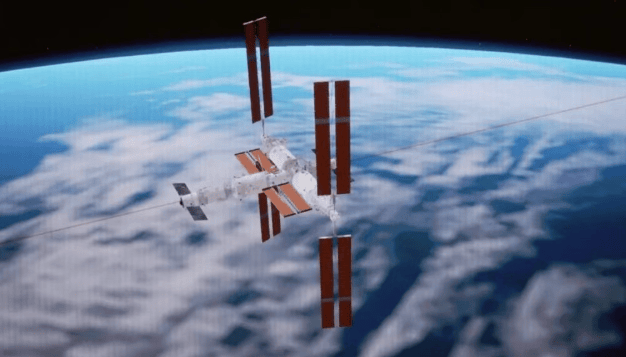
Third, the on-orbit lifespan has been extended from 6 months to 12 months, achieving "annual residency," breaking through long-life technology, enhancing system reliability, and reducing space station operational costs.
Fourth, independent controllability and systematic maturity of core technologies have been realized. Tianzhou-1 first verified on-orbit propellant refueling technology, breaking through a core bottleneck for long-term space station operation. Tianzhou-2 docked with the space station core module for the first time, verifying technologies such as multi-spacecraft collaborative control, joint attitude and orbit control maintenance, and integrated energy distribution. Starting from Tianzhou-3, the Tianzhou spacecraft entered a batch production mode, shortening the development cycle by 40% and reducing costs by 30%, achieving "high-density launches and high-quality delivery." Simultaneously, the Tianzhou spacecraft has undergone comprehensive intelligent upgrades in fully autonomous rendezvous and docking, fault self-diagnosis and redundancy switching, orbit planning, and smart cargo bay management.
"The Tianzhou spacecraft has transitioned from 'following' to 'leading,' becoming the cargo spacecraft with the world's largest payload capacity, fastest docking, longest lifespan, highest intelligence, and optimal cost. It has built China's independently controllable, world-leading space logistics system, which will lay the foundation for the long-term operation of the China Space Station," Pang Zhihao stated.