
Fast charging is a crucial pillar supporting the widespread adoption of electric vehicles, yet it is also seen as a hidden cost that damages battery life. Now, a research team from Chalmers University of Technology in Sweden and Victoria University of Wellington in New Zealand has developed an artificial intelligence (AI)-based fast-charging strategy that can adjust the charging process in real time based on battery health, extending electric vehicle battery life by nearly 23% without increasing charging time. The research findings were published in the latest issue of IEEE Transactions on Transportation Electrification.
The service life of electric vehicle batteries typically ranges from 8 to 15 years, depending on usage intensity and charging habits. Current mainstream fast-charging systems generally use fixed current and voltage parameters, applying nearly the same charging method whether the battery is brand new or has been in use for years. In reality, as a battery ages, its internal electrochemical environment continuously changes, and its tolerance for high current also declines. Continuing to apply a uniform charging strategy can easily cause additional wear and tear.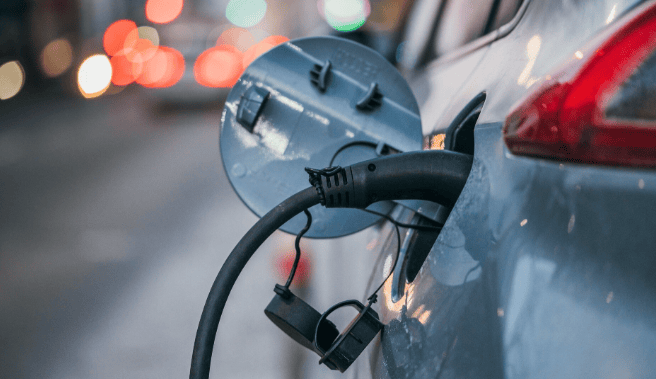
One of the most challenging issues is the phenomenon of "lithium plating." During fast charging, high current rapidly pushes lithium ions into the battery interior. Some lithium ions do not have time to embed into the electrode material structure and instead precipitate directly on the electrode surface, forming metallic lithium. When this phenomenon occurs repeatedly, it not only causes capacity loss and reduced range but may also form dendrites that pierce the separator, posing a short-circuit risk.
To solve this problem, the team used a reinforcement learning algorithm to train an AI model. They built a digital model of a common electric vehicle battery on the market and simulated key parameters affecting charging speed and battery life, allowing the AI to continuously try different charging strategies in a virtual environment. The system gradually learned to find the optimal balance between speed and degradation.
After training, the AI can decide the charging current in real time based on the battery's current state of charge, age, and overall health. Test results showed that the new method extended battery life by approximately 23%, while the charging time changed by only a few seconds, which is almost negligible.
The advantage of this technology lies in its low barrier to deployment. In principle, it can be implemented simply through a software update to the vehicle's battery management system, without the need for new hardware.