
A research team from the U.S. Rocky Mountain National Laboratory recently published findings in the Journal of the American Chemical Society, demonstrating a hybrid system composed of a silicon semiconductor coupled with a molecular catalyst. This system can capture high-energy sunlight that is unused by both plants and traditional solar panels, and use it to drive chemical reactions such as fuel production. The study, which involves the fields of artificial photosynthesis and photocatalysis, is titled "High-Energy Hybrid States Enable Long Hot Electron Lifetimes in Cobalt-Silicon Nanocrystal Systems."
Current solar panels consume only about 20% of incident light energy, while plants and other photosynthetic organisms may consume only about 1%, with both facing the problem of high-energy electrons rapidly dissipating as heat. Nathan Neale, a research scientist at Rocky Mountain National Laboratory and the paper's first author, stated: "Our work aims to push the limits of solar energy output, and the semiconductor-molecular catalyst hybrid system used in this study reveals a possible pathway. We found that the electronic states in this hybrid system allow photogenerated electrons to retain enough energy to be used for chemical reactions."
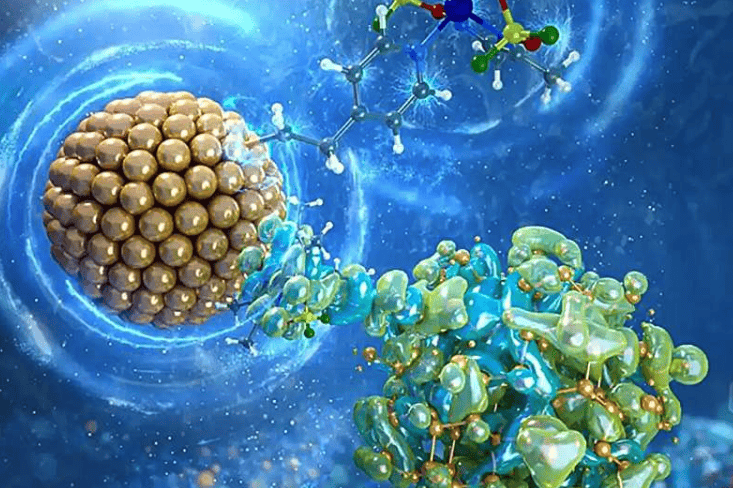
The research team achieved longer electron lifetimes by manipulating the molecular chemistry on the semiconductor surface. A key factor is a linking group called vinylpyridine, which fuses the silicon nanocrystals with the catalyst, forming a hybrid electronic state that allows the electrons to persist. Nathan Neale said: "High-energy electrons in materials typically lose energy quickly by coupling with molecular vibrations and heating the surrounding environment. By hybridizing the electronic states between the light-harvesting silicon semiconductor and the molecular catalyst, our material keeps electrons 'hot' for at least 5 nanoseconds, which could potentially be used to drive photocatalysis with higher efficiency." This duration is approximately 25,000 times longer than the hot electron cooling time in silicon, far exceeding the tens of femtoseconds typically observed in electron cooling.
The researchers confirmed the role of the hybrid electronic state using multiple spectroscopic methods and quantum mechanical calculations, discovering that hot electrons can diffuse simultaneously in both the silicon and the catalyst. Through this research on the silicon-based photocatalytic system, the U.S. Rocky Mountain National Laboratory provides new technical pathways for applications such as converting carbon dioxide into hydrocarbon fuels and synthesizing fertilizers from the atmosphere. The emergence of the silicon-based photocatalytic system represents substantial progress in the field of artificial photosynthesis.
Publication Details: Authors: Trung H. Le et al., Title: "High-Energy Hybrid States Enable Long Hot Electron Lifetimes in Cobalt Oxime-Silicon Nanocrystal Systems," Published in: Journal of the American Chemical Society (2026), Journal Information: Journal of the American Chemical Society