
Thousands or even tens of thousands of meters beneath the surface in deep mines, rock layers continuously "breathe," deform, and fracture due to high-intensity extraction. Traditional microseismic monitoring relies on a fixed wave velocity model to locate seismic event sources, akin to navigating an ever-changing city with an outdated map, resulting in significant errors. Now, a study led by Nazarbayev University in Kazakhstan has, for the first time, deeply integrated discrete physical experimental modeling, machine learning, and Explainable Artificial Intelligence (XAI) to construct a new paradigm for real-time prediction of seismic wave velocity in deep mines. This allows rockburst warning to move beyond the era of "blind men feeling an elephant" into an intelligent age that is predictable, explainable, and trustworthy.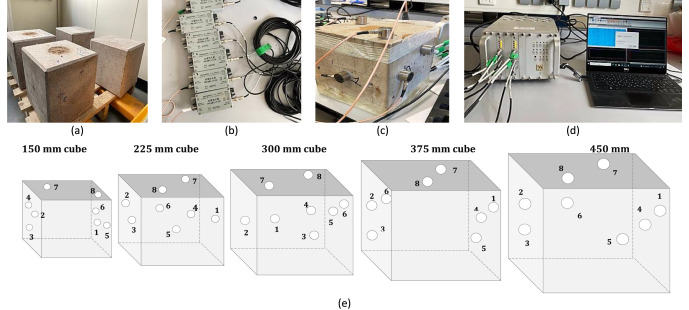
The "Ghost" of Deep Mining: Rockburst
Against the backdrop of continuously rising global demand for mineral resources, shallow resources are gradually depleting, accelerating the push of mining operations to greater depths. However, as extraction depth increases, the interaction between high in-situ stress and complex geological structures induces frequent mining-induced seismicity. When the energy from these seismic events is large enough to directly cause tunnel collapse and equipment damage, it is termed a rockburst—one of the greatest safety hazards underground.
The destructive energy released instantaneously by a rockburst is sufficient to destroy an entire tunnel. It not only threatens the lives of miners but also causes production shutdown losses amounting to tens or even hundreds of millions of dollars.
Microseismic monitoring systems are the core equipment in deep mines for assessing seismic activity and quantifying seismic risk. A network of sensors throughout the underground workings continuously captures every faint vibration signal from the rock mass. However, the "Achilles' heel" of this system lies in its dependence on an input velocity model to calculate the location of seismic events. Traditional systems adopt a constant input velocity model with periodic updates, assuming the entire mining area is a uniform "fixed velocity field." This is barely adequate for shallow, short-axis operations in simple geological conditions.
But when mines reach depths of over a kilometer, with ongoing excavation, goaf collapse, intersections of different lithologies, complex evolution of the excavation network, and the introduction of backfill materials, the real underground wave velocity field becomes a "rapidly changing" chaotic system. Positioning errors based on traditional fixed velocity models can easily reach tens or even hundreds of meters. Such large errors render the determination of rockburst hazard zones based on them nearly "blind guessing"—this has been the core technical bottleneck preventing accurate early warning of rockbursts for a century.
As the corresponding author of the study, Professor Fidelis Suorineni of Nazarbayev University, pointed out, current technology has fundamental limitations in accurately predicting the timing of rockbursts. The current capability is limited to identifying areas with high rockburst potential, and achieving a breakthrough in warning time is precisely what this research aims to conquer.
Physics Experiment-Driven AI Opens the Perception Link to the Rock's "Pulse"
In February 2026, Hanan Samadi and Fidelis Suorineni from the School of Mining and Geosciences at Nazarbayev University published a groundbreaking paper titled "Development of a procedure for predicting real-time seismic wave velocity in underground mines using discrete physical laboratory modelling and explainable artificial intelligence (XAI)" in the top-tier rock mechanics journal, the International Journal of Rock Mechanics and Mining Sciences (IJRMMS). The study was recognized as an "Editor's Recommendation," and its core innovations can be summarized in three aspects.
Discrete Physical Modeling—"Rehearsing" the Entire Life Process of a Mine in the Lab
The research team constructed a high-fidelity "digital twin training ground" for the dynamic evolution of wave velocity in mines within the laboratory. Moving away from simplistic numerical assumptions, they designed and cast numerous discrete physical models—including concrete blocks (synthetic rock) and granite cubes of varying sizes and physical conditions—to simulate "time snapshots" induced by mining activities. This means that by setting different boundary conditions, block combinations, and fracture networks, the discrete physical models "rehearsed" years of geological environment evolution in the mine within the lab, generating Acoustic Emission (AE) behavior trajectories far exceeding those obtainable from years of field data.
The research team used a SAEU3H acoustic emission system to simulate microseismic events, arranging sensor arrays around various rock blocks. One sensor acted as a pulse generator (simulating a rockburst source), while the others served as receivers. They precisely measured wave velocity changes under different physical conditions, generating a comprehensive high-dimensional training dataset covering various geological evolutions.
Stacking Ensemble Learning—An Order-of-Magnitude Leap in Prediction Accuracy
The true "masterstroke" lay in using this high-dimensional data to train various machine learning and deep learning models. After repeated comparison and validation, the Stacking-Ensemble algorithm performed exceptionally well, successfully establishing a strong regression relationship between predicted wave velocity values and the actual wave velocity values of the physical environment. Key metrics included: a coefficient of determination R²=0.97 (meaning 97% explanatory power), a Normalized Root Mean Square Error (NRMSE) as low as 0.002, and a Mean Absolute Percentage Error (MAPE) of only 0.0001—representing an order-of-magnitude leap in prediction accuracy compared to traditional models.
This implies that in the future, even without dense on-site sensors, the microseismic system could, based on the location of excavation advance and known rock mechanics parameters, invert the real-time wave velocity value for any area underground at that moment.
Explainable Artificial Intelligence—From "Black Box" to "Transparent Decision-Making"
AI predictions often face the "black box" dilemma—knowing the result is accurate but not knowing why, which is untrustworthy in safety-critical mining. This study is the first to systematically apply Explainable Artificial Intelligence (XAI) to seismic wave velocity prediction in deep mines, using explainability techniques to make the weight of physical parameters (such as porosity, confining pressure, joint orientation) behind every key algorithmic decision clearly visible.
Safety engineers see not only "where a rockburst risk is imminent" but also "based on which key geological parameters this risk was predicted." This transparency greatly enhances confidence in migrating the system from the laboratory to the ever-changing real underground environment.
Equipping Global Deep Mines with a "Disaster Warning Navigation System"
This breakthrough achievement marks a paradigm shift in global microseismic monitoring technology from "seeing the result" to "foreseeing the future."
1. "Arming" the SIMPLEX Algorithm, Significantly Enhancing Spatial Positioning Accuracy for Disaster Warning
The most important industrial value of this prediction method lies in its direct embeddability into the SIMPLEX seismic event source location algorithm currently widely used in mines globally, dramatically improving the spatiotemporal resolution of the wave velocity field. When the wave velocity prediction error drops to a MAPE level of 0.0001, using AI-corrected real-time wave velocity will significantly compress the monitoring blind spots of the microseismic system, enabling meter-level or even centimeter-level accuracy in locating the rockburst source. This not only means mining engineers can pinpoint the "burst point" and promptly evacuate personnel and equipment but also allows for the inversion of the rock fracture mechanics based on extremely high-precision data, predicting hazards at their source.
2. Building a Smart Mine Safety Foundation for "Deep Earth National Strategies"
China's "Deep Earth" strategy is in full swing, with underground metal mines, kilometer-deep coal mines, and various strategic resource repositories facing severe dynamic disaster challenges. For Chinese mines advancing intelligent construction, this "physical data + AI inference + XAI correction" architecture can be directly integrated into existing microseismic or acoustic emission signal analysis platforms, becoming the "new foundation" for smart mine safety management and control. It has the potential to fundamentally change the current situation of "drilling, blasting, and passive disaster relief," achieving truly transparent and digital mine safety management.
3. Extending to Geological Safety Assurance for Major Engineering Projects
Beyond deep mines, this technology can also be transferred to deep rock engineering projects such as mountain tunnels crossing major rivers, subsea tunnels, and large underground cavern complexes, addressing the current pain point of frequent rockburst disasters during TBM excavation. By conducting targeted discrete modeling in advance within rock mechanics laboratories and using AI to predict rock wave velocity in real-time, it can provide "early warning" for tunnel boring machines and automatically adjust excavation parameters, minimizing rockburst risk.
Letting AI "Understand" the Language of Rocks
The essence of this achievement is the first-ever establishment of a full-chain technological revolution in rock mechanics: "Physical Experiment → Big Data → AI → XAI Decision → Field Closed Loop." No matter how chaotic the blind spots at the mine site are, scientists can accurately replicate them in the lab; no matter how excellent the algorithm's prediction results are, engineers can see through the essence of its decision-making via Explainable AI.
From now on, deep rock masses are no longer a completely blind existence—every dangerous "breath" they take can be sensed in advance by the XAI-driven real-time underground seismic wave velocity prediction system.
As the late pioneer of the microseismic monitoring industry and rock mechanics master of South African gold mines, Salamon, warned, rockburst has always been a sword hanging over miners' heads. Now, this research by Hanan Samadi and Fidelis Suorineni, published in a top international rock mechanics journal, is forging a "future shield" composed of data and algorithms—faster, more accurate, and more transparent than any previous physical barrier.