
On May 18, it was learned from GalaxySpace (Beijing) Technology Group Co., Ltd. (hereinafter referred to as GalaxySpace) that the company's self-developed large-aperture deployable umbrella antenna has recently rolled off the production line. This is China's first high-performance spaceborne "umbrella antenna" developed by a commercial aerospace company, which can be applied to satellite platforms with high stowage ratio requirements.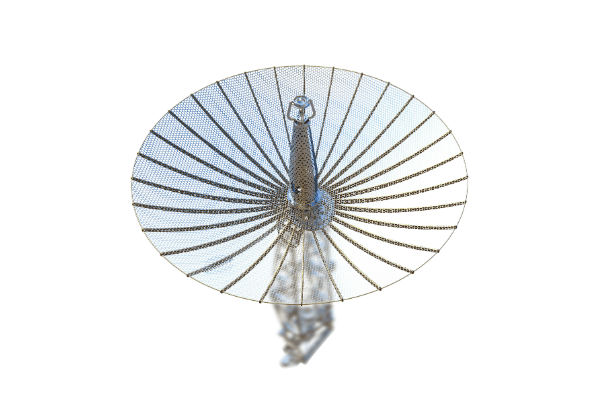
Xu Zhi, Chief Payload Engineer at GalaxySpace, explained that just like an everyday umbrella, the umbrella antenna is tightly folded into an extremely small volume before launch, and then deploys into a communication reflector antenna after the satellite enters orbit. Currently, the stowage ratio of the company's 1-meter aperture umbrella antenna has been achieved at less than 12%, a core indicator reaching an internationally advanced level.
Meanwhile, the production of traditional aerospace-grade umbrella antenna mesh surfaces relies on engineers manually adjusting the surface accuracy point by point, which is not only inefficient but also makes product consistency difficult to guarantee, making it hard to meet the mass production demands of commercial aerospace for large volumes, short cycles, and low costs. GalaxySpace's R&D team has pioneered an efficient mesh surface forming technology, which can increase development efficiency by over 70%, achieving "one-step mesh forming."
It is reported that this umbrella antenna can not only significantly enhance the communication capacity of low-Earth orbit communication satellites but can also be expanded for applications in various fields such as remote sensing and navigation. In the future, it will work in coordination with the "wing-array integrated" large flat-panel antenna, becoming a key product for realizing the core functionality of direct satellite-to-smartphone connectivity.