
In the mining and energy equipment sector, traditional casting and forging are the fundamental processes for manufacturing large metal components. However, the limited geometric freedom, frequent welding defects, and increasingly strained global supply chains associated with these processes are constraining industry development. Now, the U.S. Department of Energy's Oak Ridge National Laboratory (ORNL) has provided a revolutionary answer: using additive manufacturing technology to print fully customized canisters required for the Powder Metallurgy Hot Isostatic Pressing (PM-HIP) process. This novel combination makes the production of large metal components as efficient as "printing a container and pressing powder," successfully bypassing complex and time-consuming traditional manufacturing barriers and opening up new design space for mining turbines, high-pressure vessels, and wear-resistant components for harsh operating conditions.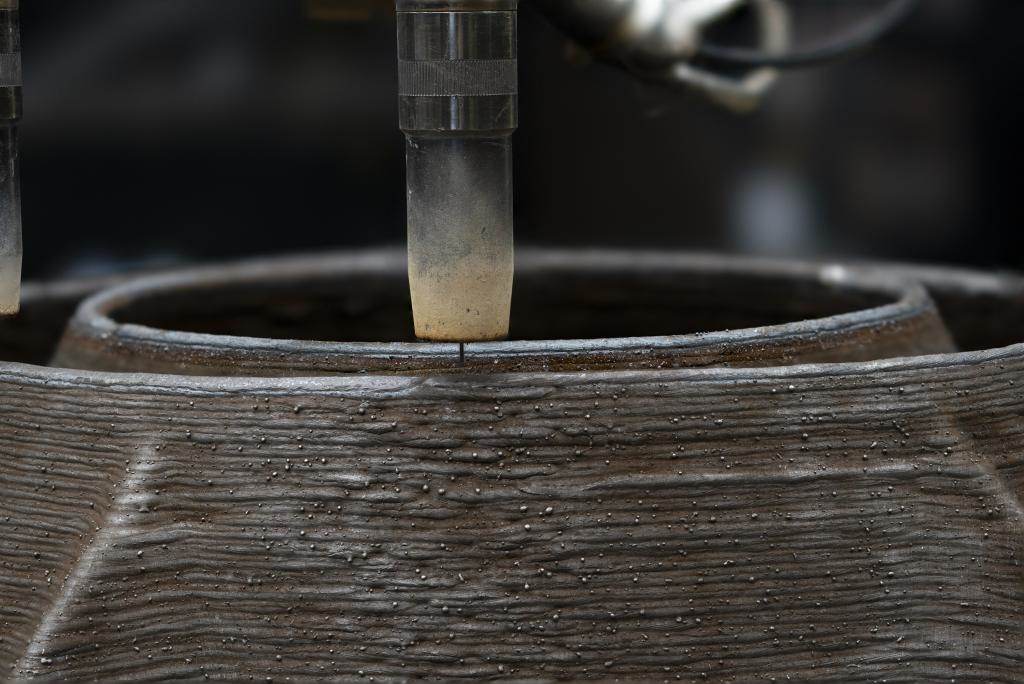
From Complex Welding Customization to One-Step 3D Printing
PM-HIP is not a new technology—its principle involves filling a sealed container with specialty metal powder and compacting it, converting the powder into a pore-free metallurgical component through solid-state diffusion under high temperature and pressure. Over the past decades, this technology has garnered significant attention for its ability to produce large, high-performance near-net-shape components and is currently applied in high-end manufacturing sectors such as aerospace, oil and gas, and energy. However, PM-HIP has consistently faced a long-unresolved engineering bottleneck: the core consumable, the "canister" (i.e., the mold), itself relies on metal forming, machining, and multi-stage welding for fabrication. This cumbersome process is not only costly and time-consuming but also highly prone to introducing weld defects, severely limiting the flexibility and reliability of component design.
In May 2026, a research team at Oak Ridge National Laboratory published a breakthrough study in the journal *Powder Technology*, using additive manufacturing as a mainstream method for the first time to directly print customized canisters required for PM-HIP. In this new process, the team employed two pathways—Laser Powder Bed Fusion and Wire Arc Additive Manufacturing (WAAM)—to obtain near-net-shape thin-walled metal containers in just hours to days of printing. Subsequently, after powder filling, vacuum sealing, hot isostatic pressing, and final acid etching/machining to remove the canister, high-density, defect-free large metal components can be directly produced.
Compared to the multi-step, high-consumption processing modes common in fields like ore crushing, mineral processing, and offshore oil and gas drilling, this innovation holds powerful disruptive significance. The team not only successfully printed a 2,000-pound PM-HIP canister using 410NiMo stainless steel powder but also, in a preceding project in 2024, completed the entire process from design to finished part for a hydroelectric turbine runner prototype canister in just two days. ORNL expert Pavan Ajjarapu commented on this: "This work lays the foundation for a transformative shift in PM-HIP technology for large components. By combining the strengths of additive manufacturing and hot isostatic pressing, we are paving the way for greater design freedom and broader applications, particularly in the hydropower and next-generation nuclear reactor sectors."
Building a Full "Computation-Manufacturing-Simulation" Chain for Customized Canisters
Traditional component design is often constrained by numerous limitations of the forming process—the more complex the component, the more lengthy the manufacturing steps. In contrast, the combination of 3D printing and PM-HIP opens up entirely new manufacturing dimensions, with its innovative highlights concentrated in three major aspects.
1. The Optimal Solution for Near-Net Shape: Zero-Welding Complex Components Liberate Design Freedom
Under traditional process routes, manufacturing large mining components with complex internal flow paths and stringent geometric features requires welding and joining multiple plates, which is not only time-consuming but also prone to fatigue failure during service due to post-weld heat-affected zones and residual stresses. The new method breaks this long-standing bottleneck: 3D-printed canisters can achieve any internal cavity geometry and external contour with "zero welding," allowing components like hydroelectric impellers and pressure vessels to closely approximate the final shape before pressing. For high-strength, wear-resistant alloy parts used in mines, this means design engineers no longer need to compromise due to welding paths and segmented assembly, enabling the direct realization of functionally optimal topological structures into real components.
2. Multi-Material Compatibility with Advanced Alloys: Simultaneously Unlocking High Wear Resistance, High Corrosion Resistance, and High-Temperature Performance
In the mining and energy equipment sector, a large number of high-value components require customized alloy compositions for extreme operating conditions. Traditional casting and forging often struggle to precisely control microstructural distribution and have a limited range of material choices. The ORNL research team fully leveraged the laboratory's strong materials science knowledge base, successfully integrating multiple advanced alloy systems into the 3D-printed canister workflow within the PM-HIP framework. Through powder selection and post-sintering microstructural control, researchers can achieve on-demand regional design within a component—"for example, constructing high-hardness particle-reinforced structures on the wear surfaces of a slurry pump impeller, while retaining impact toughness in the base region." This gradient manufacturing capability, allowing different material properties in different zones of the same component, holds significant strategic value for extending the critical lifespan of mining equipment.
3. Driven by Mechanics-Based Computational Models: Eliminating Empirical Trial-and-Error, Drastically Reducing Development Costs
The cost of a failed single-step forming of a large component is extremely high. In traditional PM-HIP, the shrinkage and deformation of components during the pressing process are subject to high uncertainty due to the influence of temperature fields, pressure fields, and non-uniform powder packing density. The ORNL team introduced a customized, mechanics-based computational model that can accurately predict the shrinkage and deformation trends of components under high temperature and pressure through simulation before actual pressing. ORNL researcher Jason Mayeur stated: "We further enhance the efficacy of PM-HIP technology by using mechanics-based computational models, eliminating the development costs and lead times associated with trial-and-error methods." This means the number of iterations from digital design to first-article verification for a critical component of a nuclear power unit or a mining high-pressure reactor could potentially be compressed to within 3-5 cycles, greatly improving engineering translation efficiency.
A "Dimensional Strike" from Wear Parts to Core Pressure-Retaining Components
From mineral processing and slurry transport to deep-sea oil and gas drilling, the mining industry's demand for large, high-strength metal components exhibits three characteristics: "high value, high risk, and long lead times." The overseas transfer of casting and forging capabilities highlights supply chain risks, while the extension of domestic high-quality raw ore mining to greater depths intensifies the demand for high-end wear-resistant materials and heavy-duty structural components.
ORNL's novel technical route perfectly aligns with the deep-seated pain points of mining equipment, with its application value primarily manifested in four aspects:
Completely Unshackling the Manufacturing of Complex-Shape Mining Wear Parts: The three-dimensional geometries of screening equipment panels, crusher liners, and wear-resistant elbows in conveying systems are often not optimized for casting parting surfaces. Using 3D-printed customized canisters, near-net-shape wear parts with integrally formed internal functional flow paths and external mounting features can be directly produced, significantly reducing subsequent machining and on-site fitting and welding. In the field of liners, the short service life and high replacement frequency of traditional cast liners are common challenges for mineral processing plants. Due to its fully dense, casting-porosity-free metallurgical quality, PM-HIP has the potential to increase liner service life by one to two orders of magnitude under extreme abrasive conditions.
Tackling Key Systems for Mining High-Pressure Vessels and Deep-Sea Oil Extraction Equipment: In the deep-sea oil and gas extraction sector, high-strength pressure vessels for subsea production systems operate for years under extremely high external pressure and corrosive media. Components manufactured by the ORNL team via the PM-HIP route can perfectly meet the dimensional accuracy and hydrogen embrittlement fracture resistance requirements for deep-sea equipment standards like API 17TR8. Concurrently, the project is accelerating the replication of experience into clean energy fields such as hydroelectric impellers and next-generation nuclear reactors—and these critical load-bearing structures happen to overlap significantly with mining heavy-duty components (such as vertical mill grinding tables and flotation cell impellers) in terms of material selection and mechanical requirements. ORNL researcher Pavan Ajjarapu specifically noted: "This technology is paving the way for applications with greater design freedom in hydropower and next-generation nuclear reactors."
Injecting Supply Chain Resilience and Localized Manufacturing Capability into Mining and Energy Equipment: Currently, the procurement lead time for large metal components in the global mining industry generally ranges from 12 to 24 months, heavily reliant on the capacity of a few overseas casting and forging giants. The ORNL team emphasized: "PM-HIP offers an alternative to casting and forging, and it can also help strengthen U.S. manufacturing and national security by alleviating supply chain shortages." For Chinese mining enterprises, this implies that mining equipment manufacturers can fully draw on ORNL's approach, introducing 3D printing and PM-HIP into the localized manufacturing of ultra-large wear-resistant components, building a more risk-resilient, autonomous, and controllable supply chain.
Low-Alloy Waste Powder Reuse and Circular Economy: ORNL's PM-HIP process also possesses an easily overlooked hidden advantage—unused metal powder from the preparation process can be directly recycled as fill material for the next batch. In the mining sector, large quantities of high-cost nickel-based and cobalt-based alloy powders often suffer from low utilization rates due to limitations in cladding or spraying processes; PM-HIP's closed filling system allows waste powder to be recycled multiple times, aligning with the green mining development direction of efficient resource utilization throughout the entire lifecycle.
From "Casting/Forging Monopoly" to "3D Printing + PM-HIP Autonomy and Control"
This research signifies a fundamental restructuring of the large metal component manufacturing paradigm. For decades, casting and forging have firmly held the central position in high-end metallurgical component production worldwide. Now, PM-HIP, empowered by 3D printing, not only inherits the inherent advantages of powder metallurgy near-net shaping, such as material uniformity and isotropy, but also triggers a cognitive leap in mining and energy equipment from "can it be cast?" to "how should the function be designed?" through its transcendent geometric design capabilities and extremely low development threshold.
More critically, the ORNL team's mechanics-based computational modeling and customized predictive tools have been validated on a series of large-scale prototype parts (such as the 2,000-pound impeller canister), proving the technology's full potential for industrial scaling. In the mining sector, the weight of a large flotation cell impeller typically ranges from hundreds of kilograms to several tons—a weight range that falls precisely within the stable production load capacity of the PM-HIP system. This means that from critical components for rare earth slurry mixing to slag transport pipeline connectors, the traditional multi-section cast-weld composite structure can be replaced by 3D-printed customized canisters + PM-HIP.
From a broader perspective, this innovation also points towards a technological breakthrough direction for domestic high-end mining equipment manufacturers: China possesses a world-leading rare earth mineral resource base and metal powder metallurgy industry foundation. If it can draw on ORNL's experience and deeply integrate wire arc additive manufacturing, powder hot isostatic pressing, and digital simulation design, China's mining equipment sector is fully capable of moving from "scale manufacturing" to "precision empowerment," achieving a leap from "following" to "running alongside."
Towards a New Era of High-Pressure, High-Strength Components
Whether it's heavy-duty liners deep underground or high-pressure vessels in the deep sea, this breakthrough from Oak Ridge National Laboratory sends a clear signal to the entire industry: the manufacturing rules for large metal components are being rewritten. Through the additive manufacturing transformation of the PM-HIP canister process, scientists and engineers have not only solved a series of "bottleneck" problems such as welding defects, limited formability, and fragile supply chains, but have also liberated the design freedom of mining functional components from two-dimensional constraints to three-dimensional free topology.
As the ORNL team envisions, "This work lays the foundation for a transformative shift in the field of powder metallurgy hot isostatic pressing for large components." Facing the increasingly complex geological conditions and extreme operating environments in mining, every material upgrade for every critical component beneath the surface may bring about a restructuring of mine productivity, safety, and cost—and 3D printing + PM-HIP may well be the golden key to unlocking this restructuring.