
The completion of the Jinghe Bridge is not just the finishing of a bridge; it represents a successful breakthrough by Chinese bridge construction against the three major limits of "structure, construction, and environmental protection" in complex mountainous terrain. Its completion also provides a brand new "Chinese solution" for future infrastructure construction in high mountain and canyon areas.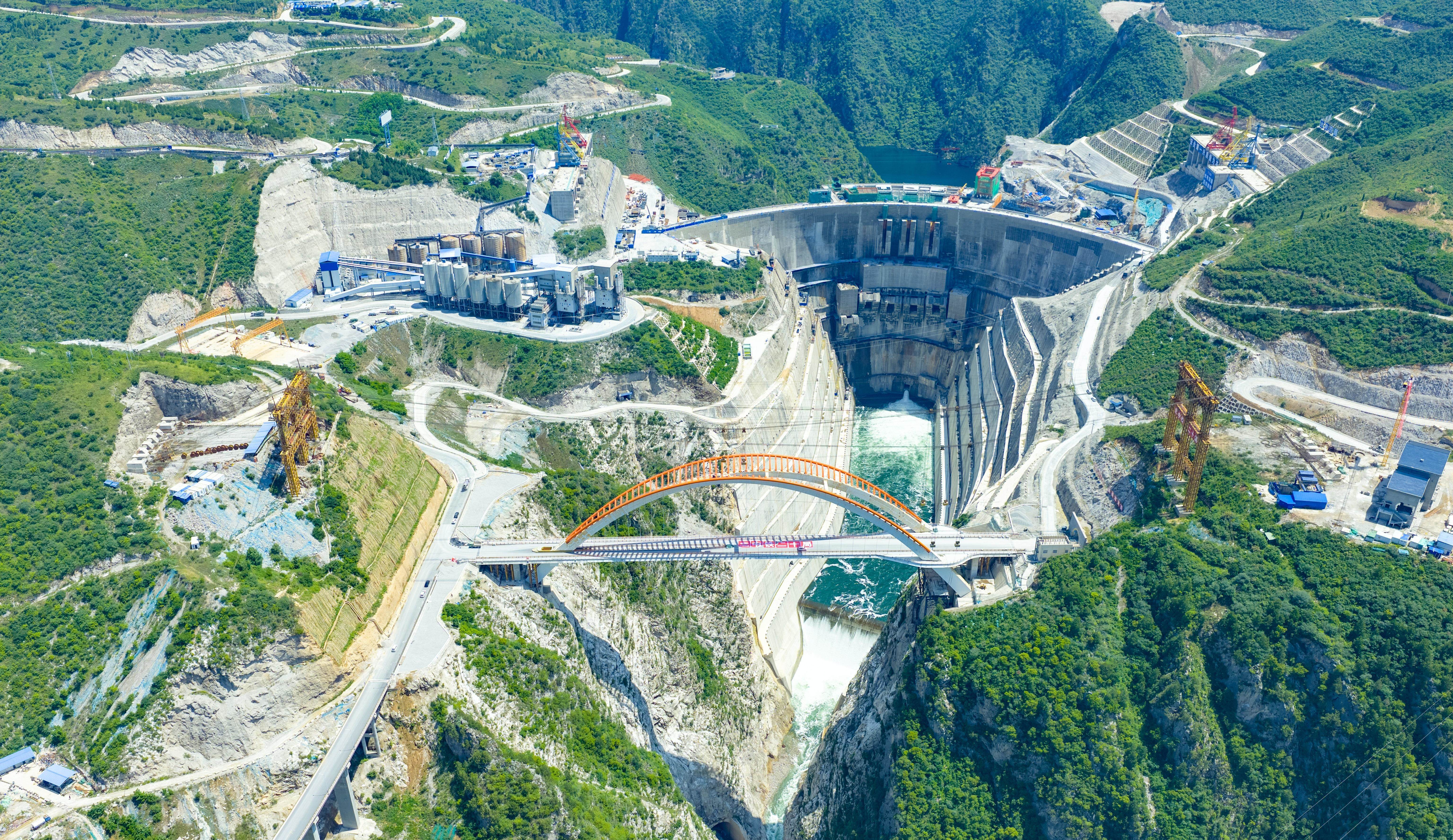
Three Major Technological Leaps in Three-Dimensional Spatial Arch Bridge Construction
The birth of this bridge stems from three core technological innovations, which together supported the transformation of this "spatial curve rainbow" from blueprint to reality.
1. Structural Design Innovation: A Paradigm Shift from Two-Dimensional Plane to Three-Dimensional Space
The Jinghe Bridge has a total length of 284 meters and a main span of 274.7 meters. Its core innovation lies in completely abandoning the traditional two-dimensional planar arch rib design and pioneering a spatial three-dimensional curved arch model featuring "single-double combination, main-secondary arch joint load-bearing." The bridge body presents a unique "Y" shape in both plan and elevation. This design not only endows the bridge with unparalleled mechanical performance, more efficiently dispersing the complex loads brought by strong canyon winds; it also transforms it into an elegant "spatial curve rainbow," becoming an iconic landscape on the Guanzhong Canyon tourism belt and achieving the unity of function and aesthetics.
2. Digital Construction Breakthrough: A Craft Revolution from "Experience-Based Construction" to "Intelligent Pre-construction Rehearsal"
Facing the Jinghe Canyon, which spans over 200 meters deep with nearly vertical banks (slopes approaching 70 degrees), traditional construction methods were nearly ineffective. The construction team pioneered a full-process digital construction system integrating "BIM (Building Information Modeling) + 3D Laser Scanning + Virtual Assembly."
Using high-precision point cloud data obtained from 3D laser scanning, this system performed virtual pre-assembly and error analysis on thousands of tons of steel components in the computer, generating the optimal assembly and hoisting plans to guide on-site operations. Ultimately, above the precipitous canyon, the "millimeter-level" precise closure of the Y-shaped spatial three-dimensional arch ribs was achieved, filling a technical gap in the construction of this bridge type in China.
3. Green Construction Practice: Harmonious Coexistence from "Large-Scale Operations" to "Eco-Friendly" Approaches
The bridge construction was not only an engineering challenge but also a severe test of ecological protection. The main arch of the bridge spans the ecologically sensitive waters of the Jinghe River. Relying on advanced digital construction technology, the project team achieved high-precision control over the entire construction process, minimizing on-site cutting, welding, and rework operations, thereby reducing the disturbance of construction activities to the canyon water body and surrounding ecological environment to the lowest possible level. This is a successful practice of the "green construction" concept under extremely complex conditions.
A Bridge Activating Regional Development and an Ecological Grand Blueprint
The completion of the Jinghe Bridge has value far beyond a single structure; it will release tremendous energy on multiple levels:
Fortifying the Water Conservancy Lifeline, Ensuring Major Project Success: As the external transportation "lifeline" for the Shaanxi Dongzhuang Water Conservancy Hub—a major national water conservancy project—the completion of the Jinghe Bridge provides crucial support for the subsequent construction of this super water project, known as "Shaanxi's Three Gorges," which is vital for ensuring flood control safety downstream and along the banks of the Weihe River.
Unblocking Regional Road Networks, Activating Economic Development: The bridge ends the long history of the two banks being separated by the river, closely connecting the Weibei Dry Plateau with the Guanzhong hinterland. It will significantly enhance regional transportation efficiency, bring new opportunities for the outward transport of local agricultural products and the development of tourism resources, and strongly promote rural revitalization and the high-quality development of the Yellow River Basin.
Creating a Smart Transportation Benchmark, Leading New Bridge Infrastructure: The construction model of the Jinghe Bridge provides valuable experience for bridge building under complex terrain conditions in the future. The full lifecycle management based on BIM and digital twins also lays the foundation for the bridge's future intelligent maintenance, traffic management, and safety warnings, serving as a successful example of "New Infrastructure" in the transportation sector.