
On May 27, a special visit and exchange event focusing on Dongfeng's hydrogen energy key technologies was held in Wuhan. During the event, Dongfeng Motor fully demonstrated its entire chain of technical capabilities, from the high-power stack and system pilot line at the Hongtai Park to the membrane electrode manufacturing line.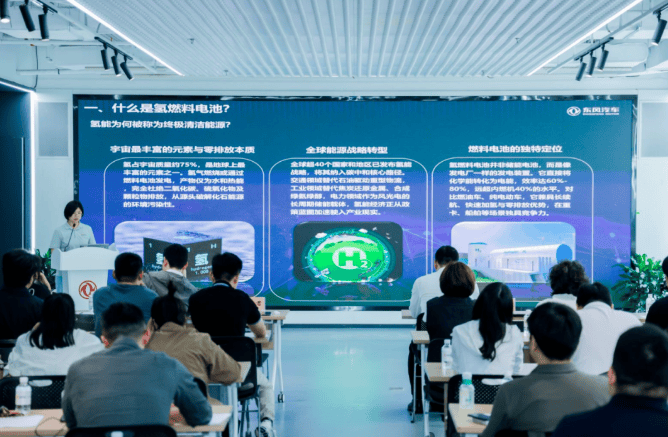
Previously, the "Dongfeng Hydrogen Core" 400kW fuel cell platform, independently developed by Dongfeng Motor, passed the 10,000-hour durability verification conducted by the National Motor Vehicle Quality Inspection and Testing Center in accordance with the new national standard, becoming the first 400kW-class fuel cell product in China to achieve this duration certification, setting a new industry record.
The new national standard imposes significantly higher requirements on extreme operating conditions such as vibration shock, dry-wet cycling, and frequent start-stop for fuel cells compared to the old standard, comprehensively simulating real-world commercial vehicle operating scenarios. The verified "Dongfeng Hydrogen Core" has an average single-cell voltage decay rate of only 3.29%, while also possessing the capability to start at ultra-low temperatures of -40°C, with a design lifespan exceeding 30,000 hours and a volumetric power density of 6.6kW/L, achieving internationally advanced comprehensive technical indicators.
"In terms of key technology self-reliance, Dongfeng has achieved full-chain independent research and development. From bipolar plates and membrane electrodes to stacks, systems, and complete vehicles, the localization rate of key components has reached 100%," said Tang Xuejun, Hydrogen Energy Technology Manager at Dongfeng Motor R&D Institute. He noted that this is the foundation of confidence for the 400kW stack to pass the rigorous 10,000-hour verification.
With over 20 years of deep involvement in the hydrogen energy field, Dongfeng Motor has gone through three major stages: technological exploration, full-chain R&D layout, and engineering-scale application. Meanwhile, the commercial application of Dongfeng's hydrogen energy is also steadily advancing. Currently, Dongfeng has established industrialization bases in Wuhan and Shiyan, with an annual production capacity of 5,000 sets of stacks and systems and 1.6 million pieces of membrane electrodes. It has built a full lifecycle support system encompassing over 700 service stations, more than 200 full-time experts, and 180 million yuan in parts reserves, driving the aggregation of over 50 hydrogen energy upstream and downstream enterprises in Hubei Province, forming a complete industrial ecosystem of "production—storage—transportation—refueling—utilization."
On this basis, Dongfeng has launched a fuel cell commercial vehicle matrix covering 4.5 tons to 49 tons, with over 20 models receiving national announcements. Commercial operations cover 45 cities nationwide, implementing full-scenario applications including trunk logistics, port and mining areas, urban distribution, and municipal sanitation. Its 49-ton hydrogen heavy-duty trucks and hydrogen passenger vehicles have accumulated over 1 million kilometers in actual commercial operation mileage. On the Han-Yu-Rong hydrogen energy highway trunk line, the highest single-vehicle mileage exceeds 60,000 kilometers, with a stable attendance rate of over 95%.
In the future, Dongfeng will accelerate the construction of system and stack production lines with an annual capacity exceeding 10,000 units, continuously deepen industry-university-research cooperation, and promote the hydrogen energy industry from demonstration applications to large-scale commercial use, injecting green momentum into building a new energy system and achieving the "dual carbon" goals.