
Deep-sea mining ‑ zero tailwater discharge ‑ carbon sequestration ‑ island reef industry—under the new circular system proposed by the team from Ocean University of China, these four originally discrete links are being "bundled" into a closed loop.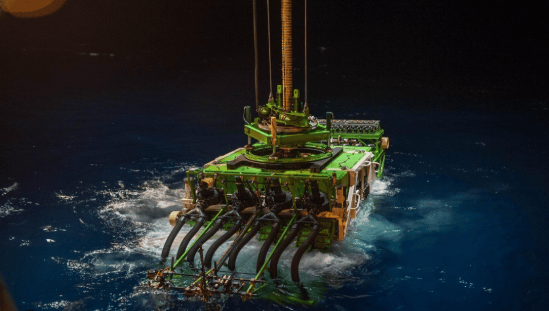
The deep sea holds hundreds of billions of tons of strategic polymetallic nodule resources globally, but the tailwater plume and high carbon emissions from the mother ship have long strangled their commercial viability. On June 8, 2026, the research team led by Professor Sha Fei from Ocean University of China published findings in *Strategic Study of CAE* that provide a systematic answer, constructing for the first time at the engineering science level a circular system of "deep-sea mining ‑ resource conversion ‑ industrial synergy," upgrading tailwater treatment from "passive discharge" to "active value addition" and embedding exhaust carbon sequestration into the mining operation chain.
Two "Green Red Lines" of Deep-Sea Mining
Deep-sea polymetallic nodules occur in soft, unconsolidated sediments, and are highly prone to forming plumes when disturbed, a major environmental constraint on deep-sea mineral resource development. Large amounts of sediment are extracted along with nodules to the surface vessel, processed into mineral mud, and discharged back into the ocean. Direct tailwater discharge triggers dual red lines: ecological controversy and excessive carbon footprint.
The ocean is the world's largest carbon sink, with a carbon storage of approximately 3.9×10¹³ t, 20 times that of terrestrial carbon reservoirs and 50 times that of atmospheric carbon reservoirs. Deep-sea space utilization and carbon sink functions are key areas for promoting sustainable development. However, deep-sea CCUS equipment is still immature, urgently requiring the development of marine carbon sequestration equipment. The Ocean University of China team directly anchors tailwater treatment and carbon sequestration to the inherent needs of deep-sea mining, making low-carbon transformation an "endogenous variable" of the mining business model.
"Six-Step Purification" of Tailwater Mineral Mud: From Pollutant to Commodity
The fundamental bottleneck of tailwater treatment lies in the high moisture content, high salinity, and heavy metal residues of mineral mud. The research team established a four-stage safe treatment system: "efficient flocculation → pressure filtration dewatering → leaching desalination → heavy metal stabilization." After treatment, the moisture content, salinity, and heavy metal content of the tailwater mineral mud are significantly reduced, and the cleanliness of the mineral mud meets safe utilization standards.
On this basis, the team unlocked three resource utilization pathways: island reef agricultural soil (the treated mineral mud is rich in organic matter, improving coral sand soil quality), island reef green building materials (high-moisture mineral mud compounded with cementitious materials to press bricks, suitable for the harsh transport conditions of island reef construction), and high-quality daily chemical products (high-purity silicates extracted from mineral mud can be used to produce face masks, body scrubs, etc.), achieving a complete chain of "waste reduction—value addition—island reef suitability."
Synergistic Integration of Exhaust Carbon Sequestration: A Win-Win for Carbon Reduction and Cost Reduction
The research team pointed out that CO₂ jets in deep-sea mining environments exhibit collection performance comparable to water jets, good environmental friendliness, and low risk of carbon sequestration leakage. Integrated shipboard carbon capture technology captures exhaust from the mother ship, driven by high-pressure, low-temperature deep-sea conditions for CO₂ hydrate sequestration, forming stable solids anchored to the seabed. This is linked to carbon trading mechanisms to enhance economic feasibility, effectively reducing duplication of operational equipment and energy, and improving overall operational efficiency.
Shared Equipment for Synergistic Operations with Carbon Sequestration
Deep-sea mining and marine carbon sequestration are highly complementary in terms of operational equipment and space, with no mutual interference in operational cycles. The industrial synergistic development model can not only improve the profitability of marine carbon sequestration but also enhance the overall profit of mining. The study recommends accelerating breakthroughs in core deep-sea technologies and equipment, forming a complete industrial chain and industrial cluster, and strengthening the construction of a composite talent team.
Approaching the "Hyperbola" of Economy and Environment
Breakthrough in Commercial Development of Deep-Sea Minerals
Deep-sea polymetallic nodule resources amount to hundreds of billions of tons, with equivalent copper, nickel, and cobalt metal content exceeding 2×10⁹ t, making them indispensable key raw materials for new energy industries such as photovoltaics, wind power, and electric vehicles. If tailwater mineral mud is directly resold to the island reef planting/building materials industry and carbon credits are included in trading, the net cash flow expectations of mining companies may undergo structural improvement. The synergistic development model of deep-sea mining and carbon sequestration can help reduce the environmental risks and controversies of deep-sea mining, providing a solid Chinese solution for the International Seabed Authority's mining code negotiations.
Island Reef Infrastructure and Food Security
The team specifically proposed "synergistic development of deep-sea mining and island reef agricultural planting." After treatment, the mineral mud possesses water and fertilizer retention functions, directly improving the quality of island reef coral sand soil and addressing dietary supply issues on islands and reefs under extreme freshwater scarcity. High-density lightweight building material preparation technology suitable for island reef environments and high-quality tailwater mineral mud daily chemical product preparation technology can also achieve on-site closed loops within the limited island reef environment.
Carbon Trading and Blue Economy
This model transforms tailwater and exhaust treatment from a cost item into a revenue point. Linking with carbon trading mechanisms to enhance economic feasibility is expected to form a dual incentive of "technology-driven carbon reduction + carbon sink trading." With the imminent expansion of the national carbon market, blue carbon sinks will gain an independent accounting channel. In the future, deep-sea mining companies may no longer just sell metal minerals, but package an overall solution of "metals + agricultural soil + building materials + carbon credits."
Providing Technical Solutions for Low-Carbon Transformation of Global Marine Engineering
The "deep-sea mining ‑ resource conversion ‑ industrial synergy" circular system provides a replicable technical solution for the low-carbon transformation of marine engineering systems and contributes an efficient technical paradigm to the global blue economy. The Ocean University of China team is advancing sea trial coordination with several leading domestic enterprises, aiming to achieve "ready-to-install" integration of zero tailwater discharge and carbon sequestration before commercial mining commences.
When the tailwater pipe of a deep-sea mining vessel is connected not to the ocean, but to island reef farmland and building material factories; when the shipboard carbon capture system turns exhaust into deep-sea solid carbon storage zones—deep-sea mining will no longer be synonymous with "destroying the ocean for resources," but a new type of infrastructure for global low-carbon transformation. China is writing a new equation balancing "economic accounts + ecological accounts" in the deep sea.