
From smartphones and laptops to new energy vehicles, these everyday applications all rely on lithium batteries. However, pain points such as slow charging, short range, and safety hazards remain major challenges for lithium battery development. Solid-state batteries, with their advantages of high safety and high energy density, are widely regarded as a key technological direction for next-generation power batteries. Among them, polymer-based solid-state batteries, due to their low cost, good flexibility, excellent interfacial contact, and ease of processing and scaling, are expected to be the first to achieve large-scale commercialization.
Recently, a team led by Academician Zhang Jiujun and Professor Zheng Yun from Fuzhou University achieved a breakthrough in the core component of solid-state batteries—polymer electrolytes. The team cleverly utilized basic physical principles such as "built-in electric fields" and "mechanical balance" to provide a new approach to solving the lithium-ion transport challenge, potentially enabling faster charging, longer range, and higher safety for batteries. The relevant results were published in the internationally renowned journals Advanced Materials and the Journal of the American Chemical Society. This breakthrough, hailed by the industry as "internationally leading," not only achieves a qualitative leap in the fast-charging performance and service life of solid-state lithium batteries but also opens a new paradigm for the development of next-generation high-safety, high-performance batteries.
The "Ion Traffic Jam" Dilemma in Solid-State Lithium Batteries
If a lithium-ion battery is compared to a city's transportation system, then lithium ions are the cars traveling on the roads, and the electrolyte is the road network connecting various areas. The charging and discharging process of a battery is essentially the process of lithium ions "running" back and forth between the positive and negative electrodes.
As people's requirements for battery performance continue to increase, the limitations of traditional liquid lithium batteries are becoming increasingly apparent. Among them, safety risks and energy density shortcomings have become core contradictions that make it difficult for them to meet next-generation application needs. In the field of polymer-based solid-state batteries, how to further improve room-temperature ionic conductivity and rate performance remains a key challenge that must be overcome on the path to commercialization.
The transport speed of lithium ions in traditional polymer electrolytes is not particularly fast.
In this regard, Professor Zheng Yun explained with a vivid analogy: "Traditional polymer electrolytes are like a 'highway' full of potholes and obstacles. Lithium ions have to slow down frequently and stop-and-go as they travel, making it difficult to move quickly. This leads to slow battery charging and significantly reduced service life."
From a microscopic perspective, the reason lithium ions have "difficulty traveling" is that the oxygen atoms on the polymer chain act like countless "little hands," firmly "grabbing" the lithium ions. This strong binding force means that every step a lithium ion takes requires overcoming a significant energy barrier. It's like a car driving on a muddy dirt road—not only is it slow, but it's also prone to getting stuck.
To solve this problem, scientists have tried various strategies, such as adjusting the polymer structure, adding plasticizers, or incorporating inorganic fillers, in an attempt to weaken the polymer's binding force on lithium ions. Although these methods have improved ionic conductivity to some extent, each has its own limitations. "These methods can only achieve 'local optimization,'" Professor Zheng Yun pointed out. "It's like occasionally increasing vehicle speed or patching some potholes on a rough old road. While it can help to some extent, it doesn't change the fundamental problem of the road being uneven and full of bumps."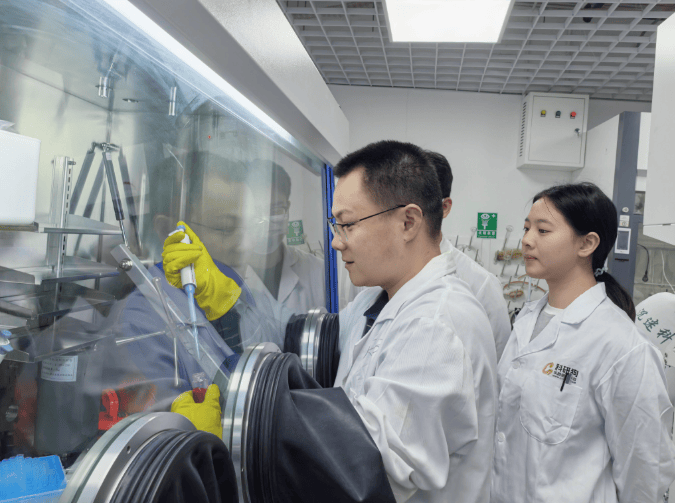
Building a "Smart Highway" for Lithium Ions
"We shouldn't just be repairing the old road; we need to fundamentally change the form of the 'road' and build a new 'highway.'" As early as two years ago during a project discussion, Professor Zheng Yun proposed this concept. The research team broke away from the conventional mindset of modifying traditional materials, sought inspiration from interdisciplinary fields, and turned their attention to the concept of "built-in electric fields" in physics.
From initial molecular design and material synthesis to repeatedly optimizing the doping ratio and distribution of zinc ions, team members experienced hundreds of experimental failures. To precisely characterize the formation mechanism and effect of the built-in electric field, the research team collaborated with multiple national-level testing platforms, utilizing techniques such as differential charge density analysis and in-situ electrochemical characterization to reveal the microscopic kinetic process of ion transport at the atomic scale. They ultimately succeeded in constructing this new polymer electrolyte system.
How does the "built-in electric field" function at the microscopic scale? Professor Zheng Yun explained: "We orderly introduced positively charged zinc ions as 'helpers' near the oxygen atoms on the polymer chain. Zinc ions have a stronger attraction to electrons, acting like a 'magnet' to pull the electron cloud around the oxygen atoms towards themselves, thereby forming a directional 'built-in electric field.' This reduces the 'binding force' of the oxygen atoms on the lithium ions, effectively laying a 'highway' with less resistance for the lithium ions."
Through experiments, the research team found that the zinc ions (on the positive electrode side) and ether oxygens (on the negative electrode side) on the polymer naturally form a stable, directional built-in electric field, akin to laying an "invisible electric grid" within the electrolyte. This field induces charge redistribution, uniformly reducing the electron cloud density around the ether oxygens, fundamentally weakening the strong coordination between lithium ions and the polymer. This reduces the migration energy barrier for lithium ions from 0.29 eV to 0.13 eV, a decrease of over 55%. Differential charge density analysis further confirmed the transfer of electrons from ether oxygens to zinc ions, verifying the formation of the built-in electric field.
"In this way, lithium ions can easily break free from their bonds. More importantly, the continuous 'built-in electric field' acts like a 'smart navigation system,' guiding lithium ions to move rapidly in a designated direction, preventing them from spinning in place. Simply put, it transforms the lithium ions from a state of 'heavy, slow travel' to 'light, fast running,'" added Professor Zheng Yun.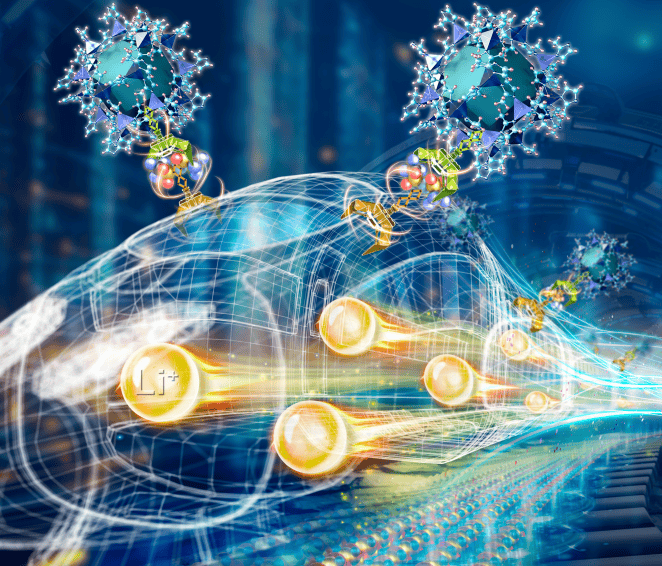
Making Charging Faster and Safer
The most intuitive improvement from this technology is seen in the battery's fast-charging performance and service life. The research team assembled common lithium iron phosphate batteries for testing. At a 2C rate (meaning a full charge in about half an hour), after 5,000 charge-discharge cycles, the battery still retained 84% of its original capacity.
"To put it in perspective: if an electric vehicle is charged every two days, 5,000 cycles equate to stable use for over 27 years, with a range degradation of less than 20%. Users wouldn't have to worry about battery durability," explained Duan Song, a doctoral student on the team. Additionally, the research team assembled symmetric batteries specifically for durability testing. The results showed that these batteries could cycle stably for over 6,000 hours, directly increasing the lifespan several times compared to traditional polymer-based batteries. This is particularly significant for application scenarios with extremely high reliability requirements, such as aerospace and energy storage stations.
In terms of safety, this technology also brings a qualitative leap. Lithium dendrites are tree-like metallic lithium formations that occur during the charging of lithium metal batteries due to uneven deposition of lithium ions on the negative electrode surface. Their growth often pierces the battery separator, causing internal short circuits, which can lead to thermal runaway, fire, or even explosion—a major safety hazard that has long plagued these lithium batteries. The "built-in electric field" design promotes uniform and orderly deposition of lithium ions, effectively inhibiting the growth of lithium dendrites.
Notably, this research provides not a specific material formula but a universal design concept. Previous studies have mostly optimized performance by changing the chemical composition of materials. This work pioneers a new paradigm for regulating ion transport using "physical fields." This means the "built-in electric field" design strategy is applicable not only to polyether-based polymer electrolytes but can also be extended to other types of ion conduction systems, providing a new technological platform for the development of electrochemical energy devices.
"The team will continue to advance fundamental research while accelerating the construction of pilot lines and industrial implementation." In the laboratory of the Institute of New Energy Materials and Engineering at Fuzhou University, Zhang Jiujun, a foreign academician of the Chinese Academy of Engineering, leaned over to check the fluctuating numbers on the computer screen and stated firmly, "We want to bring more original technologies to the world and contribute 'Chinese wisdom' to the global energy transition."
Currently, the demand for high-safety, high-energy-density batteries is increasingly urgent in fields such as new energy vehicles, large-scale energy storage, and flexible electronics. The original technology from the team of Academician Zhang Jiujun and Professor Zheng Yun at Fuzhou University has successfully opened a synergistic path for improving "high conductivity—high stability—high safety" in polymer electrolytes, providing core support for the commercialization of solid-state batteries. With coordinated progress across the industrial chain, this technology is expected to inject strong momentum into the high-quality development of China's new energy industry, help achieve the "dual carbon" goals, and accelerate the entry into public life of new energy vehicles that can "charge for five minutes and travel a thousand miles," as well as thin, lightweight, and safe flexible electronic devices.