
Recently, at the construction site of the inner tank of the No. 3 storage tank of the National Pipeline Network Group's Hainan LNG Phase II project, four sets of fully automatic welding equipment and supporting welding materials have been deployed. Next, fully automatic welding operations will be carried out for the 1st to 11th rings of the inner tank within a tank wall space approximately 15 stories high and covering an area larger than a standard football field. "Compared to previous LNG storage tank construction projects, the welding of the No. 3, No. 4, and No. 5 storage tanks at Hainan LNG will fully adopt automatic welding technology," said Li Yanwei, Deputy Manager of the Hainan LNG Project Division of the National Pipeline Network Group's Project Construction Management Company. This marks the first LNG storage tank project in China to promote and apply automatic welding technology for storage tanks.
It is understood that the second phase of the Hainan LNG receiving station will build three new 220,000 cubic meter LNG storage tanks, each with an inner tank diameter of 86 meters, a tank wall height of 42.48 meters, and a total longitudinal weld length of 1,030 meters. "The wall thickness of the entire inner tank varies, ranging from 10 mm to 35.7 mm. Welding such a large span of wall thicknesses imposes extremely stringent construction standards, and existing localized automatic welding technology cannot meet the project's requirements," Li Yanwei said.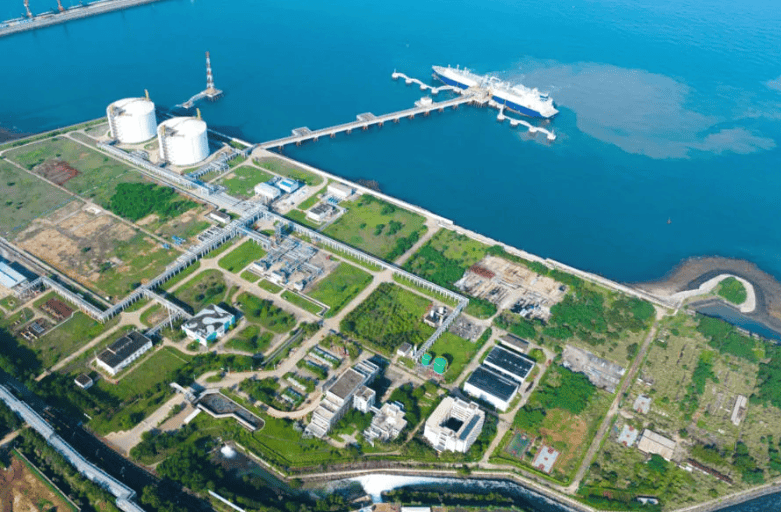
According to reports, the current automatic welding technology for LNG projects in China can only achieve automatic welding in thin-wall sections and cannot cover full wall plates or full wall thicknesses. Longitudinal welds still primarily rely on traditional manual arc welding processes, which are difficult to adapt to the complex construction conditions of large storage tanks. In traditional manual welding, weld quality depends on the operator's technical experience, and workers face high labor intensity. The construction process is prone to smoke and dust pollution, involves cumbersome procedures, and the first-pass acceptance rate needs improvement.
To overcome industry technical bottlenecks, the National Pipeline Network Group, leveraging the key second-phase project of the Hainan LNG receiving station, has collaborated with various participating units to innovate in the development and application of 9% Ni steel GTAW (commonly known as tungsten inert gas welding) full-wall-plate automatic welding technology. This promotes full coverage of automatic welding for all longitudinal weld positions across the three storage tanks at Hainan LNG, adapting to both thick and thin wall sections of the tank walls, and fills the technical application gap in China for full-wall-thickness, full-ring-plate GTAW automatic welding of large LNG storage tanks.
Zhao Jintao, Chief Engineer of the joint venture general contracting project, introduced: "With automatic welding, the weld seams are smooth and aesthetically pleasing. The equipment operates automatically according to preset programs, and operators only need to fine-tune parameters via a remote control to complete the work, reducing labor intensity." Additionally, the argon arc welding process can reduce welding fume emissions inside the tank by approximately 90%, effectively improving the on-site working environment.
Currently, the project's automatic welding equipment has completed site arrival, installation, and commissioning, and the welding procedure qualification has been successfully completed, verifying the adaptability and stability of the automatic welding process parameters. "With the full adoption of automatic welding technology, the efficiency of single weld seams has been improved, supporting simultaneous multi-station parallel construction and effectively shortening welding operation time. The overall construction schedule for the three storage tanks will be significantly advanced," Li Yanwei said.