
Construction sites may be the world's most dangerous "laboratories"—with heavy machinery roaring, hundreds of workers moving about, and environments changing in an instant. How to ensure safe coexistence between machines and humans is the "last mile" for physical AI to transition from the lab to the job site. On June 16, 2026, Built Robotics, a leader in construction physical AI, and the Safe Autonomous Systems Lab (xLAB) at the University of Pennsylvania's School of Engineering and Applied Science announced a research collaboration aimed at training "superhuman perception" AI models using real-world construction data. This will enable autonomous construction equipment not only to "see" people but also to "predict" their movements, fundamentally reshaping safety standards in the construction industry.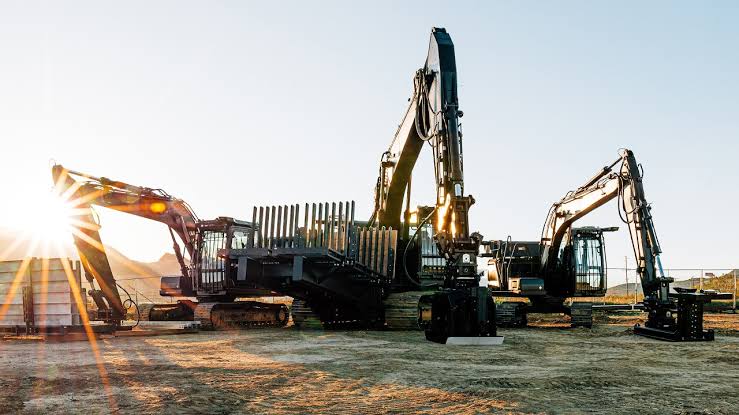
The "Last Mile" Challenge for Construction Site AI
The construction industry is one of the least digitized sectors globally and a high-risk area for safety incidents. Although autonomous construction equipment is increasingly entering job sites, a fundamental challenge remains unresolved: AI that performs perfectly in the lab often "fails" when confronted with the complex environments of real construction sites.
The complexity of construction sites far exceeds any closed testing ground: hundreds of workers operating simultaneously, vast areas spanning thousands of acres, rapidly changing lighting conditions, sudden movements of people behind obstructions, and non-standard human postures. As Rahul Mangharam, head of xLAB and professor in Penn's Department of Electrical and Systems Engineering, stated: "The fundamental challenge is bridging the gap between validation in controlled environments and robust performance under operational conditions."
Traditional methods rely on "closed-site testing plus simulation," but neither can fully replicate the real chaos of a construction site—this is the biggest bottleneck for large-scale deployment of physical AI.
"Superhuman Perception" Driven by Real Construction Data
The collaboration between Built Robotics and xLAB is built around three core technical pillars:
The World's First Construction "World Foundation Model"
Since its founding in 2016, Built Robotics has operated for over 50,000 hours across more than 40 construction sites, completing over 3 gigawatts of solar project installations. In this collaboration, Built will leverage this vast real-world operational dataset, combined with newly designed dedicated data collection robots, to build the world's first "world foundation model" for the construction industry—a universal intelligent framework that enables machines to understand "how people move, how machines operate, and how accidents occur" on construction sites.
Deep Integration of Edge AI Models and Safety Architectures
The collaboration will deeply integrate Built Robotics' proprietary edge AI person detection model with xLAB's years of research in safety-critical autonomous systems. Built's model has been refined through repeated testing in real construction environments with "hundreds of employees and thousands of acres"; xLAB focuses on the intersection of formal methods, machine learning, and embedded systems, specializing in provably safe, highly resilient software architectures. The combination means AI must not only "recognize quickly" but also be "safety-provable."
"Edge Case"-Driven Super Perception
One of the core goals of the collaboration is to systematically collect and annotate "edge cases"—rare but potentially fatal scenarios on construction sites: abnormal worker postures, sudden appearances from behind obstructions, human figures in poor lighting, and unpredictable human behavior.
By training AI models with these "unconventional" data, the system will evolve capabilities beyond human perception—identifying fleeting abnormal danger signals that humans might overlook. Liam Osler, Director of Engineering AI at Built Robotics, stated: "We share the same core belief with xLAB: physical AI must first and foremost ensure safety, and it has the potential to set new safety standards for the construction industry."
From Solar Sites to Industry-Wide Safety Standards
Phase One: "AI Sentinels" for Solar Sites
The pilot collaboration will first be deployed on utility-scale solar projects. Built Robotics' edge AI person detection model will be installed on an autonomous construction surveying robot to collect high-fidelity sensor data from real solar project sites. This data will, in turn, optimize Built's AI models and expand to other vehicle platforms and construction scenarios.
Mid-Term: Covering All Types of Construction Equipment
As the model continues to evolve, this safety AI system is expected to expand from surveying robots to all types of construction equipment, including heavy bulldozers, excavators, and cranes, creating a safety closed loop for "human-machine collaboration" on construction sites.
Long-Term: Setting Industry-Wide Safety Benchmarks
Noah Ready-Campbell, CEO of Built Robotics, noted that Built is a member of the Future Committee of the Association of Equipment Manufacturers (AEM). He stated: "Safety is a rising tide that lifts all boats. If a safety incident occurs, even if it's not a Built robot, it casts a shadow over the entire industry. So we have a responsibility to help the whole industry operate safely."
This means the technical outcomes of this collaboration have the potential to be translated into industry-wide safety standards and best practices, rather than being the proprietary assets of a single company.
A Milestone in Physical AI Safety
The uniqueness of this collaboration lies in the fact that it is not a simple "company plus university" technology transfer, but a deep, two-way empowering research partnership.
For Built Robotics: xLAB's deep academic expertise in safety-critical systems provides a "safety-provable" theoretical endorsement for Built's large-scale deployment.
For xLAB: The access to real construction site data provided by Built allows xLAB's research to move from "simulation" to "real-world validation."
For the entire industry: This is the world's first large-scale practice of introducing "provably safe" formal methods into construction physical AI, opening a new path for regulatory certification of autonomous construction equipment.
Built Robotics CEO Ready-Campbell is a Penn alumnus. He acknowledged that the pioneering work of Professor Vijay Kumar from Penn's GRASP Lab on quadrotors and multi-robot coordination profoundly influenced his founding of Built. Now, this collaboration between an alumnus and his alma mater is turning construction sites into the "ultimate testing ground" for physical AI safety.
When AI can not only "see" danger but also "predict" it, the safety myth of construction sites will transition from science fiction to reality.