
Recently, Juli Sling, in collaboration with CSSC Technology, completed China's first offshore wind turbine generator main hoist-free replacement operation at the Rudong offshore wind farm in Jiangsu. The main hoist-free replacement system and specialized tooling, independently developed and manufactured by Juli Sling, completely eliminate the reliance on traditional large-scale offshore main hoist vessels. By utilizing only small transport vessels, the system enables high-altitude disassembly and assembly of core wind turbine components, improving operation and maintenance efficiency by 75%. This domestically produced high-end equipment addresses industry pain points in operation and maintenance, creating a benchmark solution for efficient and low-cost offshore wind power maintenance.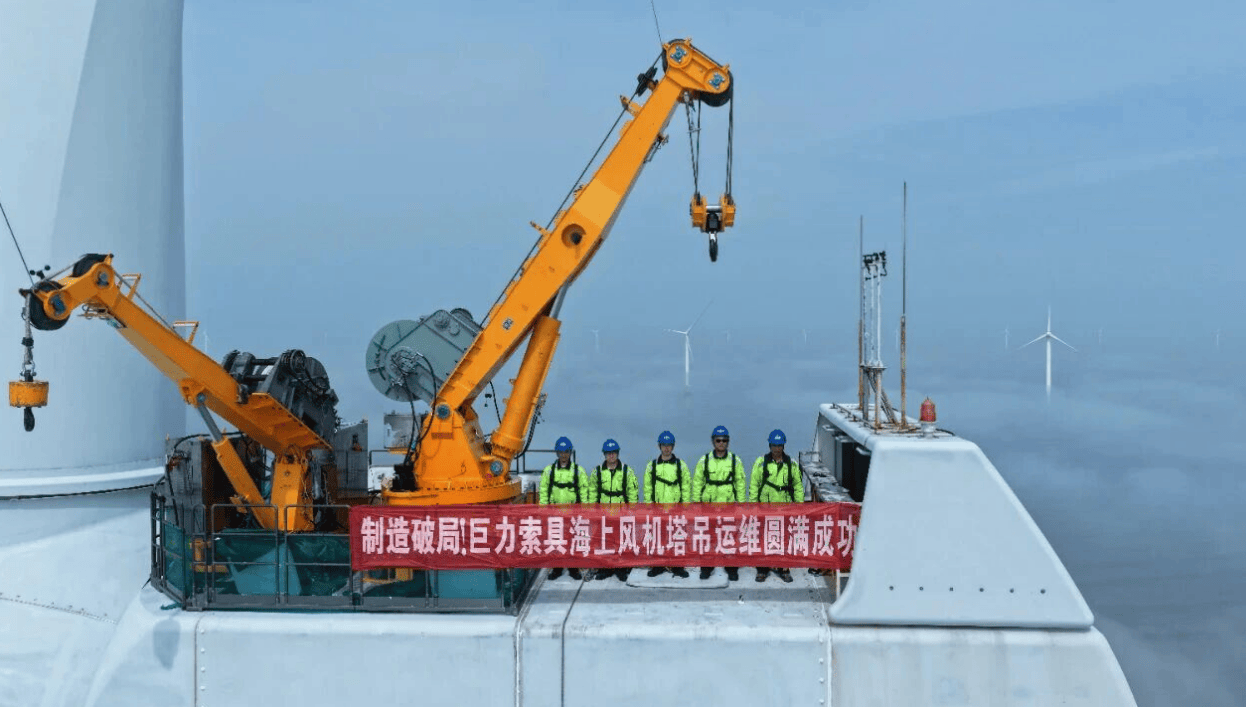
Currently, China's offshore wind power is accelerating toward deep-sea and large-capacity turbine models, making the repair and replacement of core components such as generators and gearboxes a common industry challenge. Traditional operation and maintenance models heavily rely on scarce thousand-ton-class large lifting vessels, which have long scheduling cycles and high rental costs. Additionally, nearshore shallow-water turbine positions are constrained by geographical conditions, making it difficult for large lifting vessels to access. After turbine failures, maintenance cycles are significantly extended, leading to high operation and maintenance costs and substantial power generation losses. Complex offshore conditions also keep operational safety risks high. To address these industry pain points, Juli Sling, leveraging the harsh offshore environment of high humidity, salt spray, and heavy swells, collaborated with CSSC Technology to develop a lightweight main hoist-free lifting solution, overcoming various drawbacks of traditional operation and maintenance models at the equipment level.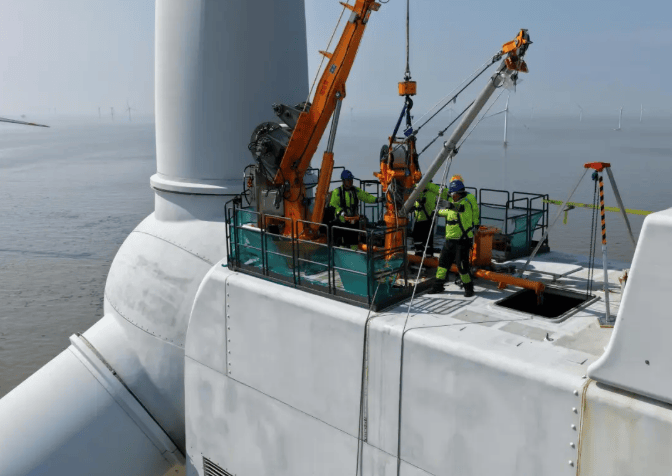
The complete equipment set for this operation includes a portable hoist, auxiliary hoist, main hoist, and specialized tooling. It builds the operation foundation on the turbine's existing structure without requiring external large lifting equipment. The equipment adopts a modular, lightweight design for easy disassembly, assembly, and transport, perfectly adapting to the limited offshore workspace. It also features a standardized three-step operation process, sequentially completing hoist assembly, deployment, and component disassembly and assembly, with simple operation and stable performance. Furthermore, the system has strong versatility; by simply replacing the support base and adjusting parameters, it can adapt to different models of onshore and offshore wind turbines. It can also meet the operation and maintenance needs of ultra-high-power turbines through iterative upgrades, offering broad application expansion potential.
This equipment set incorporates multiple core technologies that fill gaps in China's offshore wind power operation and maintenance equipment field. The equipment features high-performance anti-corrosion processes and anti-interference stable structural design, adapting to complex sea conditions and ensuring comprehensive operational safety. It is equipped with a self-developed intelligent control system, achieving smooth and precise lifting, effectively protecting precision turbine components. Integrated multi-functional monitoring functions further drive the digital upgrade of operation and maintenance models. From design and component production to complete machine assembly, the entire equipment set achieves 100% domestic production, with fully independent intellectual property rights, breaking overseas technology monopolies and offering comprehensive performance superior to imported products. The equipment has undergone triple verification through workshop drills, onshore testing, and offshore practical operations, with mature technology ready for rapid promotion and application across wind farms nationwide.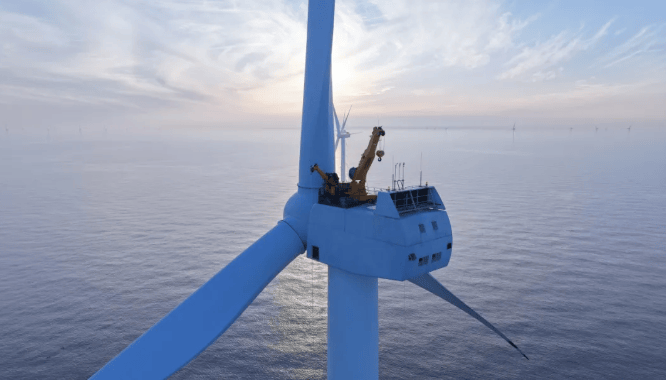
Practical data shows that traditional large lifting vessel operations take 14 to 28 days, with high single-operation costs. Using the main hoist-free replacement system, the operation cycle is compressed to 7 days, reducing power generation losses by 50%. The use of small transport vessels also significantly lowers vessel idle costs, notably enhancing project risk resistance. Offshore wind power operation and maintenance costs account for 25%-30% of the turbine's full lifecycle cost. The widespread adoption of this equipment will continuously reduce long-term operational investments in wind farms, laying a solid foundation for the cost-effective development of deep-sea offshore wind power.
This collaboration has reshaped the offshore wind power operation and maintenance model, shifting from reliance on external large vessels to autonomous operations based on the turbine itself. The operation and maintenance philosophy has also upgraded from reactive repairs to full-cycle proactive maintenance. Juli Sling stated that in the future, it will continue to optimize product performance, develop next-generation equipment suitable for deep-sea and ultra-large-capacity turbines, deepen cooperation with partners like CSSC Technology, overcome technical challenges with domestic intelligent manufacturing, and jointly promote the steady development of China's offshore wind power industry.