
On June 27, the Guangxi Hengqin Expressway Transportation-Energy Integration Project officially commenced construction. This project is the first large-scale, full-chain zero-carbon freight corridor along the New Western Land-Sea Corridor and also the nation's first trinity green low-carbon transportation demonstration project integrating "zero-carbon highway + zero-carbon energy system + ecological carbon sinks."
Invested and constructed by China Energy Engineering Group Gezhouba Group Co., Ltd., the project adopts a "simultaneous design, simultaneous construction, and simultaneous operation" model in sync with the main Hengqin Expressway project. It will deploy distributed photovoltaic power stations with a total installed capacity of approximately 7.17 MWp along the expressway, supported by a 3200kW/7524kWh energy storage system, a smart microgrid, and a new power supply and distribution system. This setup enables self-consumption of solar power, storage of surplus electricity, and intelligent dispatch, ensuring a stable and green energy supply for the highway.
In May 2026, 11 departments including the Ministry of Transport, the National Development and Reform Commission, and the Ministry of Industry and Information Technology jointly issued the "Implementation Plan for Promoting Large-Scale Application of New Energy Heavy Trucks," which explicitly outlines key tasks such as building zero-carbon road transport corridors, simultaneously equipping highway service areas with heavy truck charging and swapping facilities, and advancing transportation-energy integration innovation pilot projects. The project implements all construction deployments outlined in the plan, focusing on the energy replenishment needs of freight vehicles to create a new application scenario for transportation-energy integration. It will deploy heavy truck charging stations, megawatt-level ultra-fast charging piles, and heavy truck battery swapping stations along the service areas. This layout establishes a comprehensive, efficient, and convenient green energy replenishment network covering the entire route, effectively addressing the pain points of difficult and slow charging for long-haul freight heavy trucks, and providing a solid energy guarantee for the green transportation of bulk cargo.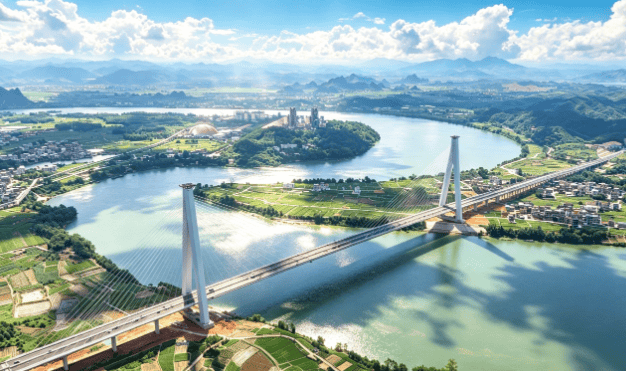
Different from the "low-carbon" model of traditional green highways, this project will achieve "net-zero carbon" emissions for the first time over its entire operational cycle. The project innovatively constructs a diversified ecological carbon sink offset system. Simply put, it works through synergy in three aspects: forestry carbon sinks and mangrove carbon sinks allow nature to help "absorb carbon," while energy-saving renovations of existing buildings reduce energy consumption at the source. Through the two-pronged approach of ecological carbon sequestration and energy conservation and carbon reduction, it is sufficient to fully offset all carbon emissions generated during the highway's operational period, driving a substantial leap for transportation infrastructure from "emission reduction" to "net-zero carbon."
It is reported that upon completion, the project will generate an average of over 6.55 million kWh of electricity annually, reducing carbon dioxide emissions by approximately 40,000 tons per year. The total power generation over the entire operational period is expected to exceed 190 million kWh, equivalent to the annual household electricity consumption of 95,000 ordinary families. The implementation of this project will not only vigorously promote the green transformation of road transportation, assist in the electrification upgrade of freight heavy trucks, and cultivate new productive forces in the transportation sector, but will also further improve the green logistics transportation system for the western land corridor, solidify the foundation for green development of the New Western Land-Sea Corridor, and form a replicable and scalable energy construction solution for Guangxi to deeply integrate into the national pattern of opening up and achieve the "dual carbon" goals.