
Concrete is the most widely used man-made material on Earth, and its production process contributes approximately 8% of global carbon emissions. Now, a Dutch startup has completely overturned this logic—making buildings themselves permanent carbon storage sites, rather than sources of carbon emissions.
In June 2026, Dutch cleantech company Paebbl officially launched the world's first carbon-negative building material—Rebond 300. Certified by an Environmental Product Declaration (EPD), its carbon footprint is -149 kg of CO₂ per ton. This means that every ton of Rebond 300 removes more CO₂ from the atmosphere than the total emissions generated throughout its entire production process.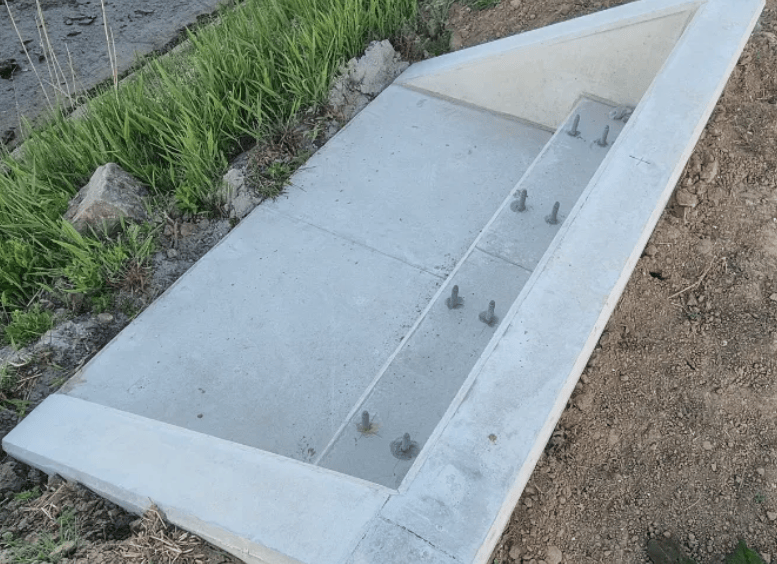
Compressing a Billion-Year Geological Process into One Hour
Principle: Biomimetic "Accelerated Weathering"
In nature, the process where CO₂ reacts with surface rocks (such as peridotite) to form stable carbonate minerals—known as "rock weathering"—typically takes hundreds or even thousands of years. Paebbl's proprietary technology, "geomimicry," compresses this geological timescale to approximately one hour through an accelerated mineralization process, achieving an acceleration factor of up to 10 million times.
Specifically, the technology reacts CO₂ captured from industrial emission sources with silicate-rich minerals (such as olivine) under low-temperature, low-energy conditions, converting gaseous CO₂ into a stable, light gray mineral powder. This powder can be used as a Supplementary Cementitious Material (SCM) to replace traditional cement directly in concrete production. The entire process integrates carbon capture, utilization, and permanent storage (CCUS).
Product: Near-White Powder, Compatible with Existing Production Lines
Rebond 300 is near-white in color, meeting the aesthetic requirements of architecture and design. It can replace up to 30% of traditional cement in standard concrete mixes, reducing the embodied carbon emissions of concrete by up to 40% at standard replacement ratios. Compared to Paebbl's first-generation product, the carbon reduction effect has improved tenfold.
More importantly, Rebond 300 is fully compatible with existing production processes for ready-mix concrete and precast elements, requiring no modifications to batching plants, molds, or construction procedures. Paebbl has successfully integrated its product into various cement and concrete systems, including CEM I, CEM II, CEM III/A, and CEM III/B.
Core Logic: Buildings as Carbon Sinks
Paebbl stated unequivocally in its official announcement: "Every building that uses Rebond 300 becomes a permanent carbon storage repository. This contribution is based on the material's inherent physicochemical properties, not on accounting adjustments."
The disruptive nature of this logic lies in the fact that traditional carbon neutrality relies on an "emission-offset" accounting balance, whereas Rebond 300 solidifies CO₂ within the building material at the molecular level, with a storage duration equivalent to the building's lifespan—decades or even centuries.
From Laboratory to Commercialization
Net-Zero Carbon Bridge in the Netherlands: World's First Carbon-Neutral Concrete Bridge
In January 2026, Paebbl, in collaboration with Dutch contractor Heijmans and concrete producer Van der Kamp, completed the world's first carbon-neutral concrete bridge in the Netherlands. The project replaced 30% of the cement with Paebbl's carbon-storing material, locking away 66 kg of CO₂ in the bridge deck alone, achieving net-zero embodied carbon over its entire lifecycle.
Industrial Floor in Germany: First Commercial-Scale Carbon-Storing Cast-in-Place Concrete
Paebbl partnered with global building materials giant Holcim and construction company GOLDBECK to deliver the first commercial-scale industrial floor using carbon-storing cast-in-place concrete in Germany. Paebbl's material was used in three structural anchors, reducing the carbon footprint while ensuring stability.
Holcim confirmed in the collaboration: "The concrete containing Paebbl's carbon-storing material performed exactly as expected—same workability, same strength class, same construction cycle. This is precisely the confidence we need for large-scale deployment."
Port Infrastructure: 110 kg of CO₂ Stored per Ton of Anchoring Mix
In a quay wall application developed with Hakkers, replacing 15% of the cement with Paebbl's material allowed for the storage of up to 110 kg of CO₂ per ton of anchoring mix.
EU and Global Giants Join Forces to Drive Scale-Up
Paebbl is moving from a single product to full value chain collaboration. In June 2026, Paebbl, together with SaltX Technology (a Swedish company specializing in electrically heated cement clinker technology) and Holcim (the world's largest cement manufacturer), received approximately 45 million Swedish kronor (about USD 4.3 million) in funding from the EU's Clean Energy Transition Partnership (CETP) to launch a three-year integrated demonstration project for electrically heated cement and carbon mineralization in Sweden.
This project integrates SaltX's Electric Calcination Reactor (ECR) technology with Paebbl's carbon mineralization technology within the same industrial value chain. SaltX's ECR technology replaces fossil fuel calcination with electric heating, while Paebbl converts captured CO₂ into carbon-negative building materials—the combination is expected to significantly reduce process emissions from cement production while creating new circular material flows.
Andreas Saari, Co-founder and Co-CEO of Paebbl, stated: "The cement industry faces a dual pressure: to reduce both energy intensity and carbon emissions. This collaboration demonstrates a pathway to tackle both challenges simultaneously—using electrically heated kilns and converting captured CO₂ into carbon-storing SCMs, pushing the boundaries of carbon efficiency in concrete mixes."
Lina Jorheden, CEO of SaltX, noted: "We have already proven that high-quality cement clinker can be produced using an all-electric process. This collaboration brings together leading industrial and research partners across the value chain to lay the foundation for a new generation of cement production."
Ram Muthu, Head of Operational Excellence at Holcim, emphasized: "Our collaboration proves that partnership is the new leadership. Together with SaltX and Paebbl, we are scaling innovative technologies to achieve full electrification of cement production while turning it into a carbon sink."
The project also receives support from research institutions such as the RISE Research Institutes of Sweden, Gustave Eiffel University in France, and India's NCCBM and CSIR-CBRI.
Making Every Building a Carbon Sink
Ready for Immediate Use: No Retrofitting of Existing Facilities Required
Rebond 300 can directly replace up to 30% of cement in existing concrete mixes and is fully compatible with current processes for ready-mix concrete and precast elements. This means concrete batching plants worldwide can start using it without any equipment modifications.
Comprehensive Coverage of Application Scenarios
Paebbl is in discussions with multiple industry-leading companies for collaboration, covering areas such as carbon-storing data centers, public infrastructure projects, coastal protection works, and retail and residential buildings.
Monetizing Carbon Credits: Every Ton is "Quantifiable"
Rebond 300 can also generate verified CO₂ removal credits for companies to use in achieving net-zero targets—meaning carbon-negative building materials can not only reduce environmental costs but also create tradable economic value.
Ultimate Vision: Billion-Ton Scale Carbon Removal
Paebbl's founding mission is to restore the Earth's carbon balance through carbon-storing materials, targeting a scale of billions of tons of CO₂. From the carbon-neutral bridge in the Netherlands, to the first commercial-scale carbon-storing floor in Germany, to the EU-funded integrated electrically heated cement demonstration project—each step is turning the vision of "buildings as carbon sinks" into reality. As Paebbl states: "This product opens up an entirely new category of building materials—CO₂ is used as a raw material input, transformed into minerals, making every building a permanent carbon storage repository."