
On July 2, South Korean telecom operator SK Telecom unveiled multiple quantum communication security technologies for the AI and 6G era at Quantum Korea 2026 in Seoul, focusing on quantum key distribution (QKD) based on photonic integrated circuits (PIC), PIC-based quantum random number generators (QRNG), and QKD technology applicable to wireless and satellite communication scenarios.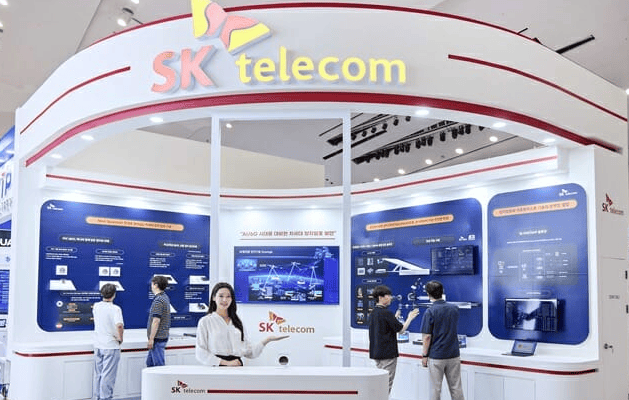
The technologies showcased this time are not focused on general network security solutions, but rather on advancing quantum security capabilities towards smaller sizes, higher speeds, and greater suitability for communication network deployment. The QRNG technology demonstrated by SK Telecom has achieved 10Gbps-level random number generation on an ultra-compact chip measuring 10×10 square millimeters. QRNGs are used to generate unpredictable random numbers and are a fundamental building block for encryption keys, security authentication, and quantum-secure communications. The higher the quality and generation speed of random numbers, the better they can support encryption demands in high-throughput network equipment, edge terminals, and AI services. Traditional security systems face higher concurrent pressure in scenarios involving AI, 6G, edge devices, and massive terminal access. Only after miniaturization can a 10Gbps-level QRNG be more easily integrated into devices such as communication equipment, edge computing nodes, unmanned systems, AI cameras, and robots.
SK Telecom is also advancing the development of an integrated QKD chip, integrating the transmitter, receiver, and QRNG optical system onto a single chip architecture. The value of QKD lies in using quantum states to transmit keys; if the transmission process is eavesdropped upon, disturbances in the quantum states can be detected, thereby enhancing the security of key distribution over communication links. In the past, QKD systems often had large equipment sizes, high costs, and complex deployment, making them more suitable for backbone networks, dedicated lines, and high-security scenarios. PIC-based QKD compresses optical components, transceiver units, and random number capabilities to the chip level, aiming to reduce size and cost, improve system consistency, and create conditions for future large-scale deployment.
More noteworthy is the direction of wireless and satellite QKD. SK Telecom is preparing the core technologies required for the stability and security of wireless QKD and is developing a QKD solution applicable to long-distance wireless communication over 30 kilometers. This technology is also subsequently targeted for satellite-mounted scenarios.
The challenges of wireless QKD and satellite QKD are significantly greater than those of fixed fiber optic links. Terrestrial wireless links are affected by weather, obstructions, atmospheric turbulence, beam alignment, mobile platform vibration, and channel loss; satellite links must also handle high-speed relative motion, long-distance attenuation, terminal acquisition and tracking, link availability windows, and space-ground network coordination. 6G emphasizes integrated space-air-ground communication, where network connection objects will expand from mobile phones and base stations to low-orbit satellites, drones, vehicle networking terminals, robots, AI cameras, and industrial edge devices. If quantum key distribution remains confined to fixed fiber optic dedicated lines, it will be difficult to cover the three-dimensional network structure of future 6G. By extending QKD to 30-kilometer wireless links and satellite communication directions, SK Telecom indicates that quantum communication security is evolving from fixed network security towards integrated space-air-ground network security.
The Q-HSM and Q-SSE also showcased by SK Telecom revolve around "quantum security entering edge networks." Q-HSM integrates QRNG, post-quantum cryptography (PQC), modern cryptographic techniques, and physically unclonable functions (PUF) into a hybrid quantum security chip, targeting edge devices in 6G networks such as drones, AI CCTV, and robots. Q-SSE combines QRNG with PQC to support zero-trust access control and secure usage of large model services.
The impact of such technological innovations on the information and communication industry will fall on quantum security chips, photonic integrated circuits, optical transceiver modules, satellite communication terminals, edge security devices, 6G network equipment, and AI infrastructure security systems. AI services and 6G networks both require higher density connections, greater data flow, and more complex terminal coordination. Traditional encryption systems will face greater pressure when confronted with the threat of quantum computing and massive edge access. The core highlights of SK Telecom's announcements this time—10Gbps-level QRNG, PIC-based QKD, 30km wireless QKD, and satellite QKD—lie in pushing quantum security from "dedicated line-level deployment" towards "network equipment-level, edge terminal-level, and integrated space-air-ground communication-level" applications. What remains to be observed subsequently is the actual bit error rate, key generation rate, weather adaptability, and terminal alignment capability of its 30km wireless QKD, as well as whether the integrated QKD chip can enter the engineering verification phase for communication equipment and satellite terminals.