
The average age of welders has reached 45, with a shortage exceeding 3 million. High temperatures, dust, noise, and arc light—young people are voting with their feet. As the "industrial tailors" face a shortage of successors, who will inherit the skills of veteran craftsmen? On July 2, 2026, Beijing Xiaoyu Intelligent Manufacturing Technology Co., Ltd. provided an answer at the 2026 Global Digital Economy Conference: the industry's first industrial-grade embodied intelligent welding robot, the "Xiaoyu Future Robot," was officially launched, with a standard version starting price of 169,800 RMB. A novice worker who has never touched a robot can be directly deployed in just 3 minutes—welding industry has officially entered the era of embodied intelligence.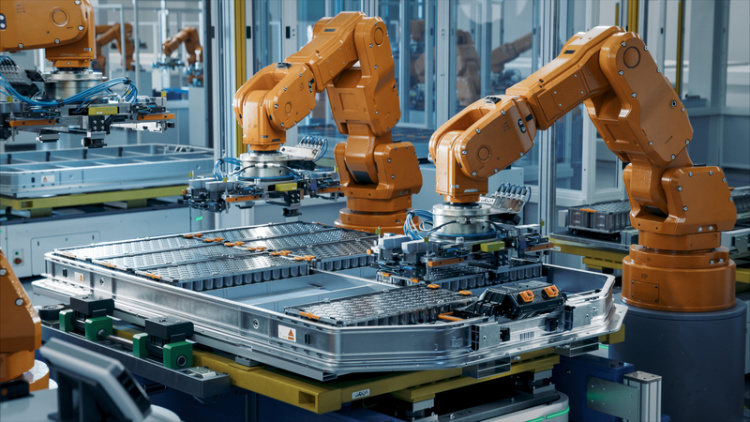
The "Craftsmanship Crisis" Behind the Million-Welder Shortage
Welders, known as "industrial tailors," are among the most numerous occupations according to Ministry of Human Resources and Social Security statistics. However, this trade, which underpins China's manufacturing foundation, is facing a severe "generation gap crisis": the average age of welders has reached 45, with a shortage exceeding 3 million. "The welding environment is harsh—high temperatures, dust, noise, and arc light—young people are voting with their feet," stated Qiao Zhongliang, founder and CEO of Xiaoyu Intelligent Manufacturing.
Even with monthly salaries of over 10,000 RMB, many places still struggle to recruit experienced senior welders. More concerning is, "When this generation of industrial workers ages, how will their skills be passed down?" Wei Fanli, special assistant to the CEO of Xiaoyu Intelligent Manufacturing, pinpointed the core issue.
Traditional industrial robots also fail to solve this dilemma: complex programming, long deployment cycles, and inability to adapt to non-standard scenarios. In narrow, dead-angle-dense ship cabins, traditional robots struggle to operate; in building steel structures, welding paths vary endlessly, making traditional teach-pendant programming extremely inefficient.
Three Core Underlying Technologies Reconstruct "Hand-Eye-Brain"
Qiao Zhongliang, founder and CEO of Xiaoyu Intelligent Manufacturing, unveiled the product and revealed the three self-developed underlying technologies behind it: the Xiaoyu Runwu World Model, the Xiaoyu Xirang Hardware Platform, and the Positioning Pen. These three technologies build a complete technical foundation for industrial embodied intelligence from the dimensions of physical AI models, hardware platforms, and human-machine collaboration.
"Industrial Intuition": Xiaoyu Runwu World Model
"The Runwu World Model gives robots 'industrial intuition' for the first time," Qiao introduced. This model is Xiaoyu's self-developed 4D world model, capable of deducing the evolution of the physical environment after action execution, thereby finding the optimal control path that meets constraints in advance. The model has accumulated over 100,000 hours of multimodal data from real industrial scenarios and has focused on the extremely complex welding scenario, closing the loop of training, online data feedback, and rapid real-machine deployment.
"The ultimate in a single point is the gateway to universality," Qiao stated. Every time a scenario is thoroughly penetrated, it brings us closer to 'one brain, multiple forms.' Xiaoyu Intelligent Manufacturing follows the technical route of 'one brain, multiple forms'—the robot's 'brain' is essentially a large model that can understand tasks, output actions, and make dynamic decisions, plans, and adjustments during execution.
"Cross-Form Universality": Xiaoyu Xirang Hardware Platform
Over the past three decades, robot manufacturers have commonly faced infrastructure pain points such as insufficient edge computing power, loose overall architecture, and unstable communication. The Xiaoyu Xirang Hardware Platform aims to reshape the industry foundation, unify underlying interfaces and communication protocols, and break down software and hardware barriers across multiple robot forms. In the future, whether it's a robotic arm, a quadruped, or a humanoid, as long as it connects to the Xirang platform, the most powerful brain can take over.
"Zero-Barrier Onboarding": Positioning Pen Redefines Human-Machine Collaboration
Compared to breakthroughs in software and hardware, innovations in human-machine collaboration have attracted the most attention. Due to the particularity of industrial environments and the complexity of tasks, language has inherent disadvantages in conveying human intent to embodied intelligence. Inspired by the mouse, Xiaoyu Intelligent Manufacturing created a positioning pen that can "point where you want" in three-dimensional space.
The positioning pen can collect spatial information and transmit it to the robot in real time, featuring a smartphone-level UI interface. This means—a novice worker who has never touched a robot can be directly deployed in just 3 minutes. Welders can seamlessly transition to robot operators, avoiding occupational hazards.
"Full Hardware Specs": Sub-Millimeter Precision + Autonomous Driving-Level Computing Power
The Xiaoyu Future Robot pushes the configuration to the top in three core areas: robotic arm, vision, and computing power. The robotic arm is selected from Universal Robots (Denmark), with an absolute precision of about 0.5mm, paired with industry-leading thermal compensation technology; it has TÜV Rheinland safety certification, with full-joint torque sensing and millisecond-level instant stop capability. In terms of vision, it uses Mech-Mind's welding-specific 3D cameras, capable of stably outputting sub-millimeter point clouds.
Notably, the Xiaoyu Future Robot directly elevates the computing power level of the welding industry to autonomous driving standards—it is equipped with the NVIDIA Orin platform, and will later feature the Sunrise S600 domestic flagship computing platform (AI computing power 560 TOPS).
From Shipbuilding and Steel Structures to Thousand-Unit Scale Deployment
Real-World Deployment in Over a Dozen First-Tier Factories
As of the release date, the Xiaoyu Future Robot has been deployed in over a dozen first-tier factories, covering shipbuilding, building steel structures, bridges, and other fields. In narrow, dead-angle-dense ship cabins, traditional robots struggle, but the Xiaoyu Future Robot, with its self-developed spatial perception and 'one brain, multiple forms' technical route, can adaptively complete welding tasks. In the building steel structure field, the company has conducted deep strategic cooperation with China Construction Science and Industry Corporation, and showcased a jointly developed high-flexibility intelligent welding solution at the concurrently held Beijing Essen Welding & Cutting Fair.
Thousand-Unit Scale Application Imminent
Xiaoyu Intelligent Manufacturing and China Construction Science and Industry Intelligent Technology have signed an agreement: within the next year, they will jointly promote the large-scale application of 1,000 units of embodied intelligent welding robots in the building steel structure field. Wei Fanli, special assistant to the CEO of Xiaoyu Intelligent Manufacturing, revealed that by the end of 2026, it is expected that approximately 1,000 robotic arms will be deployed in various smart manufacturing factories for actual work.
4-Hour Rapid Deployment, Multi-Scenario Adaptability
The Xiaoyu Future Robot can achieve rapid deployment in 4 hours and supports multiple arm spans—it can use a small arm span in narrow ship cabins or a large arm span for building steel structures. Currently, the company plans to expand scenarios to heavy machinery, aerospace, and other fields, and explore more industrial applications such as grinding, polishing, and spraying.
Faster Return on Investment
Qiao Zhongliang stated that, using the comprehensive cost of a mature welder as an indicator, the starting price of 169,800 RMB allows the Xiaoyu Future Robot to achieve a faster return on investment compared to similar industry products. With the average age of welders being relatively high and a huge shortage, "freeing humans from harsh working environments is a just cause for humanity."